

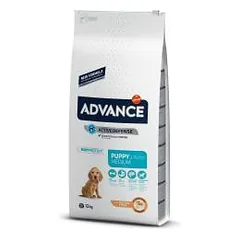
Advance
Advance Puppy Medium sausas maistas vidutinių veislių šuniukams, 12 kg
1,48 €/kg
17,76 € / 12 kg

Also known as: Scottie, Scotty Dog, Aberdeen Terrier
In the Scottish Highlands this breed was bred to hunt fox, badger and other burrowing game, its low, sturdy build suited to squeezing into narrow dens. The long eyebrows and beard aren't just for looks, they protected the eyes and muzzle from a cornered animal's teeth. The frame is compact, up to 10.4 kilograms, but carries unusually heavy bone for its size. The wiry coat needs regular hand-stripping. It's known as one of the more stubborn terriers, independent enough that standard obedience work takes real patience. Loyal to its family, reserved with strangers. Life expectancy runs 12 to 15 years.
Browse dog food sized right for this breed
Scottish Terrier: how old in human years?
Energy level
Trainability
Family friendly
Grooming need
Males 25–28 cm
Females 25–28 cm
Males 8.6–10.4 kg
Females 8.2–9.6 kg
Scottish Terrier's average temperament and family-life score for this breed is moderate.
Scottish Terrier's energy and exercise needs are moderate.
Scottish Terrier's guarding and alertness traits are moderate.
Scottish Terrier's grooming needs are low.
In profile he looks like a chess piece with a beard, and he behaves like a steward someone has absent-mindedly put in charge of your house. The Scottish Terrier is a small dog with a great deal of dignity: he loves his people but doesn't beg for cuddles, and strangers get a long, appraising look first. He makes an excellent watchdog, and you will hear about every courier before anyone else does.
Two or three brisk walks and a bit of play make his day, so a flat suits him well. He was bred to go to ground after quarry, so a molehill in the flowerbed is a personal challenge and a cat or a squirrel is urgent business; in open spaces, a lead is the wiser choice. He learns quickly, but only when he sees the point; short, varied sessions and a treat work better than repetition or a stern voice.
He gets on best with children old enough to understand that a dog isn't a plush toy. With other dogs he can be choosy, and he sometimes forgets how much he actually weighs. If you like an independent, slightly stubborn but loyal companion with a sense of humour, a Scottie is a real find.
A Scottie's coat comes in two layers: a hard, wiry topcoat over a dense, soft undercoat. It sheds little, but it doesn't renew itself either, so every few months it needs attention: either hand-stripping, pulling out the dead hair to keep the coat harsh and its colour rich, or clipping, which is easier but leaves the coat softer. A few times a week, comb out the beard, the eyebrows and the skirt on the belly and legs, which collect twigs, snowballs and bits of dinner. Look at the skin as you go, especially the belly and armpits, and show a vet any redness, flaking or constant scratching.
The pricked ears air themselves well, but glance inside once a week anyway: clean and odour-free is good. The heavy eyebrows partly cover the eyes, so trim them so the hairs don't poke at them, and wipe the corners of the eyes with a damp cloth. An eye that waters, reddens or is held half-shut is a reason to see a vet.
The beard, the eyebrows and the short legs hide a sturdy, long-lived dog: a Scottish Terrier can be with you for twelve to fifteen years. A few inherited conditions are linked to the breed, one of them even named after it, so it is worth knowing what they look like. Talk anything that puzzles you through with a vet, who will judge whether it is serious.
This is general information, not veterinary advice. For your own dog's health, tests and treatment, see a vet.
This is an inherited movement disorder in which the muscles briefly seize up when the dog gets excited or exerts itself. You might see your dog, in the thick of a game, arch its back while its hind legs start flinging out in an odd, goose-stepping rhythm, and a few moments later it is moving normally again. The first time you see it, film the episode on your phone and show the video to a vet.
This is an inherited clotting disorder: the blood lacks a protein that helps a small wound seal, so bleeding goes on for longer. You might notice that a scratch from a digging session in the garden, or a nail clipped too short, bleeds longer than it should. Make sure your vet knows about it before any procedure, and if you are getting a puppy, ask the breeder about the parents' health testing.
With a shunt, some of the blood coming from the gut bypasses the liver, so the liver can't clean out what it should. A young dog may grow more slowly than its littermates, drink more, or seem dazed or act strangely after meals. A Scottie puppy that lags behind or behaves oddly should see a vet soon.
The cerebellum is the part of the brain that coordinates movement, and when its cells gradually die off, the dog loses its coordination. A Scottish Terrier's gait may become wide and wobbly; it may trip over a threshold or miss a step. The changes can creep in slowly and are easy to put down to age, so if you notice unsteadiness, see a vet, and if you are getting a puppy, ask the breeder about the parents' health testing.
The thyroid gland makes too little hormone and the whole body starts running slower. You might notice your dog putting on weight while eating the same as before, seeking out warm spots, or its harsh coat thinning or losing its colour. A Scottie is fond of dignified rest anyway, so real sluggishness can hide behind its personality; tell your vet about changes like these.
This list is chosen by the breed's weight (10 kg) rather than the breed itself: shops label food by dog size, so every breed of the same size gets the same list. Prices are updated daily.
≈ 155 g of dry food a day, from €8,55 a month For a neutered, normally active 9,2 kg dog. Calculate for your dog
Advance
1,48 €/kg
17,76 € / 12 kg
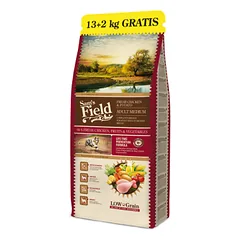
Sam's Field
1,80 €/kg
26,99 € / 15 kg

Country Dog
1,89 €/kg
28,29 € / 15 kg
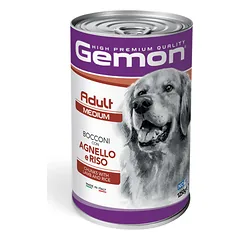
Gemon
1,94 €/kg
2,42 € / 1,3 kg
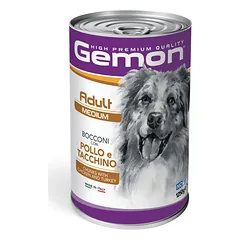
Gemon
1,94 €/kg
2,42 € / 1,3 kg
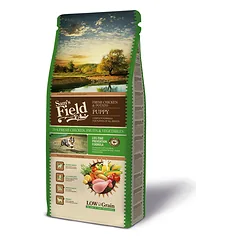
Sam's Field
2,11 €/kg
27,45 € / 13 kg

2,14 €/kg
30,00 € / 14 kg

Club 4 Paws
2,15 €/kg
42,99 € / 20 kg