


VetExpert
Raw Paleo Dog Ultra Mini Puppy Beef 750 kg
0,02 €/kg
13,09 € / 750 kg

Also known as: Puddin Jack, Jack Terrier, Jack Russels, Atlas Terrier
Like its close relative the Parson Russell Terrier, this breed comes from the same work by English clergyman John Russell in the 19th century, bred to hunt foxes alongside the hound pack and go to ground after them. Unlike the longer-legged Parson type, the Jack Russell Terrier stayed shorter and more compact, which lets it squeeze into narrower dens. An adult weighs barely 8 kilograms, with a coat that comes smooth, rough, or somewhere in between. Energy runs well beyond what the small size would suggest, and without enough outlet the dog tends to become loud and destructive. The hunting instinct remains strong, and small pets at home can be chased without any training at all. It's playful with children but needs a firm, consistent hand. Life expectancy runs 13 to 16 years.
Browse dog food sized right for this breed
Jack Russell Terrier: how old in human years?
Energy level
Trainability
Family friendly
Grooming need
Males 25–30 cm
Females 25–30 cm
Males 6–8 kg
Females 6–8 kg
Jack Russell Terrier's average temperament and family-life score for this breed is moderate.
Jack Russell Terrier's energy and exercise needs are high.
Jack Russell Terrier's guarding and alertness traits are moderate.
Jack Russell Terrier's grooming needs are low.
A mouse under the woodpile, a cat on the fence, a leaf that moved the wrong way: to a Jack Russell, each one is a job that needs doing right now. The breed was developed in England to hunt foxes and follow them underground, and the hunting passion hasn't cooled by a single degree; it digs, chases and barks with the same devotion other dogs bring to napping.
It needs more exercise than its size would suggest: long walks, games, scent work and chances to dig where digging is allowed. Its mind is quick and it likes to learn, but it always reserves the right to choose the mouse over your command, so short sessions and a secure fence matter as much as treats. A bored terrier is a loud terrier, and a flat with thin walls will soon introduce your dog to the whole building.
With its family it is devoted and full of fun, but it isn't always peaceable with other dogs and it regards small animals as prey, so introductions to other pets need careful thought. It does best with children old enough to respect a dog's limits. And you'll be the first to know about every visitor; well, the second, right after the dog.
A Jack Russell's coat comes smooth, rough or broken, the in-between, but it is always short and practical, made for a hunter that dives into burrows and brambles. A smooth coat needs a weekly once-over with a rubber mitt or brush, while a rough one can be hand-stripped by a groomer a couple of times a year to keep it hard and tidy. Shedding is moderate, yet short white hairs have a talent for weaving themselves into fabric, as your dark trousers will soon confirm. After every digging session, look over the skin: scratches, ticks or a thorn between the toes are part of terrier life.
The ears fold forward, so give them a look once a week and again after a long run through the undergrowth: clean, odour-free and free of seeds means all is well. Glance at the eyes each morning when your dog wakes up; wipe a bit of sleep from the corner with a damp cloth, but an eye that has suddenly gone red, cloudy or watery means a trip to the vet straight away, not tomorrow.
Small body, big engine, long life: a Jack Russell can be at your side for thirteen to sixteen years and will spend a good deal of that time running. Its health list is short and made of things you can spot yourself: a three-legged skip, a dog that doesn't turn at its name, a red eye or bad breath. When you notice one, show the vet, who will decide what comes next.
This is general information, not veterinary advice. For your own dog's health, tests and treatment, see a vet.
The kneecap, a small bone at the front of the knee, can slide out of its groove and a moment later slip back. A running terrier suddenly hops a few steps on three legs, one hind leg held up, then takes off again at full speed as though nothing happened. A Jack Russell leaps off sofas and climbs where no dog should, so if you see that skip, film it and show it to a vet.
Congenital deafness means a puppy is born unable to hear in one or both ears. Such a pup may sleep soundly while the rest of the litter leaps at the doorbell, or ignore its name while following hand signals perfectly. This kind of deafness is linked to white coat colour, and Jack Russells are predominantly white, so if you have doubts, ask a vet to check the puppy's hearing.
The lens of the eye is held in place by fine fibres, and in this inherited condition they weaken, letting the lens shift or drop out of position entirely. You might find one eye suddenly red, cloudy or bluish, with your terrier squinting and rubbing its face. The condition is linked to terriers, the Jack Russell among them, and it is an emergency: the dog needs a vet immediately, because its sight is at stake.
Plaque hardens into tartar, tartar irritates the gums, and the inflammation slowly eats into the tissue that anchors each tooth in the jaw. It gives itself away through bad breath, reddened gums or a brownish rim where tooth meets gum. A small dog's mouth leaves the teeth little room, so a Jack Russell's teeth are worth having a vet check regularly.
This list is chosen by the breed's weight (8 kg) rather than the breed itself: shops label food by dog size, so every breed of the same size gets the same list. Prices are updated daily.
≈ 125 g of dry food a day, from €6,96 a month For a neutered, normally active 7 kg dog. Calculate for your dog
VetExpert
0,02 €/kg
13,09 € / 750 kg

1,70 €/kg
17,02 € / 10 kg

Real Dog
1,78 €/kg
17,79 € / 10 kg
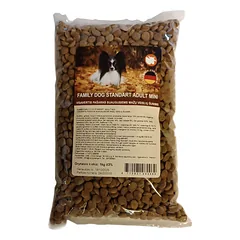
Family Dog
1,89 €/kg
1,89 € / 1 kg

Club 4 Paws
1,93 €/kg
26,99 € / 14 kg

Club 4 Paws
1,93 €/kg
26,99 € / 14 kg
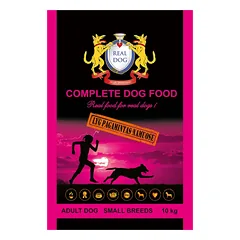
Real Dog
1,94 €/kg
19,42 € / 10 kg
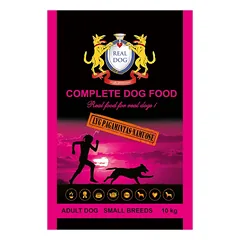
Real Dog
1,95 €/kg
19,49 € / 10 kg