

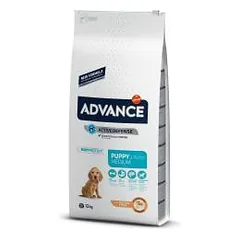
Advance
Advance Puppy Medium sausas maistas vidutinių veislių šuniukams, 12 kg
1,48 €/kg
17,76 € / 12 kg

Also known as: Staffy, Staffie, Staffbull, Irish Staffie, Irish bull terrier
In England's Staffordshire county this breed was developed in the 19th century for bull baiting and later for dog fighting in pits, work that shaped the solid, muscular body, up to 17 kilograms, and powerful jaw. Despite that history, the breed today is known for unusually gentle behavior with children, earning it the nickname nanny dog in parts of England. The short, smooth coat needs minimal grooming. Conflict with other dogs can surface given the fighting history bred into the line, so early socialization matters. Physically it's remarkably tough and durable for its size. Deeply affectionate and playful with its family. Life expectancy runs 12 to 14 years.
Browse dog food sized right for this breed
Staffordshire Bull Terrier: how old in human years?
Energy level
Trainability
Family friendly
Grooming need
Males 36–41 cm
Females 36–41 cm
Males 13–17 kg
Females 11–15.4 kg
Staffordshire Bull Terrier's average temperament and family-life score for this breed is high.
Staffordshire Bull Terrier's energy and exercise needs are moderate.
Staffordshire Bull Terrier's guarding and alertness traits are moderate.
Staffordshire Bull Terrier's grooming needs are low.
A Staffie's tail works like a metronome that only stops when the dog falls asleep, and it sleeps the way it does everything else, with its whole body, preferably on top of you. This is a small but astonishingly solid dog, built from muscle and enthusiasm, and its love for its own people knows no limits. In a family with children it is in its element: patient, playful and always up for one more lap of the garden.
It has energy to spare, so it needs good walks every day plus games that use both strength and brain: tug, fetch, sniff-and-find. A well-exercised Staffie lives happily in a flat; an under-exercised one may decide the sofa cushion is a toy too. It is clever, keen to learn and responds best to calm, consistent, cheerful training with generous praise.
To be honest about its weak spot: a Staffie doesn't always get on with other dogs, particularly ones that act up, so early socialisation and a firm grip on the lead are your best friends. It meets strangers in a fairly friendly way and is only a middling guard, though it will tell you someone is at the door. Long hours alone don't suit it, so it fits best in a home where someone is around. And the tough-dog image on the street and the real Staffie on your sofa are two very different characters; you will meet the second one very quickly.
A Staffie's coat is short and close-fitting, like a second skin, so brushing it takes about as long as boiling the kettle: a weekly pass with a rubber brush or mitt, and the loose hairs end up in it. The upside is that the skin is right there for you to see: the belly, armpits and inner thighs are thinly covered, so redness, spots or scratch marks are easy to catch. Bath only when your dog has truly rolled in something questionable, and use a gentle dog shampoo so the skin doesn't dry out.
Once a week, while your dog is standing still after brushing anyway, look at the eyes and ears. The eyes should be clear, with no redness or heavy discharge, and any greyish sheen in the pupil is a reason to check in with the vet. Small, half-folded ears get plenty of air, but still deserve a look: pale pink inside and odour-free, while head shaking or dark discharge makes them a job for the vet.
A compact, muscular body and twelve to fourteen years of life make a good start, but the Staffordshire Bull Terrier does carry a few inherited weak points, in the joints, the eyes and the nervous system. Several of them can be screened for with genetic tests before the puppies are even born, so your first health question belongs to the breeder, and the rest to your vet.
This is general information, not veterinary advice. For your own dog's health, tests and treatment, see a vet.
Elbow and hip dysplasia is a developmental problem in which the bones of a joint don't fit together precisely, so the joint wears down over time. You might notice a limp after play, stiff first steps after a nap, or reluctance to jump into the car. In a muscular, busy dog a slight limp is easy to miss, so even a small one is worth showing to a vet rather than waiting for it to pass.
The kneecap slips out of its groove, and for a moment the dog can't bend the leg normally. The classic picture: your dog is running, suddenly skips along on three legs for a few strides with a back leg held up, then carries on as if nothing happened. With a Staffie's explosive starts and sharp turns, that skipped step is worth noting and mentioning to your vet.
Hereditary juvenile cataracts cloud the lens of the eye not in old age but in a young dog, and slowly dim its sight. You might notice a greyish or white sheen in the pupil, or a dog that moves hesitantly at dusk and starts missing a thrown toy. This form is known to be inherited in Staffies and breeders can DNA-test the parents, so ask about it before you choose a puppy.
An inherited metabolic disorder: the body can't break down one particular substance, which builds up and damages the brain. The signs vary, from a wobbly walk and trembling to seizures or changes in behaviour, with a dog that seems unusually confused or jumpy. It is a known genetic disease in Staffies that breeders can avoid by DNA-testing the parents, and if you see signs like these in your dog, let a vet assess them.
Degenerative myelopathy is a slow, painless wasting of the spinal cord in later life that weakens the back legs. You may hear it before you see it: the back toenails start scraping on the pavement, and later the dog begins to sway and tangle its legs. There is a DNA test showing whether a Staffie carries the gene linked to it, but what a changing walk in an older dog actually means is for a vet to decide.
This list is chosen by the breed's weight (17 kg) rather than the breed itself: shops label food by dog size, so every breed of the same size gets the same list. Prices are updated daily.
≈ 215 g of dry food a day, from €11,77 a month For a neutered, normally active 14,1 kg dog. Calculate for your dog
Advance
1,48 €/kg
17,76 € / 12 kg
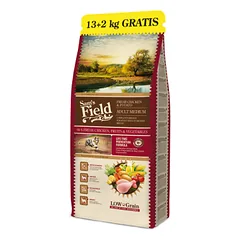
Sam's Field
1,80 €/kg
26,99 € / 15 kg

Country Dog
1,89 €/kg
28,29 € / 15 kg
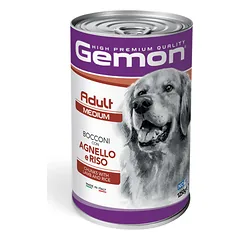
Gemon
1,94 €/kg
2,42 € / 1,3 kg
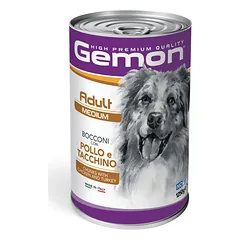
Gemon
1,94 €/kg
2,42 € / 1,3 kg

Sam's Field
2,11 €/kg
27,45 € / 13 kg

2,14 €/kg
30,00 € / 14 kg
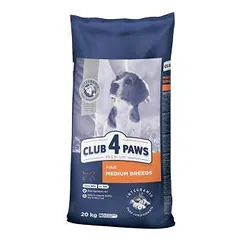
Club 4 Paws
2,15 €/kg
42,99 € / 20 kg