


VetExpert
Raw Paleo Dog Ultra Mini Puppy Beef 750 kg
0,02 €/kg
13,09 € / 750 kg

This terrier was developed in England during the 19th century to bolt foxes from their dens during a hunt, working on foot behind the mounted field and the hound pack. The wiry outer coat protected it from bites and brambles underground, and it needs hand-stripping now and then rather than just brushing. A male rarely tops 8 kilograms, but that small frame holds a stubborn, high-drive personality. The breed is known for its energy and digging habit, and an idle Fox Terrier will usually invent its own entertainment indoors. Its instinct toward small animals can run sharp, a leftover from its den-hunting job. Life expectancy runs 12 to 15 years.
Browse dog food sized right for this breed
Fox Terrier (Wire): how old in human years?
Energy level
Trainability
Family friendly
Grooming need
Males not specified
Females not specified
Males 7.3–8.2 kg
Females 6.8–7.7 kg
Fox Terrier (Wire)'s average temperament and family-life score for this breed is moderate.
Fox Terrier (Wire)'s energy and exercise needs are high.
Fox Terrier (Wire)'s guarding and alertness traits are moderate.
Fox Terrier (Wire)'s grooming needs are low.
In the morning your Wire Fox Terrier is already waiting at the door with a toy in its mouth and a plan for the day. The breed was developed in England to bolt foxes from their earths alongside hounds and riders, and that courage, speed and restless curiosity are its essence. It needs more than walks: ball games, hide-and-seek, agility-style sports where it can both run and think. It can live in a flat if it gets enough of a workout every day.
It learns quickly and willingly when lessons are short and fun, but it has a terrier's character: if it is bored it will find its own hobby, and that hobby will probably be digging. Its prey drive is strong, so cats, squirrels and hares are a challenge, and the recall takes long, patient practice. With other dogs it can be a hothead, so make introductions thoughtfully.
With its family it is cheerful, affectionate and likes to be at the centre of things; with older children who can keep up, it is a terrific playmate. It barks and announces every arrival, so your neighbours will always know someone has come round. For an active household with a sense of humour and no fear of a little mud, this small bundle of energy is a loyal companion for many years.
A Wire Fox Terrier's coat is something like a wire brush: dense, hard and resistant to dirt. To keep it that way it isn't clipped but hand-stripped a few times a year, plucking out the dead hair by hand; you can learn to do it yourself or leave it to a groomer who knows the job. A clipped coat turns soft and loses some of its colour and its weather resistance, while day to day a weekly brush and a comb through the beard and legs keep tangles away. It sheds little, so your sofa stays fairly clean.
Digging in the garden and pushing through hedges, the coat collects everything. After adventures like that, run your hand over the skin for ticks, scratches and burrs. Lift the folded ears once a week and look inside: they should be clean and free of smell. Wipe the beard after meals and the corners of the eyes now and then with a damp cloth; a red eye or a patch that is always wet is a reason to see a vet.
A seven- or eight-kilogram dog that will behave for twelve to fifteen years as if it were still one year old: the Wire Fox Terrier is, at heart, a sturdy and long-lived little dog. A few inherited eye and joint problems are known in the breed, and in a small jaw the teeth are worth watching. Ask the breeder about the parents' health testing before you take a puppy home, and leave everything else for a vet to judge.
This is general information, not veterinary advice. For your own dog's health, tests and treatment, see a vet.
The fine fibres that hold the lens of the eye in place weaken, and the lens slips out of position. The eye may suddenly turn red, water, go cloudy, and the dog may squint or paw at it. It is painful and a threat to sight, so if you see such changes in your Wire Fox Terrier's eye, get to a vet right away; because the problem is inherited, ask the breeder about the parents' health testing.
In a young small dog the head of the thigh bone loses its blood supply, the bone there slowly breaks down, and the hip becomes painful. You may notice a growing puppy starting to limp on one hind leg, favouring it or not wanting to put it down. A Wire Fox Terrier will soldier on through pain, so a limp that hasn't settled within a few days is worth showing to a vet.
The kneecap slips out of its groove, and for a moment the leg won't bend as it should. Your dog may suddenly lift a hind leg mid-run, skip a few steps on three legs, then carry on as if nothing happened. In a Wire Fox Terrier that bounces off the sofa and over obstacles all day, that skip can look like play, but if it keeps happening, show it to a vet.
Plaque and tartar build up on the teeth, the gums become inflamed, and in time teeth can loosen. The first things you notice are bad breath, reddened gums or a brown rim of tartar. Teeth sit closely together in a Wire Fox Terrier's small jaw, so look inside the mouth regularly and talk to a vet when something changes.
This list is chosen by the breed's weight (8 kg) rather than the breed itself: shops label food by dog size, so every breed of the same size gets the same list. Prices are updated daily.
≈ 135 g of dry food a day, from €7,33 a month For a neutered, normally active 7,5 kg dog. Calculate for your dog
VetExpert
0,02 €/kg
13,09 € / 750 kg

1,70 €/kg
17,02 € / 10 kg

Real Dog
1,78 €/kg
17,79 € / 10 kg
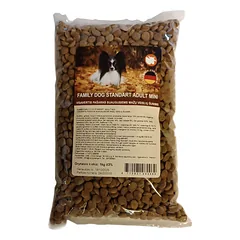
Family Dog
1,89 €/kg
1,89 € / 1 kg

Club 4 Paws
1,93 €/kg
26,99 € / 14 kg

Club 4 Paws
1,93 €/kg
26,99 € / 14 kg

Real Dog
1,94 €/kg
19,42 € / 10 kg

Real Dog
1,95 €/kg
19,49 € / 10 kg