


VetExpert
Raw Paleo Dog Ultra Mini Puppy Beef 750 kg
0,02 €/kg
13,09 € / 750 kg

Also known as: Parson Russell, Parson Terrier
This breed was shaped in the 19th century by English clergyman John Russell, who wanted a terrier that could keep pace with a foxhound pack and then go to ground to bolt a fox or badger from its den. An adult weighs barely 8 kilograms, but the build, especially the spannable chest, was selected for fitting down a narrow tunnel, not simply for small size. The coat comes in smooth or broken varieties, both dense and reasonably low maintenance. Unlike the shorter-legged Jack Russell Terrier, this breed has longer legs, built to keep up on foot with mounted riders over distance. Energy runs high, and without enough exercise it tends to become loud or destructive. It's playful with children but needs a firm, consistent hand in training. Life expectancy runs 13 to 16 years.
Browse dog food sized right for this breed
Parson Russell Terrier: how old in human years?
Energy level
Trainability
Family friendly
Grooming need
Males 33–36 cm
Females 31–34 cm
Males 6–8 kg
Females 6–8 kg
Parson Russell Terrier's average temperament and family-life score for this breed is moderate.
Parson Russell Terrier's energy and exercise needs are high.
Parson Russell Terrier's guarding and alertness traits are moderate.
Parson Russell Terrier's grooming needs are low.
The moment you stir in bed, a Parson Russell is already standing at the door, looking at you as if the day began an hour ago. The breed was developed in England to run with foxhounds and riders, then go to ground wherever the fox thought it was safe. That is why its legs are longer and its stamina greater than you'd expect from a dog weighing barely six to eight kilos, and it expects you to keep up.
It needs a lot: long walks, running, sniffing and digging games, and better still agility or another sport where the head works as hard as the legs. It is remarkably clever and learns fast, but the hunting instinct is strong, so a lead or a fenced area will hold it more reliably than any shout of yours. A flat is a hard fit: a bored terrier digs, chews and reports every sound in the stairwell.
With its family it is devoted and full of fun, but it can be hot-headed with other dogs, and it sees cats, rabbits and hamsters as prey. It does best with older children who understand that play has limits. As for guard duty, it will take that on by itself: every courier will be greeted out loud, and more than once.
A Parson Russell's coat is either smooth or the slightly rough kind called broken, but always dense and made for any weather. A smooth coat needs no more than a weekly once-over with a brush or rubber mitt; a rougher one is worth hand-stripping a couple of times a year, a job for a groomer, so the coat stays crisp rather than fluffy. Shedding is light but constant, and short white hairs will find their way into every jumper you own.
After every adventure in the undergrowth, run your fingers over the skin and between the toes: scratches, ticks and thorns are part of terrier life. Lift the forward-folded ears and look inside once a week, and check the eyes whenever your dog comes in from outside: wipe away grit or sleep with a damp cloth, and take an eye that is red or cloudy to the vet.
Thirteen to sixteen years: that is how long a Parson Russell Terrier may run at your side, and it means to make use of every day. A few conditions are linked to the breed, from knees and eyes to teeth and heart, and you can spot a good number of their signs yourself if you know where to look. When something seems unusual, show your dog to a vet, and if you are getting a puppy, ask the breeder about the parents' health testing.
This is general information, not veterinary advice. For your own dog's health, tests and treatment, see a vet.
When the kneecap slips out of its groove at the front of the knee, the leg briefly seems to lock, and the dog runs a few steps on three legs. A Parson Russell bounces and spins more than anyone else in the house, so a sudden skip like that can slide by unnoticed; watch whether it happens again. If you see it, film it and show it to a vet.
This name covers several different eye troubles, from changes in the lens to conditions that slowly weaken sight. You might notice an eye that has turned red, cloudy or watery, or a dog that starts to stumble in dim light and hesitate on the stairs. For a terrier that dives into hedges and burrows, eyes are precious, so show any change to a vet; an eye that is suddenly red and painful is an emergency and needs a vet immediately.
Plaque on the teeth hardens into tartar over time, which irritates the gums and slowly breaks down the tissue holding each tooth. The first sign is bad breath, later reddened gums or a brownish rim along the gumline. In a small muzzle the teeth sit tightly together, so a Parson Russell's mouth is worth showing to the vet at every check-up.
This is a narrowing, present from birth, at the valve through which blood flows from the right side of the heart to the lungs, so the heart has to push it through a smaller opening. A dog may tire sooner, breathe harder after a run, or suddenly collapse. In a dog that otherwise never stops all day, unusual tiredness is an important sign to show a vet, and if it ever suddenly collapses or faints, it needs a vet immediately.
This list is chosen by the breed's weight (8 kg) rather than the breed itself: shops label food by dog size, so every breed of the same size gets the same list. Prices are updated daily.
≈ 125 g of dry food a day, from €6,96 a month For a neutered, normally active 7 kg dog. Calculate for your dog
VetExpert
0,02 €/kg
13,09 € / 750 kg

1,70 €/kg
17,02 € / 10 kg

Real Dog
1,78 €/kg
17,79 € / 10 kg
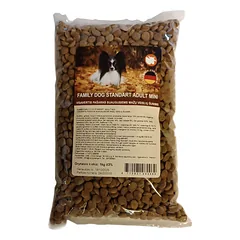
Family Dog
1,89 €/kg
1,89 € / 1 kg

Club 4 Paws
1,93 €/kg
26,99 € / 14 kg

Club 4 Paws
1,93 €/kg
26,99 € / 14 kg
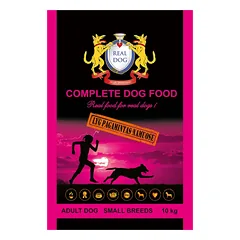
Real Dog
1,94 €/kg
19,42 € / 10 kg
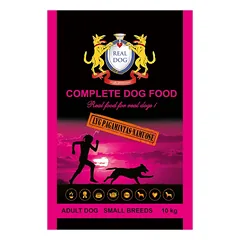
Real Dog
1,95 €/kg
19,49 € / 10 kg