

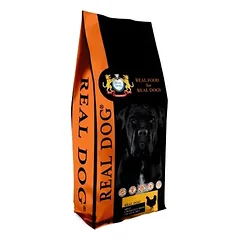
Real Dog
Real Dog sausas maistas suaugusiems, didelių-milžiniškų veislių, šunims su vištiena ir ryžiais 20kg
2,11 €/kg
42,15 € / 20 kg

Also known as: Swissy, Grosse, Gran boyero suizo, Grand bouvier suisse, Isosveitsinpaimenkoira
The largest of Switzerland's four Sennenhund breeds, this dog historically pulled heavy carts and drove cattle on Alpine farms. A male can weigh up to 65 kilograms, making it one of the heaviest Swiss breeds around. The short tricolor coat is easy to maintain but sheds heavily. The breed nearly vanished in the early 20th century until cynologist Albert Heim spotted surviving examples among farm dogs and worked to rebuild it. Calm by temperament but slow to mature, it often stays puppyish well past two years despite its size. Joint health matters given the weight it carries, so screened parentage is worth checking for. Life expectancy runs 8 to 11 years, short given its size.
Browse dog food sized right for this breed
Greater Swiss Mountain Dog: how old in human years?
Energy level
Trainability
Family friendly
Grooming need
Males 65–72 cm
Females 60–68 cm
Males 48–65 kg
Females 40–55 kg
Greater Swiss Mountain Dog's average temperament and family-life score for this breed is high.
Greater Swiss Mountain Dog's energy and exercise needs are low.
Greater Swiss Mountain Dog's guarding and alertness traits are moderate.
Greater Swiss Mountain Dog's grooming needs are low.
Fifty kilos of black, rust and white leaning against your legs is how a Greater Swiss Mountain Dog says hello. In the Swiss valleys his ancestors pulled carts to market and minded the farm in between, and both jobs still show. Indoors he is calm and solid, but his body needs work: a long daily walk at a good pace, hiking, or pulling a cart if you fancy trying it, rather than sprints after a ball. He matures slowly, and a forty-kilo adolescent who never learned to walk on a loose lead will be the one taking you for a walk, so teach it while he still weighs fifteen.
He learns quickly and responds best to calm, consistent training with food and praise. He is wonderful with children and devoted to his family, polite but not gushing with strangers, and he will make sure you know when someone comes to the gate. Early and plentiful socialising pays off with other dogs.
A flat is a hard place for a dog this size; he is happiest in a house with a garden and his family close by. Expect him to follow you from room to room and to lie across the doorway so that nobody leaves without his knowing. Hot summer afternoons are for shade and a cool floor; the long walks belong to the mornings and evenings.
The tricolour coat is short and dense, with an undercoat beneath, and it asks for very little: a rubber brush or grooming glove once a week, and a few sessions a week when he moults and the undercoat comes loose in tufts. Brushing doubles as a skin check. Run your hand over the whole dog and look for redness, scabs or flaky patches; on a short coat they are easy to see, as long as you look.
Check the eyes while you are there: they should be clear, with no watering or redness, and the lids should sit neatly against the eye. The ears lie close to the head and are worth a look once a week; inside they should be clean, pale and odourless. Keep an old towel by the water bowl, too, because a Greater Swiss drinks generously and is not too fussy about where the rest of the water ends up.
Big, strong and slow to grow up, the Greater Swiss Mountain Dog carries a lot of body on his frame, and a lot of what follows comes back to that: joints, a deep chest, a big dog's needs. Dogs of this breed live around eight to eleven years. Know the signs below, keep up regular check-ups, and you will catch problems while they are still small.
This is general information, not veterinary advice. For your own dog's health, tests and treatment, see a vet.
Epilepsy means repeated seizures, bursts of disordered electrical activity in the brain. A seizure can look like a dog falling onto his side with paddling legs, drooling and a blank stare, or something smaller, like a twitching face or a strange frozen moment. A seizure in a dog this size is frightening to watch; whenever one happens, contact a vet immediately.
Here the trouble is the eyelashes: extra lashes growing from the edge of the lid, or lashes pointing the wrong way, can brush against the surface of the eye. You might notice watering, squinting, a red eye or a dog rubbing his face along the carpet. With a short coat there is nothing hiding the eyes, so a glance at them while brushing is easy, and any irritation is a matter for the vet.
Urinary incontinence means a dog leaks urine without meaning to, and it is not bad behaviour: he doesn't even know it is happening. The giveaway is a damp patch where he has been lying, or a few drops on the floor after he gets up. In a big dog with a big bed it is easy to miss at first, so if you spot it, mention it to your vet rather than going back to house-training.
Bloat is when the stomach fills with gas and may twist on itself, cutting off its own blood supply; it can kill a dog within hours. The warning signs are restless pacing, retching that brings nothing up, drooling and a swollen, tight belly. The Greater Swiss Mountain Dog is large and deep-chested, exactly the build this threatens, so if you see these signs, get to a vet immediately, day or night.
Joint dysplasia means a joint such as the hip or the elbow has not formed quite right, so the bones rub where they should glide and the joint wears out early. You might see stiffness after rest, a limp after a long walk, or a young dog who is reluctant to tackle stairs or jump into the car. A big, fast-growing puppy is better off kept lean and spared long forced runs while his joints are forming, and the breeder is worth asking about the parents' health testing.
This list is chosen by the breed's weight (65 kg) rather than the breed itself: shops label food by dog size, so every breed of the same size gets the same list. Prices are updated daily.
≈ 570 g of dry food a day, from €31,42 a month For a neutered, normally active 52 kg dog. Calculate for your dog
Real Dog
2,11 €/kg
42,15 € / 20 kg

Sam's Field
2,56 €/kg
33,26 € / 13 kg
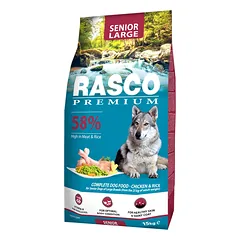
Rasco
2,67 €/kg
39,99 € / 15 kg
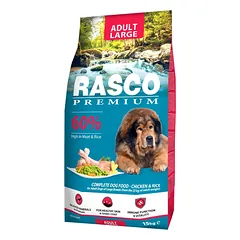
Rasco
2,67 €/kg
39,99 € / 15 kg
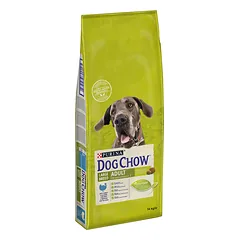
Purina
2,71 €/kg
37,96 € / 14 kg
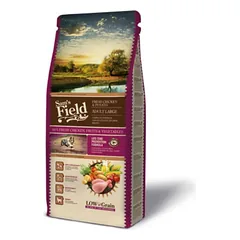
Sam's Field
2,77 €/kg
35,99 € / 13 kg
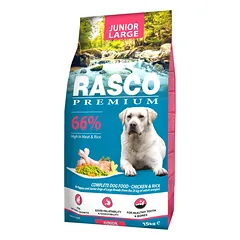
Rasco
2,80 €/kg
41,99 € / 15 kg
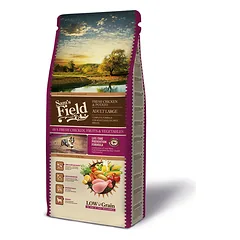
Sam's Field
2,85 €/kg
37,04 € / 13 kg