

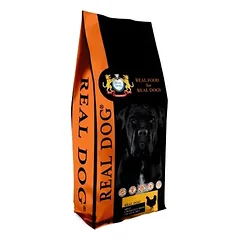
Real Dog
Real Dog sausas maistas suaugusiems, didelių-milžiniškų veislių, šunims su vištiena ir ryžiais 20kg
2,11 €/kg
42,15 € / 20 kg

Also known as: Doberman Pinscher
The Dobermann was created in late nineteenth century Germany by a tax collector named Karl Friedrich Louis Dobermann, who wanted a dog that could protect him while he carried cash through dangerous neighbourhoods on his rounds. That origin explains why the breed was built from the outset as a protection dog rather than a herder or hunter. The smooth, short coat needs almost no grooming but offers little insulation, so the dog needs a coat of its own in winter. An adult male can reach 45 kilograms of lean, athletic muscle, built for speed and power at once. Intelligence and trainability rank among the highest of any breed, which is why early, consistent training matters from the first months. Contrary to its tough reputation, a well-socialised Dobermann is often gentle and deeply attached to its family. Hip dysplasia and heart conditions like cardiomyopathy are important health considerations when choosing a breeder. Life expectancy runs 10 to 12 years.
Browse dog food sized right for this breed
Dobermann: how old in human years?
Energy level
Trainability
Family friendly
Grooming need
Males 68–72 cm
Females 63–68 cm
Males 40–45 kg
Females 32–35 kg
Dobermann's average temperament and family-life score for this breed is moderate.
Dobermann's energy and exercise needs are moderate.
Dobermann's guarding and alertness traits are high.
Dobermann's grooming needs are low.
You walk from the living room to the kitchen, and the Dobermann walks with you, not because the kitchen is interesting but because you're in it. The breed was developed in Germany as a personal protection dog, and that wish to stay close to its person is stronger than any reputation: at home it is an affectionate, sensitive dog that would rather lie on your feet than alone in the yard.
Brains and willingness are top grade: a Dobermann learns fast, works gladly and enjoys a job, whether obedience, tracking, protection work or agility. But it has as much energy as intelligence, so a typical day means two long, active walks, a run or a game and some work for the mind; under-exercised and bored, it can turn restless. A flat is a tight squeeze unless you're a daily runner yourself.
With strangers it is reserved and alert, and it announces a visitor briefly and clearly, without needless barking. Good socialisation from puppyhood and calm, consistent training channel that alertness the right way, so the dog at your side is confident rather than suspicious. It can get on well with children and other dogs when raised with them and taught properly, though a body this big and strong means the smallest family members are best supervised around it.
A Dobermann's coat is short, dense and close-lying, so looking after it takes less time than making coffee: once a week, go over it with a rubber mitt or soft brush to lift out dead hair and bring up the shine. It sheds moderately but steadily, so you'll still find short hairs on the rug. Watch the skin as you go; in a coat this short every lump, scratch or thinning patch shows straight away, which is handy. In winter, remember that this coat is thin and keeps out little cold, so in a hard frost your dog may appreciate a warm jacket.
Natural, dropped Dobermann ears need a weekly look: inside they should be clean, pink and odour-free, and if your dog shakes its head or scratches at an ear, let a vet see it. Wipe the corners of the eyes with a damp cloth when needed; an eye that turns red, cloudy or watery is a reason to visit the vet.
Under the gleaming coat and athlete's muscle lie a few things you can't see from outside: the heart, the blood's ability to clot, the thyroid. A Dobermann lives ten to twelve years, and regular vet visits, even when the dog looks splendid, are the best way to make those years count. One of the conditions below, bloat, is an emergency worth knowing about in advance.
This is general information, not veterinary advice. For your own dog's health, tests and treatment, see a vet.
The stomach fills with gas and can twist on itself, pinching off its blood supply; it is life-threatening and unfolds over hours, not days. Your dog may pace restlessly, retch without bringing anything up, and develop a tight, swollen belly. A Dobermann is a large, deep-chested dog, so signs like these mean it needs a vet immediately; find out now where your nearest round-the-clock clinic is.
The thyroid produces too little hormone and the metabolism slows down. A Dobermann's short coat works like a shop window here: it loses its gloss and thins on the flanks or tail, while the once tireless dog puts on weight and starts seeking out warm spots. It can look like ageing, but finding the real cause is a vet's job.
The heart muscle weakens and stretches, the chambers enlarge, and the heart can no longer pump blood efficiently. It can stay silent for a long time; later a dog may tire sooner, cough, breathe faster or even faint. The condition is linked to the Dobermann, so talk to your vet about heart checks while your dog still looks perfectly healthy, and know that sudden fainting or laboured breathing means it needs a vet immediately.
This is an inherited clotting disorder: the dog lacks enough of a protein that helps stop bleeding after an injury. You might notice a small cut that bleeds longer than it should, bleeding gums or nosebleeds. There is a DNA test for it in Dobermanns, and the result is worth sharing with your vet so it is on file well in advance.
The hip joint develops imperfectly: the ball of the thigh bone sits too loosely in its socket, and the joint wears faster than it should. You might see your dog struggle to rise after resting, hesitate before jumping into the car, or sway slightly at the hindquarters when running. For a big athlete like this, sound hips matter a great deal, so show any change in gait to a vet.
This list is chosen by the breed's weight (45 kg) rather than the breed itself: shops label food by dog size, so every breed of the same size gets the same list. Prices are updated daily.
≈ 450 g of dry food a day, from €24,75 a month For a neutered, normally active 38 kg dog. Calculate for your dog
Real Dog
2,11 €/kg
42,15 € / 20 kg

Sam's Field
2,56 €/kg
33,26 € / 13 kg
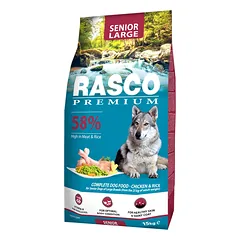
Rasco
2,67 €/kg
39,99 € / 15 kg
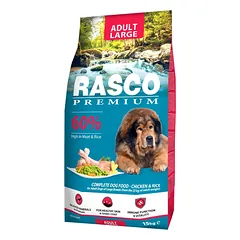
Rasco
2,67 €/kg
39,99 € / 15 kg
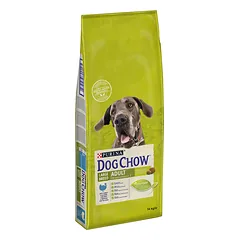
Purina
2,71 €/kg
37,96 € / 14 kg

Sam's Field
2,77 €/kg
35,99 € / 13 kg
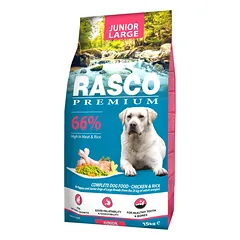
Rasco
2,80 €/kg
41,99 € / 15 kg
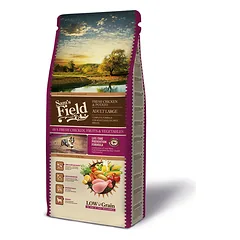
Sam's Field
2,85 €/kg
37,04 € / 13 kg