

VetExpert
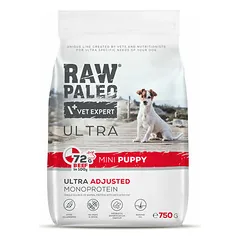
Raw Paleo Dog Ultra Mini Puppy Beef 750 kg
0,02 €/kg
13,09 € / 750 kg

The Miniature Schnauzer was created in Germany by breeding down the Standard with crosses to the Affenpinscher and Poodle, aiming for a smaller dog that kept the same sharp instinct for hunting rats around a farm. A male weighs barely 9 kilograms, yet the wiry, dense coat with its trademark eyebrows and beard gives it an almost dignified look. Despite its small size, the breed kept a strong watchdog streak and a loud bark, so it tends to sound off at every noise by the door. The coat does not shed in the usual sense but mats without periodic clipping or hand-stripping. It ranks among the world's most popular small breeds largely because of that combination: tiny body, big personality. Life expectancy runs 12 to 14 years.
Browse dog food sized right for this breed
Miniature Schnauzer: how old in human years?
Energy level
Trainability
Family friendly
Grooming need
Males 30–35 cm
Females 30–35 cm
Males 6–9 kg
Females 6–9 kg
Miniature Schnauzer's average temperament and family-life score for this breed is high.
Miniature Schnauzer's energy and exercise needs are moderate.
Miniature Schnauzer's guarding and alertness traits are moderate.
Miniature Schnauzer's grooming needs are low.
The courier has barely turned into your stairwell and the Schnauzer already knows, and is telling the whole building. This small German dog has the heart of a much bigger guard: it hears every sound outside the door and is happy to comment on it, so the first word worth teaching is "enough". There is no malice in it, just a dog that feels personally responsible for your doorstep.
It is very bright: it quickly works out what you want, and just as quickly works out how to get round a rule you apply inconsistently. Short, varied sessions with praise and a tasty reward suit it far better than endless repetition. A couple of good walks and some play each day are plenty, and sniffing games or a new trick tire the brain as well as the legs. Flat life is no problem, as long as the energy has somewhere to go.
In the family a Schnauzer is a full member: it follows you from room to room, lies at your feet while you work and happily joins in with the children's games. It sizes up strangers before warming to them, and gets on with other dogs if it has been well socialised. A little of the old farm ratter is still in there, so a squirrel in the park can rewrite the walk in a second, and the lead is worth keeping on.
A Schnauzer barely sheds, which is great news for your carpets and no holiday for you. The harsh, wiry topcoat and dense undercoat don't renew themselves, so every few weeks the coat needs either hand-stripping, where the dead hair is plucked out, or clipping. Stripping keeps the crisp texture and rich colour; clipping is quicker but leaves the coat softer. Between sessions, comb out the legs and beard a few times a week, since that is where mats love to form. The beard is a story of its own: after every drink it becomes a wet mop that carries water across the kitchen, and after dinner it keeps a few souvenirs. Wipe it, check the skin underneath for redness or a funny smell, and look over the rest of the skin as you comb, especially after a clip.
The eyebrows are the breed's pride, but if they start falling into the eyes, trim them back so your dog sees the world rather than its own fringe. Wipe the corners of the eyes with a soft damp cloth. Hair grows inside the ear canal and traps moisture and dirt, so take a look inside once a week: the ear should be pale and odour-free. Redness, dark discharge or a dog that keeps shaking its head means the ear is a job for the vet, not for you and a cotton bud.
Behind those bushy eyebrows is a sturdy little dog that, with decent care, can keep you company for twelve to fourteen years. Its weak spots tend to hide where you can't see them, in the blood, the pancreas and the liver, which makes regular check-ups and the occasional blood test especially worthwhile for a Schnauzer. Nothing to lose sleep over, just good to know where to look.
This is general information, not veterinary advice. For your own dog's health, tests and treatment, see a vet.
A cataract is a clouding of the lens inside the eye: what should be clear turns milky, and the world goes foggy. You might see a white or bluish sheen in the pupil, or notice your dog hesitating before jumping off the sofa or losing track of a thrown toy. Those famous eyebrows hide a lot, so lift them now and then for a proper look, and leave it to a vet to say what the cloudiness is.
Hyperlipidaemia means there is too much fat in the blood, as cholesterol, triglycerides or both. On the outside it may show nothing at all; it turns up in a blood test, where the sample can look cloudy, as if someone had stirred milk into it. It is a known tendency in Miniature Schnauzers and is linked with pancreatitis, so it is worth asking your vet about blood work even while your dog seems perfectly well.
Pancreatitis is inflammation of the pancreas, the gland that helps digest food. A dog with it may vomit, refuse food, go flat and quiet, or hold the 'praying' pose, front end down on the floor and rear end in the air, which is a dog's way of saying the belly hurts. With the breed's tendency to high blood fats it is a known risk for Schnauzers, and those signs call for a vet soon, not a wait-and-see until tomorrow.
A liver shunt is a blood vessel that lets blood from the gut bypass the liver, so it never gets properly cleaned and substances that affect the brain build up. Suspicion may start with a puppy that stays smaller than its littermates, or with odd behaviour after meals: wobbling, staring at a wall, seeming lost. It is a known inborn problem in Miniature Schnauzers, so signs like these in a young dog are worth getting to a vet promptly.
This infection is caused by bacteria that live in soil and water; a healthy dog's immune system shrugs them off, but some Miniature Schnauzers inherit an immune weakness that lets them take hold. It creeps in slowly: weight loss, a fading appetite, less spark, sometimes swollen lymph nodes under the jaw or behind the knees. Those signs are vague, which is exactly why a Schnauzer that has been off-colour for weeks without a clear reason deserves a thorough look from a vet.
This list is chosen by the breed's weight (9 kg) rather than the breed itself: shops label food by dog size, so every breed of the same size gets the same list. Prices are updated daily.
≈ 135 g of dry food a day, from €7,33 a month For a neutered, normally active 7,5 kg dog. Calculate for your dog
VetExpert
0,02 €/kg
13,09 € / 750 kg
1,70 €/kg
17,02 € / 10 kg
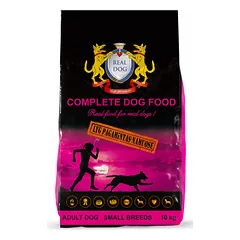
Real Dog
1,78 €/kg
17,79 € / 10 kg
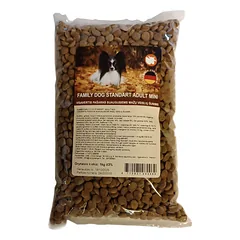
Family Dog
1,89 €/kg
1,89 € / 1 kg
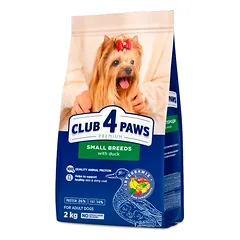
Club 4 Paws
1,93 €/kg
26,99 € / 14 kg
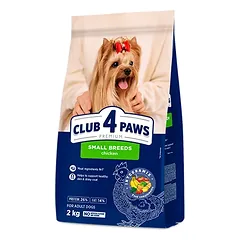
Club 4 Paws
1,93 €/kg
26,99 € / 14 kg
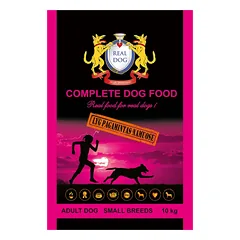
Real Dog
1,94 €/kg
19,42 € / 10 kg
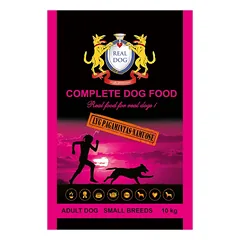
Real Dog
1,95 €/kg
19,49 € / 10 kg