

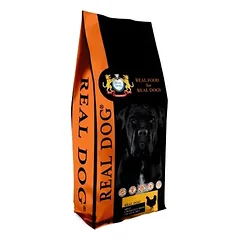
Real Dog
Real Dog sausas maistas suaugusiems, didelių-milžiniškų veislių, šunims su vištiena ir ryžiais 20kg
2,11 €/kg
42,15 € / 20 kg

Also known as: Corso, Italian Corso, Italian Mastiff, Italian Molosso, Sicilian Branchiero
The Cane Corso comes from Italy and is considered a direct descendant of ancient Roman war dogs, with the name itself thought to derive from the Latin cohors, meaning guard or protector. A male can weigh up to 50 kilograms on a muscular frame, and the short, dense coat needs little grooming despite heavy seasonal shedding a few times a year. In rural Italy the breed historically guarded farmsteads and hunted large game such as boar. It nearly disappeared by the mid 20th century and was rebuilt only through the efforts of dedicated breeders in the 1970s and 80s. It needs early, consistent socialization, since its size and guarding instinct without proper training can pose a real risk. It stays close and protective toward its own family. Life expectancy runs 9 to 12 years.
Browse dog food sized right for this breed
Cane Corso: how old in human years?
Energy level
Trainability
Family friendly
Grooming need
Males 64–68 cm
Females 60–64 cm
Males 45–50 kg
Females 40–45 kg
Cane Corso's average temperament and family-life score for this breed is moderate.
Cane Corso's energy and exercise needs are moderate.
Cane Corso's guarding and alertness traits are high.
Cane Corso's grooming needs are low.
The doorbell rings, and without a single bark the Cane Corso stands up and places itself between the visitor and you. This is a dog that guards quietly: it barks little, misses nothing, and its watchfulness is not an act. It spent a long working life guarding Italian farms, and that job still strikes it as obvious.
Which is why it needs an owner who is calm, consistent and clear from day one. A Corso is clever and keen to learn, but when a dog weighs nearly as much as a small adult, "heel" has to work without negotiation, and early socialisation, meeting people, noises and other dogs, is a necessity rather than a bonus. It tends to be short-tempered with unfamiliar dogs, and a running cat can switch on a strong urge to chase.
Every day it needs proper exercise: long walks, games and jobs for the brain, and it is happiest in a house with a garden rather than a cramped flat. With its own family it is devoted and gentle, though around small children it is worth staying alert purely because of its size and strength. The stern-guardian reputation is half true: it really is reserved with strangers, but the dog lying on the rug at your feet in the evening is a different animal entirely.
The Corso's short, dense coat asks for very little: a weekly once-over with a rubber brush or grooming mitt keeps it gleaming, stepped up to a few times a week while the dog is shedding. That brushing doubles as a skin check, so look over the muzzle, the area around the eyes and the legs for bald spots or redness. Glance at the eyes and ears in the same session: eyes clear with the lids sitting snugly, ears pale inside and free of any unpleasant smell.
Nails and teeth matter more here than the coat. A heavy dog with overgrown nails walks as if in badly fitting shoes, so keep them short; if you can hear them clicking on the floor, it is time. Start the habit while the paw still fits in your palm, because persuading a grown Corso that has decided nail trims are not for it is a different project altogether. Brush the teeth with a dog toothbrush and dog toothpaste, daily if you can, and if you see tartar or notice bad breath, let a vet have a look.
Forty or fifty kilos of muscle need a solid foundation, and the Cane Corso's health worries come largely from the same things that make it so impressive: a heavy frame, a deep chest and a massive head. You can expect nine to twelve years together, and knowing where the weak spots are lets you catch a lot early and, with your vet, make those years good ones.
This is general information, not veterinary advice. For your own dog's health, tests and treatment, see a vet.
Obesity is more than a few extra kilos: it is excess fat that loads the joints, the heart and the breathing. Under a Corso's short, tight coat you should be able to feel the ribs easily with a flat hand and see a waist from above; if those have disappeared, it's time for a chat with your vet. In a dog this big, whose joints already carry plenty, every unnecessary kilo counts double.
Hip and elbow dysplasia means the joints don't develop into a snug fit, so they grind and wear over time. You might see a young Corso limping on a front leg after play, getting up stiffly after a nap, or running with both back legs pushing together. A heavy, fast-growing puppy is best spared hard jumping and long forced runs while the joints are forming, and a vet is the one to judge whether they are sound.
Idiopathic epilepsy means repeated seizures for which tests find no underlying cause. A seizure may look like a sudden collapse onto the side with paddling legs, drooling and a dog that simply isn't there, or just a strange freeze or twitching in one part of the body. Watching a dog this size have its first one is genuinely frightening, so know in advance: call your vet, and if you can, film it, because a video helps them a great deal.
Demodectic mange is caused by microscopic mites that live in the hair follicles; healthy dogs carry them too, but when the immune system doesn't keep them in check they multiply and the skin suffers. The first thing you notice is small bald patches around the eyes, on the muzzle or on the front legs, sometimes with flaky or reddened skin. A Corso's short coat hides patches like that poorly, and a vet confirms the cause by examining a skin scraping.
These are faults in the shape of the eyelids: a lid can roll inwards, so the lashes rub the surface of the eye, or droop outwards and leave the eye exposed. Squinting, watery eyes, redness or a dog rubbing its face along the carpet should raise the question. Eyelid faults are a known concern in heavy mastiff-type heads, so look at your Corso's eyes every week and let a vet judge what you see.
Bloat is when the stomach fills with gas and may twist on itself, cutting off its own blood supply; it can kill a dog within hours. The dog paces restlessly, tries to vomit but brings nothing up, drools, and the belly looks swollen and tight. A deep-chested giant like the Corso is exactly the build at risk, so if you see these signs, get to a vet immediately, even in the middle of the night.
This list is chosen by the breed's weight (50 kg) rather than the breed itself: shops label food by dog size, so every breed of the same size gets the same list. Prices are updated daily.
≈ 515 g of dry food a day, from €28,19 a month For a neutered, normally active 45 kg dog. Calculate for your dog
Real Dog
2,11 €/kg
42,15 € / 20 kg

Sam's Field
2,56 €/kg
33,26 € / 13 kg
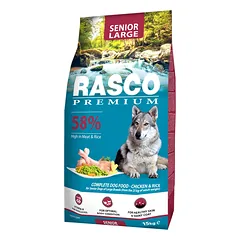
Rasco
2,67 €/kg
39,99 € / 15 kg
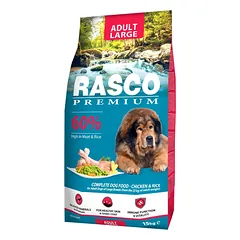
Rasco
2,67 €/kg
39,99 € / 15 kg
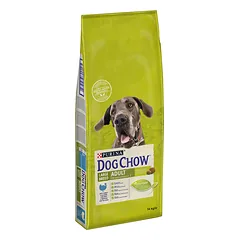
Purina
2,71 €/kg
37,96 € / 14 kg

Sam's Field
2,77 €/kg
35,99 € / 13 kg
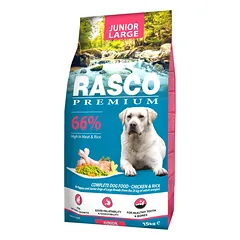
Rasco
2,80 €/kg
41,99 € / 15 kg
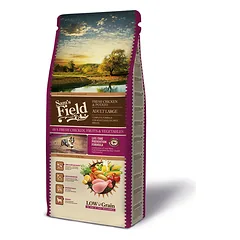
Sam's Field
2,85 €/kg
37,04 € / 13 kg