

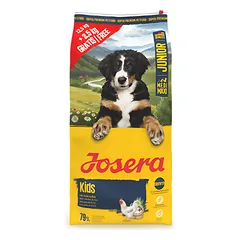
Josera
Josera Kids 12,5kg + 2,5kg = 15 kg
1,38 €/kg
37,89 € / 27,5 kg

Also known as: Bokseris, German Boxer, Deutscher Boxer
The Boxer originated in Germany in the late nineteenth century, descended from the old Bullenbeisser, a dog once used to hunt wild boar and hold it at bay until the hunter arrived. That history explains the breed's powerful, broad jaw and its instinct to grip and hold onto things in its mouth. The short, smooth coat needs minimal grooming but offers little protection against cold or sunburn on light-skinned dogs. An adult male can reach 32 kilograms of solid muscle, built for power in short, explosive bursts rather than long-distance running. The breed keeps a playful, puppyish streak well into adulthood, which often surprises new owners. Its short muzzle brings heat sensitivity and some risk around airway health. The guarding instinct remains strong even though most Boxers today live as family dogs. Life expectancy runs 10 to 12 years.
Browse dog food sized right for this breed
Boxer: how old in human years?
Energy level
Trainability
Family friendly
Grooming need
Males 57–63 cm
Females 53–59 cm
Males 30–32 kg
Females 25–27 kg
Boxer's average temperament and family-life score for this breed is high.
Boxer's energy and exercise needs are moderate.
Boxer's guarding and alertness traits are moderate.
Boxer's grooming needs are low.
You unlock the door and what is waiting on the other side is less a dog than a whole bouncing, wriggling, tail-thrashing celebration. Boxers meet life with bottomless enthusiasm: they need plenty of exercise, play and company, and they have so much energy that puppyhood seems to run on for quite a while. They are clever and keen to learn, but short, cheerful sessions with lots of praise work best; endless repetition bores them quickly, and a bored Boxer invents its own game.
In a family a Boxer is a full member: affectionate, gentle, wonderful with children and happiest at the centre of everything. It is also alert and will stand up for its people when it matters, without barking for the sake of it. It is not always instant friends with strange dogs, so early socialisation pays off. And be ready for a little drool on your trousers; it comes with the package.
A typical day is a long, active walk or run in the morning, games in the garden, another proper outing in the evening, and in between a nap as close to you as possible. A flat is a tight fit; a garden and a family that likes to move suit it far better. Left alone for long, it gets bored, and a bored Boxer is a different story altogether.
The Boxer's short, smooth, glossy coat is about as easy as dog coats get: a weekly once-over with a rubber brush or grooming mitt and it shines. That weekly ritual has a second purpose, though, as a skin check. While you work along the flanks, chest, belly and neck, feel for new lumps, red patches or scabs; on a coat this short they are easy to find, as long as you are looking.
Give the eyes a quick look: clean and calm, no constant tears, and the corners wiped with a soft damp cloth when needed. The little folds on the muzzle collect moisture and drool, so wipe them and pat them dry. Check and sniff the ears once a week; inside they should be clean and odour-free. Remember, too, that a short coat keeps out little cold in winter and little sun in summer, and a short muzzle cools less well in the heat, so a coat on bitter days and shade and a gentler pace on hot ones go a long way.
A Boxer lives around ten to twelve years and spends a good part of them acting as though the world was built for its games. In this breed's health story the heart and the skin take centre stage, so it pays to know what early signs look like and to keep up with regular check-ups. That is a reason to watch, not to worry: whatever you notice, talk it through with your vet.
This is general information, not veterinary advice. For your own dog's health, tests and treatment, see a vet.
Cancer is the umbrella term for diseases in which the body's cells start multiplying out of control; they can affect the skin, internal organs or blood cells. Stroking your Boxer, you may find a new lump in or under the skin, or notice less tangible changes such as weight loss, lethargy or a fading appetite. A Boxer's short coat hides nothing, so make a monthly habit of running your hands over the whole dog, and show any new lump to your vet, who is the only one who can say what it is.
This is a disease of the heart muscle in which the heart stretches, its walls thin and it can no longer pump strongly. You might notice your dog tiring sooner, coughing, breathing faster at rest than it used to, or giving up on games earlier than usual. In a breed that normally plays until it drops, a sudden loss of stamina is a real signal and worth raising with your vet without delay.
This heart disease is sometimes simply called Boxer arrhythmia: the heart muscle gradually changes and the heart starts beating out of rhythm. It can stay silent for a long time, and the first sign may be a sudden weak spell or a brief faint during play or excitement. Because it is tied to Boxers in particular, ask your vet about heart-rhythm screening even when your dog seems perfectly well.
The stomach fills with gas and can twist on itself, pinching off its blood vessels; it is life-threatening and moves very fast. The dog becomes restless, retches without bringing anything up, drools, and the belly swells and turns hard. Boxers are deep-chested dogs, so learn these signs by heart: if you see them, get your dog to a vet immediately, because minutes count.
The thyroid gland makes too little hormone, so the body drops into a lower gear. A dog may gain weight without eating more, grow sluggish, seek out warm spots, and its short coat may thin or lose its gleam. A Boxer without its usual zest looks like a different dog, which makes the change easy to spot; working out the cause is your vet's job.
The cruciate ligament holds the knee steady; when it weakens or tears, the knee becomes wobbly and sore. Your dog may suddenly go lame on a hind leg after a jump or a sharp stop, sit with one leg poking out to the side, or keep weight off it when getting up. Boxers play with leaps, spins and emergency stops, which asks a lot of those ligaments, so a limp that hasn't eased within a day deserves a vet visit.
This list is chosen by the breed's weight (32 kg) rather than the breed itself: shops label food by dog size, so every breed of the same size gets the same list. Prices are updated daily.
≈ 365 g of dry food a day, from €19,95 a month For a neutered, normally active 28,5 kg dog. Calculate for your dog
Josera
1,38 €/kg
37,89 € / 27,5 kg
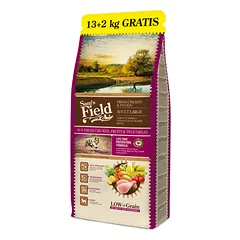
Sam's Field
1,80 €/kg
26,99 € / 15 kg

Country Dog
1,89 €/kg
28,29 € / 15 kg

Club 4 Paws
1,92 €/kg
26,94 € / 14 kg
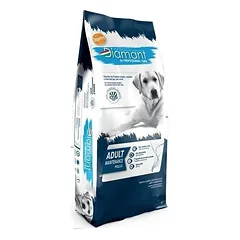
Diamant
1,93 €/kg
28,99 € / 15 kg
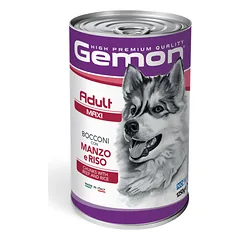
Gemon
1,94 €/kg
2,42 € / 1,3 kg

BIO FORM
2,00 €/kg
40,00 € / 20 kg

BIO FORM
2,00 €/kg
40,00 € / 20 kg