


Dobermann vs St. Bernard
Compare two breeds
Pick two breeds to see them compared side by side.
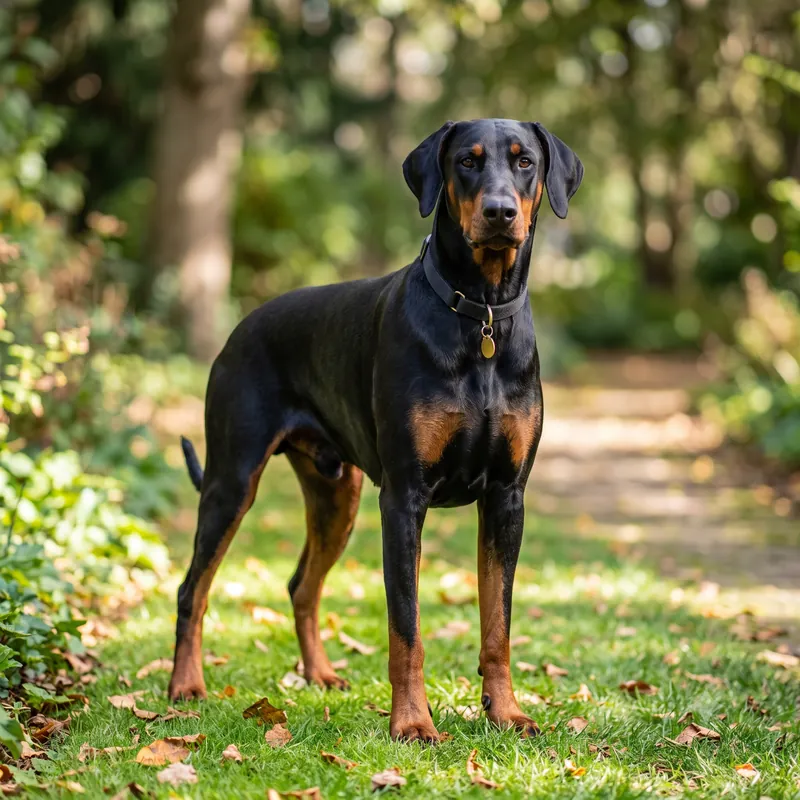
Dobermann
The Dobermann was created in late nineteenth century Germany by a tax collector named Karl Friedrich Louis Dobermann, who wanted a dog that could protect him while he carried cash through dangerous neighbourhoods on his rounds. That origin explains why the breed was built from the outset as a protection dog rather than a herder or hunter. The smooth, short coat needs almost no grooming but offers little insulation, so the dog needs a coat of its own in winter. An adult male can reach 45 kilograms of lean, athletic muscle, built for speed and power at once. Intelligence and trainability rank among the highest of any breed, which is why early, consistent training matters from the first months. Contrary to its tough reputation, a well-socialised Dobermann is often gentle and deeply attached to its family. Hip dysplasia and heart conditions like cardiomyopathy are important health considerations when choosing a breeder. Life expectancy runs 10 to 12 years.
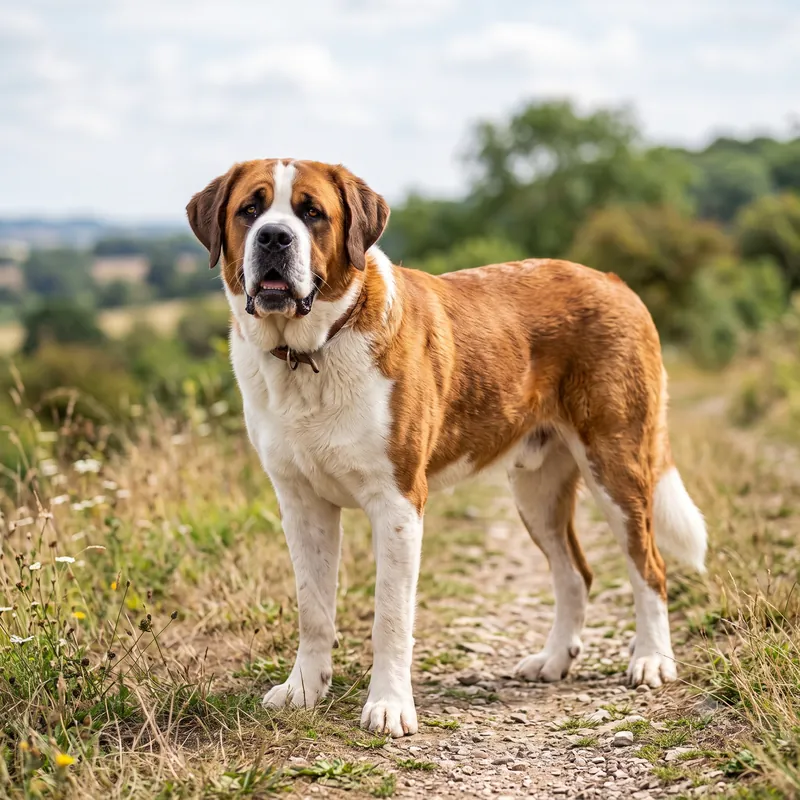
St. Bernard
At a monastery pass in the Swiss Alps, founded in the 11th century by Saint Bernard of Menthon, monks used this breed to search for travelers lost in avalanches and blizzards. The legendary dog Barry is credited with saving over forty people during his working life. A modern male can weigh up to 82 kilograms, ranking it among the heaviest breeds on the FCI list. The coat comes in short or long variants, both dense and cold resistant. Despite the massive size, the breed is known for a calm, patient temperament, particularly around children. Drooling and heavy shedding are simply part of owning a dog this size. Life expectancy runs 8 to 10 years, short given the weight it carries.
At a glance
| Dobermann | St. Bernard | |
|---|---|---|
| Height (male) | 68.0–72.0 cm | 70.0–90.0 cm |
| Weight (male) | 40.0–45.0 kg | 64.0–82.0 kg |
| Life expectancy | 10–12 yrs | 8–10 yrs |
| Coat | smooth, short, dense | short-haired or long-haired, dense |
Temperament & Family Life
| Dobermann | St. Bernard | |
|---|---|---|
| Family friendly | ||
| Good with children | ||
| Good with other dogs | ||
| Friendly with strangers | ||
| Intelligence | ||
| Trainability |
Exercise, Energy & Space
| Dobermann | St. Bernard | |
|---|---|---|
| Energy level | ||
| Exercise need | ||
| Apartment friendly | ||
| Prey drive | ||
| Hunting instinct |
Guarding & Alertness
| Dobermann | St. Bernard | |
|---|---|---|
| Guarding instinct | ||
| Watchfulness | ||
| Barking level |
Grooming & Care
| Dobermann | St. Bernard | |
|---|---|---|
| Shedding | ||
| Drooling | ||
| Grooming need |
Temperament and care scores (1-5) are a general guide based on the breed standard — every individual dog is different.