

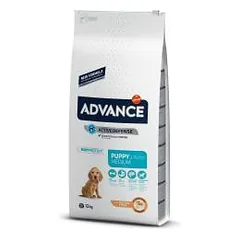
Advance
Advance Puppy Medium sausas maistas vidutinių veislių šuniukams, 12 kg
1,48 €/kg
17,76 € / 12 kg

Also known as: ACD, Heeler, Queensland Heeler, AuCaDo, Cattle dogs
The Australian Cattle Dog was developed in the 19th century to drive cattle across vast, hot Australian terrain, crossing dingoes with Scottish herding breeds and other working stock. The dingo blood explains not just its heat tolerance but a distinctive working style, the dog controls a herd by nipping at heels rather than barking or body-blocking. The short, dense double coat reflects heat and shrugs off dust, so upkeep stays simple. A male weighs up to 22 kilograms, compact but remarkably tireless, able to work a full day. This is a breed that demands serious physical and mental outlet, and without one it often invents its own job, sometimes nipping at the heels of running children. Life expectancy runs 12 to 15 years.
Browse dog food sized right for this breed
Australian Cattle Dog: how old in human years?
Energy level
Trainability
Family friendly
Grooming need
Males 46–51 cm
Females 43–48 cm
Males 15–22 kg
Females 15–22 kg
Australian Cattle Dog's average temperament and family-life score for this breed is moderate.
Australian Cattle Dog's energy and exercise needs are moderate.
Australian Cattle Dog's guarding and alertness traits are high.
Australian Cattle Dog's grooming needs are low.
For an Australian Cattle Dog, a walk round the block is a warm-up. The breed was made to drive cattle across enormous Australian distances, and its head and legs still demand work: long runs, hikes, herding, agility or problems to solve. Without a job it will invent one, and you are unlikely to approve of its choice.
It learns at lightning speed and likes having a purpose, so short, varied training sessions every day matter to it as much as the running does. The herding instinct can show as a wish to round up anything that moves, children, cyclists or the cat, sometimes with a nip at the heels, so channel that habit into play early. With small, noisy children it can be too strict a shepherd, and it gets on with other dogs if it has been well socialised.
It is devoted to its family, likes to be close and will quite possibly pick one person to follow like a shadow. With strangers it is reserved, announces every arrival straight away and takes guarding its yard seriously. A flat is too small for it: it is happiest in a house with a yard and an owner who loves to move as well.
A cattle dog's short, dense coat was made for Australian dust and rain: harsh outer hairs shed water, and underneath sits a short, thick undercoat. A once-a-week going-over with a rubber brush or grooming mitt is plenty, and when the undercoat changes a couple of times a year, brush several times a week and pull out whatever comes loose. There's no need for regular baths, unless it has found something it considers a big improvement on its own smell; check the skin as you brush, especially after a day in fields or scrub.
Look into the upright ears once a week: clean, pink and odour-free is what you want, and after a run through long grass check that no grass seed has lodged inside. Check the eyes in daylight; they should be clear, with no redness or discharge. An active dog wears its nails down partly by itself, but check them every few weeks anyway, and brush the teeth with a dog toothbrush several times a week.
How to do it:
By age:
Australian Cattle Dog puppies are born almost white and only later grow into their blue or red speckled coats, a small marvel that reminds you genes decide more than coat pattern. This hardy working dog lives twelve to fifteen years, and the three things below show where to look more closely: eyes, ears and joints. If you notice a change, see a vet, who will judge what is going on.
This is general information, not veterinary advice. For your own dog's health, tests and treatment, see a vet.
This covers a range of eye troubles, diseases of the retina, the lens or other parts of the eye that can slowly weaken sight. You might notice cloudiness, redness or watering, or see your dog hesitating at stairs at dusk or missing a thrown toy. A cattle dog works with its eyes, tracking every movement in the herd or on the training field, so changes in sight are worth showing a vet, and if you are getting a puppy, ask the breeder about the parents' health testing.
Deafness can be present from birth and affect one ear or both, and the puppy knows nothing of it; it simply lives in a quieter world. You might notice a pup that doesn't wake when you walk in, ignores its name from the next room, or struggles to work out where a sound is coming from. A deaf cattle dog can learn hand signals very well, a vet can help find out whether a puppy hears, and if you are getting one, ask the breeder about the parents' health testing.
This covers trouble with bones and joints, from faults in how the hips or elbows develop to joint wear and ligament injuries. You might notice limping after a busy day, a stiff gait in the morning or reluctance to jump into the car. A cattle dog is a stubborn worker and may keep going even when something is wrong, so show any change in gait to a vet instead of waiting for it to complain.
This list is chosen by the breed's weight (22 kg) rather than the breed itself: shops label food by dog size, so every breed of the same size gets the same list. Prices are updated daily.
≈ 265 g of dry food a day, from €14,42 a month For a neutered, normally active 18,5 kg dog. Calculate for your dog
Advance
1,48 €/kg
17,76 € / 12 kg
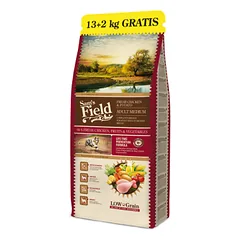
Sam's Field
1,80 €/kg
26,99 € / 15 kg

Country Dog
1,89 €/kg
28,29 € / 15 kg
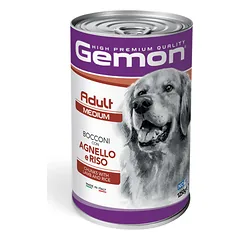
Gemon
1,94 €/kg
2,42 € / 1,3 kg
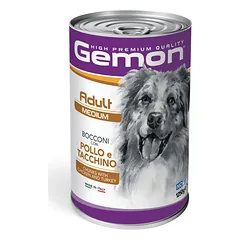
Gemon
1,94 €/kg
2,42 € / 1,3 kg
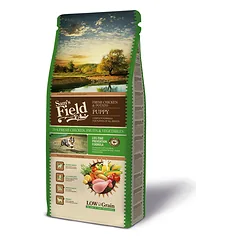
Sam's Field
2,11 €/kg
27,45 € / 13 kg
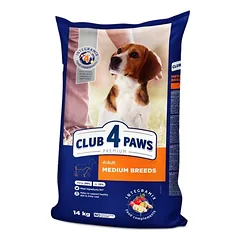
2,14 €/kg
30,00 € / 14 kg
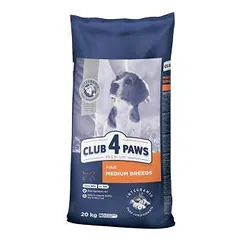
Club 4 Paws
2,15 €/kg
42,99 € / 20 kg