

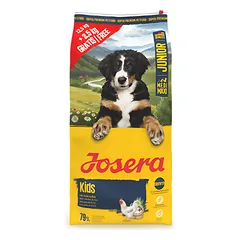
Josera
Josera Kids 12,5kg + 2,5kg = 15 kg
1,38 €/kg
37,89 € / 27,5 kg

Also known as: Rough dog, Scotch Collie, Tri-color collie
The Rough Collie originated in the Scottish Highlands, herding sheep through harsh mountain weather, until Queen Victoria spotted the breed at Balmoral Castle in the late nineteenth century and made it fashionable across England. Popularity surged again in the mid twentieth century thanks to the film and television character Lassie, so many people know this breed from the screen rather than the pasture. The long, dense double coat with its full mane and frill protected against Scotland's cold and damp, but it needs thorough brushing several times a week. An adult male can reach 29 kilograms, lean and graceful, built to cover ground quickly and for long stretches across open pasture. Temperament is gentle and highly attuned to its owner's mood, often conflict-averse. A genetic eye condition known as Collie Eye Anomaly occurs in the breed, so eye testing matters when choosing a puppy. It tends to be remarkably patient and gentle with children. Life expectancy runs 12 to 14 years.
Browse dog food sized right for this breed
Collie (Rough): how old in human years?
Energy level
Trainability
Family friendly
Grooming need
Males 56–61 cm
Females 51–56 cm
Males 20–29 kg
Females 18–25 kg
Collie (Rough)'s average temperament and family-life score for this breed is high.
Collie (Rough)'s energy and exercise needs are low.
Collie (Rough)'s guarding and alertness traits are moderate.
Collie (Rough)'s grooming needs are moderate.
The doorbell rings and the Collie is already in the hall: no lunging, no growling, just a clear announcement that someone is here, followed by a patient wait while you decide whether they're a friend. The breed comes from Scottish herding dogs, and that watchful, slightly reserved look at strangers has survived, though there isn't an ounce of guard-dog aggression in it.
Collies learn fast and gladly, and respond best to a calm voice and praise; a harsh tone simply hurts a sensitive dog's feelings. Their energy needs are moderate: a morning walk, a longer one in the evening and a little work for the brain, such as obedience practice, scent games or a new trick, and by nightfall yours will be content at your feet. A Collie likes to voice its opinions, so in a flat without enough to do the barking can become a topic among the neighbours; a house with a garden suits it better.
Family life is where this dog shines: gentle with children, easy with other dogs and keen to be wherever things are happening. Now and then it may try to "herd" running children by circling them, a shepherd's inheritance best redirected into a game. Long hours alone are not its thing, so it does best in a home where someone is around nearly all the time.
A Rough Collie wears two coats: a long, slightly harsh outer layer and a dense, soft undercoat that comes out in whole tufts during the moult. Once or twice a week, brush right down to the skin rather than just over the top, paying attention to the spots behind the ears, the armpits and the "trousers" on the back legs, where mats form first. When the coat is blowing you will have a brush in your hand every day and the vacuum cleaner out more than you'd like. As you work, part the hair and look at the skin for redness, flakes or bald patches.
The narrow muzzle and almond eyes need little: wipe the corners with a soft damp cloth when needed and keep an eye out for cloudiness or squinting. The semi-erect ears get plenty of air, but the fine, silky hair on and behind them tangles faster than anything else, so comb it weekly and glance inside to check it is clean and doesn't smell. Trim the nails once you can hear them clicking on the floor.
Rough Collies live twelve to fourteen years, and their health questions mostly concern the eyes, the skin and one inherited genetic quirk your vet should know about in advance. Some of these can be looked into before a puppy ever comes home, so ask the breeder about the parents' health testing. The rest is a watchful eye day to day and regular vet check-ups.
This is general information, not veterinary advice. For your own dog's health, tests and treatment, see a vet.
This is an inherited fault in how the back of the eye develops, where the tissues there, especially the layer called the choroid, don't form quite as they should. In mild cases an owner notices nothing at all; in more severe ones the dog may see less well, particularly at dusk or somewhere unfamiliar. The condition is named after the breed; a genetic test exists, and a vet can examine a puppy's eyes young, so ask the breeder about the parents' testing.
Some Collies inherit a change in the MDR1 gene that makes certain medicines affect them much more strongly than they affect other dogs. You can't tell an affected dog by looking at it, so your vet should know about it before any medicine is used. A genetic test exists that shows whether your Collie carries the change.
PRA is an inherited disease in which the cells of the retina slowly die off and sight fades. The first thing you may notice is your Collie hesitating on the stairs in the evening, or bumping into a chair you have just moved. A dog that follows your every move as closely as this one gradually leans more on its ears and nose; ask the breeder about the parents' health testing.
Dermatomyositis is an inherited inflammatory disease of the skin, and sometimes the muscles. In young dogs it can show up as scaly, hairless patches on the face, around the eyes, on the ear tips, the end of the tail or the feet. Under all that Collie coat such patches are easy to miss, so check the face and ear edges as you brush and show any changes to your vet.
This list is chosen by the breed's weight (29 kg) rather than the breed itself: shops label food by dog size, so every breed of the same size gets the same list. Prices are updated daily.
≈ 310 g of dry food a day, from €16,98 a month For a neutered, normally active 23 kg dog. Calculate for your dog
Josera
1,38 €/kg
37,89 € / 27,5 kg
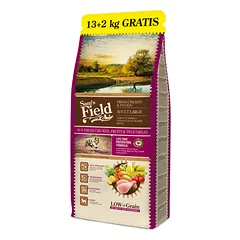
Sam's Field
1,80 €/kg
26,99 € / 15 kg

Country Dog
1,89 €/kg
28,29 € / 15 kg
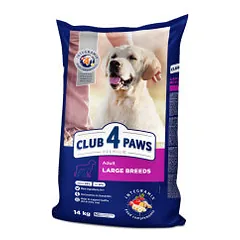
Club 4 Paws
1,92 €/kg
26,94 € / 14 kg
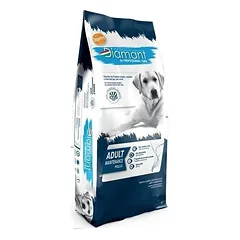
Diamant
1,93 €/kg
28,99 € / 15 kg
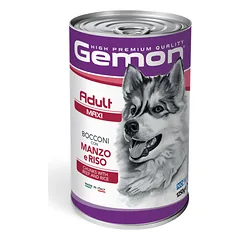
Gemon
1,94 €/kg
2,42 € / 1,3 kg

BIO FORM
2,00 €/kg
40,00 € / 20 kg

BIO FORM
2,00 €/kg
40,00 € / 20 kg