

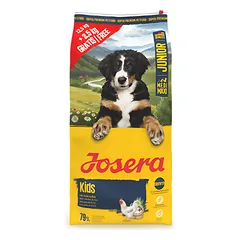
Josera
Josera Kids 12,5kg + 2,5kg = 15 kg
1,38 €/kg
37,89 € / 27,5 kg

Also known as: Swiss Shepherd
The White Swiss Shepherd descends from white German Shepherds that were sidelined by breed standards for decades in the 20th century as an undesirable color, until Switzerland eventually recognized it as its own breed. A male can weigh up to 40 kilograms on an athletic frame, and the medium to long double coat sheds heavily and needs brushing at least once a week. Beyond the color, the breed differs from the classic German Shepherd in a softer, more overtly friendly temperament, which has made it more popular as a family dog than a guard dog. It still needs plenty of physical and mental exercise, since the working heritage of its ancestors hasn't gone anywhere. It tends to be gentle and patient with children. Life expectancy runs 12 to 14 years.
Browse dog food sized right for this breed
White Swiss Shepherd Dog: how old in human years?
Energy level
Trainability
Family friendly
Grooming need
Males 58–66 cm
Females 53–61 cm
Males 30–40 kg
Females 25–35 kg
White Swiss Shepherd Dog's average temperament and family-life score for this breed is high.
White Swiss Shepherd Dog's energy and exercise needs are moderate.
White Swiss Shepherd Dog's guarding and alertness traits are moderate.
White Swiss Shepherd Dog's grooming needs are moderate.
You can teach a White Swiss Shepherd a new trick in less time than it takes to finish a cup of coffee, and that is both its charm and its challenge. A clever, quick, work-ready dog left with nothing to do will find a job of its own, and its ideas rarely match your plans.
It needs real exercise every day: long walks, running, search games, and better still a sport that works both head and legs, such as obedience or tracking. This is a big dog, up to forty kilos, so a small flat feels cramped; a house with a garden and an active family suit it far better.
With its family it is gentle and devoted, patient with children, and it watches strangers from a distance first. It will announce every approaching person out loud but won't become a fierce guard; its alertness is more attentive host than bouncer at the door. It gets along with other dogs if it has met plenty of them from puppyhood, so set time aside for socialising your puppy.
The White Swiss Shepherd Dog wears a medium to long double coat: a dense undercoat below, a layer of outer hair on top. It sheds generously, and when the undercoat changes, white tufts will roll across your floors like tumbleweed in a western. Brush it at least a couple of times a week and every day while it is shedding; a long-toothed comb reaches the undercoat that a brush gliding over the surface misses.
A white coat shows mud without a shred of shame, but there's no need to fear it: once dry, most of the dirt brushes out, so baths come round less often than you might expect. While you groom, check the skin too, especially behind the ears, in the armpits and on the thighs, where the undercoat mats most easily, and show any redness or lump you find there to a vet.
We don't have reliable health information specific to this breed, so we don't list conditions here. Keep up regular vet check-ups, and if you are getting a puppy, ask the breeder about the parents' health testing.
This is general information, not veterinary advice. For your own dog's health, tests and treatment, see a vet.
This list is chosen by the breed's weight (40 kg) rather than the breed itself: shops label food by dog size, so every breed of the same size gets the same list. Prices are updated daily.
≈ 400 g of dry food a day, from €22,02 a month For a neutered, normally active 32,5 kg dog. Calculate for your dog
Josera
1,38 €/kg
37,89 € / 27,5 kg
Sam's Field
1,80 €/kg
26,99 € / 15 kg

Country Dog
1,89 €/kg
28,29 € / 15 kg
Club 4 Paws
1,92 €/kg
26,94 € / 14 kg
Diamant
1,93 €/kg
28,99 € / 15 kg
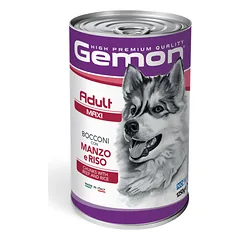
Gemon
1,94 €/kg
2,42 € / 1,3 kg

BIO FORM
2,00 €/kg
40,00 € / 20 kg

BIO FORM
2,00 €/kg
40,00 € / 20 kg