

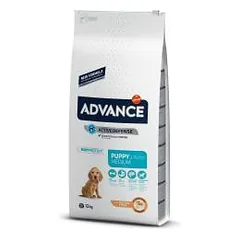
Advance
Advance Puppy Medium sausas maistas vidutinių veislių šuniukams, 12 kg
1,48 €/kg
17,76 € / 12 kg

Also known as: Corgi, Corgwn, Corgïaid, Welsh corgi
This breed is believed to have arrived in Wales over a thousand years ago with Celtic tribes, making it older than its relative the Pembroke Corgi. Short legs and an elongated body let it herd cattle safely by nipping at heels and ducking quickly out of kicking range. A male can weigh up to 17 kilograms, and the medium length double coat sheds seasonally but fairly heavily. Unlike the Pembroke, the Cardigan Corgi has a long, fox like tail that was never docked, one of the clearest ways to tell the two breeds apart. Despite its low stature it remains a sturdy working dog with a strong voice and sharp alertness. At home it tends to be calmer and less high strung than its more popular relative. Life expectancy runs 12 to 15 years.
Browse dog food sized right for this breed
Welsh Corgi Cardigan: how old in human years?
Energy level
Trainability
Family friendly
Grooming need
Males 27–32 cm
Females 27–30 cm
Males 11–17 kg
Females 11–15 kg
Welsh Corgi Cardigan's average temperament and family-life score for this breed is high.
Welsh Corgi Cardigan's energy and exercise needs are moderate.
Welsh Corgi Cardigan's guarding and alertness traits are high.
Welsh Corgi Cardigan's grooming needs are low.
The long tail swings like a flag, and the Cardigan is already on its third lap of the family in the park, making sure nobody strays. These low-slung Welsh cattle drovers once moved herds across the farmers' hills, and the sense of having a job is still very much alive. Sometimes it shows at home too, when a Cardigan tries to round up running children with a gentle nip at their heels, so redirect that urge consistently into play.
It is clever, enjoys learning and works best when a task makes sense to it: search games, tricks, obedience work or even a go at herding suit it perfectly. Every day it needs a couple of good walks and something for the brain, and with that it lives happily in a flat. Just remember that it is alert and vocal, and you will be the first to hear about every passer-by.
With its family a Cardigan is devoted and calmer than you might expect from a herder, and it gets on well with children. It starts out reserved with strangers and generally manages with other dogs, especially if it was socialised young. One piece of advice for life: keep it lean, and do not teach it to leap off the sofa. Its back will thank you.
The Cardigan's double coat, a short to medium weatherproof outer layer over a dense undercoat, lets it herd through the rain without a care, but at home it leaves a trail. It sheds all year, and in spring and autumn the undercoat comes out in tufts. Brush down to the undercoat a few times a week, daily while it moults, and do not forget the chest, the trousers and that fox-like brush of a tail, where hair likes to tangle. The belly travels close to the ground, so dry it after a wet walk and check the skin.
Once a week, look at the big upright ears, which should be clean and odour-free, and at the eyes: clear, not red, no discharge. Trim the nails regularly, before you hear them clicking on the floor, because on short legs overlong nails change the way a dog walks. Brush the teeth with a dog toothpaste several times a week. Start in puppyhood and it becomes one more small ritual you share.
The Welsh Corgi Cardigan is a sturdy working dog, and a good part of its health comes down to how a long body fares on short legs. That puts the focus on the joints, the back and the spinal cord, and in later years on the eyes as well. A Cardigan can be with you for twelve to fifteen years, and a healthy weight and sensible exercise help it more than anything else.
This is general information, not veterinary advice. For your own dog's health, tests and treatment, see a vet.
This is a fault in how the joint develops: as the puppy grows, the parts of the hip joint do not fit together properly, and over time the joint wears faster than it should. You might notice your Cardigan getting up slowly after a nap, moving stiffly after a longer walk, or no longer keen to jump into the car. With a long body resting on short legs, it is worth asking the breeder about joint screening of the parents and showing any change in gait to your vet.
PRA is an inherited disease in which the retina at the back of the eye slowly wastes away, so sight fades, first in dim light and later in daylight too. You may notice your Cardigan reluctant to go out into the garden in the evening, bumping into things in a new place, or pupils that look unusually wide. A genetic test exists for this breed, so ask the breeder about the parents' results, and show any change in sight to your vet.
Degenerative myelopathy is a slowly progressing disease of the spinal cord that, in older age, weakens the link between the brain and the hind legs. You might notice a back paw occasionally landing knuckled over, nails scuffing the floor, or the rear end swaying as your dog walks. It is worth asking the breeder about the parents' health testing, and only your vet can tell whether a change in gait comes from this disease.
The discs between the vertebrae work as shock absorbers; when one slips or bulges, it can press on the spinal cord. You may notice your Cardigan refusing the stairs, flinching when touched, walking with a hunched back or suddenly wobbling on its hind legs. A long back on short legs puts extra load on the spine in this breed, so sudden pain or weakness in the legs needs a vet without delay.
This list is chosen by the breed's weight (17 kg) rather than the breed itself: shops label food by dog size, so every breed of the same size gets the same list. Prices are updated daily.
≈ 210 g of dry food a day, from €11,39 a month For a neutered, normally active 13,5 kg dog. Calculate for your dog
Advance
1,48 €/kg
17,76 € / 12 kg

Sam's Field
1,80 €/kg
26,99 € / 15 kg

Country Dog
1,89 €/kg
28,29 € / 15 kg
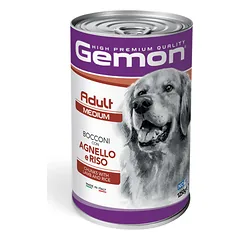
Gemon
1,94 €/kg
2,42 € / 1,3 kg
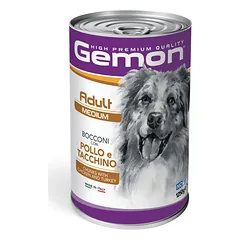
Gemon
1,94 €/kg
2,42 € / 1,3 kg

Sam's Field
2,11 €/kg
27,45 € / 13 kg
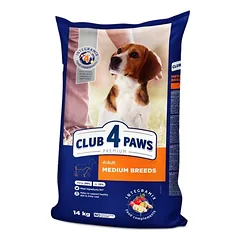
2,14 €/kg
30,00 € / 14 kg
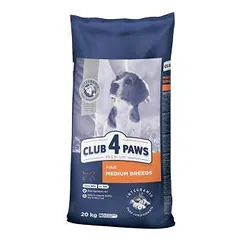
Club 4 Paws
2,15 €/kg
42,99 € / 20 kg