

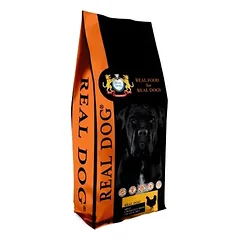
Real Dog
Real Dog sausas maistas suaugusiems, didelių-milžiniškų veislių, šunims su vištiena ir ryžiais 20kg
2,11 €/kg
42,15 € / 20 kg

Also known as: Zangao, Bhotekukur, Tibetian Dog, Himalayan mastiff, Tibetan wolfhound
The Tibetan Mastiff, called Do-Khyi in Tibetan, guarded nomad camps and villages against wolves and leopards for centuries, often working loose at night and resting through the day. The dense double coat, with its pronounced neck mane, is built for extreme high-altitude cold, which means the breed tends to struggle more than most with heat in warmer climates. A male can reach 72 kilograms, and that size means slow growth and a real need to protect joints while young. This is an independent breed that makes its own decisions, built to work without constant human direction. Around strangers it stays watchful and distrustful. Life expectancy runs 10 to 14 years.
Browse dog food sized right for this breed
Tibetan Mastiff: how old in human years?
Energy level
Trainability
Family friendly
Grooming need
Males 66–76 cm
Females 61–71 cm
Males 45–72 kg
Females 34–54 kg
Tibetan Mastiff's average temperament and family-life score for this breed is low.
Tibetan Mastiff's energy and exercise needs are low.
Tibetan Mastiff's guarding and alertness traits are high.
Tibetan Mastiff's grooming needs are moderate.
A Tibetan Mastiff spends his day lying somewhere with a view of his whole territory, looking lazy right up until someone appears at the fence. He needs daily calm walks and a roomy, securely fenced garden rather than marathons. A flat is no place for him: his size, his vigilance and his deep voice call for space and distant neighbours, all the more so because he takes his guard duty most seriously in the evening and at night.
He is intelligent but not obedient in the usual sense. He was bred to make his own decisions, so he treats commands as suggestions, and harshness only makes him dig in. Calm consistency, early and very broad socialisation, and experience with large guardian breeds are close to essential, which makes him a poor choice for a first dog.
With his own family he is devoted and protective, but reserved and suspicious with strangers, and he finds it hard to get along with other dogs, particularly of the same sex. Always supervise him with small children: he can be gentle, but he may read the noisy games of visiting children as a threat. If what you want is a calm, dignified companion who guards the house at night rather than a playmate, this mountain giant may be your dog.
A Tibetan Mastiff's coat was made for Himalayan winters: long, coarse guard hairs over a dense undercoat, with a heavy mane around the neck and shoulders, especially in males. For most of the year it asks surprisingly little: a thorough weekly brush right down to the skin, with extra attention to the mane, the trousers and the tail. But once a year, in the warm season, the undercoat comes out all at once, and for a few weeks you will be brushing daily with a rake and a brush, filling bags as you go. There is no need to clip or shave this coat, which insulates against cold and heat alike.
As you brush, part the coat and look at the skin: it shouldn't be red or flaky, and mats keep the air off it. The drop ears get little air, so look inside once a week: clean and not smelly is what you want. His eyes should be clear, without discharge or redness. A dog this size likes to decide for himself when he is handled, so start the grooming routine while he is still a puppy small enough to sit on your lap.
Midnight, and the dog who has not made a sound all day stands up at the gate and informs the whole street, in a deep voice, that he is on duty. The Tibetan Mastiff is a mountain guardian raised in a harsh climate, tough and unpampered, but his eyes, joints and thyroid deserve watching. A dog this big doesn't always show discomfort, so your attention and regular vet check-ups go a long way.
This is general information, not veterinary advice. For your own dog's health, tests and treatment, see a vet.
An umbrella term for a range of eye troubles, from faulty eyelids and lashes to inflammation or damage to the cornea. A Tibetan Mastiff's eyes are partly hidden by his heavy mane, so check that an eye isn't watering or red and that he isn't squinting or pawing at it. If an eye suddenly turns red, looks painful or has been injured, he needs a vet immediately.
A developmental problem of the joints: as the puppy grows, the parts of the elbow or hip don't form quite right, so the joint wears faster than it should. You may notice him getting up stiffly after a nap, limping after a longer walk or taking the stairs reluctantly. A big, heavy Tibetan Mastiff grows slowly and needs sound joints, so if you are getting a puppy, ask the breeder about the parents' health testing.
When the thyroid makes too little hormone, the whole body slows down. Sluggishness in a calm Tibetan Mastiff is easy to put down to character, so watch for other clues: weight gain without eating more, a thinning, dull coat, hair slow to grow back, or seeking out warm spots. Whether the thyroid is behind it is for your vet to determine.
This list is chosen by the breed's weight (72 kg) rather than the breed itself: shops label food by dog size, so every breed of the same size gets the same list. Prices are updated daily.
≈ 565 g of dry food a day, from €31,10 a month For a neutered, normally active 51,3 kg dog. Calculate for your dog
Real Dog
2,11 €/kg
42,15 € / 20 kg

Sam's Field
2,56 €/kg
33,26 € / 13 kg
Rasco
2,67 €/kg
39,99 € / 15 kg
Rasco
2,67 €/kg
39,99 € / 15 kg
Purina
2,71 €/kg
37,96 € / 14 kg

Sam's Field
2,77 €/kg
35,99 € / 13 kg
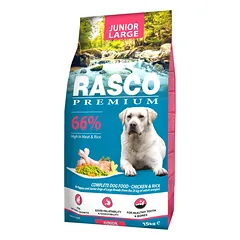
Rasco
2,80 €/kg
41,99 € / 15 kg

Sam's Field
2,85 €/kg
37,04 € / 13 kg