


Real Dog
Real Dog sausas maistas suaugusiems, didelių-milžiniškų veislių, šunims su vištiena ir ryžiais 20kg
2,11 €/kg
42,15 € / 20 kg

Also known as: Mastín Leonés, Mastín Ganadero, Mastín Extremeño
The Spanish Mastiff spent centuries guarding sheep flocks in the mountains of Spain against wolves, often fitted with a spiked collar to protect its throat from a predator's bite. It's one of Spain's largest breeds, males can reach 90 kilograms, and that sheer mass let a single dog hold its ground against a large predator. The coat is medium length and dense, well suited to cold nights at altitude. Despite the size, the breed tends to be calm and low-energy indoors, and it does far better with space to roam than in an apartment. Drooling runs well above average for this breed, especially after eating or drinking. It's gentle with its own family but tends to be watchful and reserved with strangers. Life expectancy runs 10 to 12 years.
Browse dog food sized right for this breed
Spanish Mastiff: how old in human years?
Energy level
Trainability
Family friendly
Grooming need
Males 77–88 cm
Females 72–83 cm
Males 50–90 kg
Females 45–70 kg
Spanish Mastiff's average temperament and family-life score for this breed is moderate.
Spanish Mastiff's energy and exercise needs are low.
Spanish Mastiff's guarding and alertness traits are high.
Spanish Mastiff's grooming needs are moderate.
In the mountains of Spain these dogs walked with the sheep for centuries and guarded them from wolves at night, and they haven't forgotten. By day your Spanish Mastiff may look like an enormous, idle rug in the yard, but an unfamiliar sound at the gate brings it to its feet in a second, and its deep bark is enough that nobody wants to find out what happens next. It is calm, patient and saves its energy, so what it needs isn't a marathon but unhurried daily walks and a roomy, securely fenced yard.
It can learn, but it thinks for itself: this is a guardian bred to decide on its own what is a threat and what isn't, so it weighs a command before obeying it. Patient, consistent training and early socialisation with people and other dogs are essential, because you won't be able to reshape by force an adult that outweighs you. It is reserved with strangers and not always friendly with other dogs, particularly of the same sex.
With its own family it is devoted and gentle, as patient with children as an old uncle, though small children still need an adult nearby, since one sweep of that tail can knock a toddler over. A flat simply doesn't suit it: it wants a house with a yard, a solid fence and an owner who understands that they have taken on not a pet but a sentry with its own work ethic.
The Spanish Mastiff's dense coat, short to medium in length, is no great burden: give it a thorough weekly brush with a fine-toothed or rubber brush, and more during the seasonal shed, when far more hair ends up on the floor. Baths are rare; the real challenge isn't the coat but shampooing a dog that can weigh up to ninety kilos and has opinions.
The face needs more of your time. This is a breed that drools, especially after a drink or while waiting for dinner, so keep a towel by the door for your sake and your guests' trousers, and wipe the lip folds and check that the skin there stays dry and calm. Lift the hanging ears and look inside once a week, and wipe the eyes with a damp cloth; redness, a bad smell or weeping eyes are reasons to see a vet.
A dog that weighs as much as a grown man tends to live a little less long than a small one, and the Spanish Mastiff lives ten to twelve years. A body this big means it is worth knowing a few conditions that involve the joints, the spinal cord and the deep chest. Ask the breeder about the parents' health testing before you bring a puppy home, and leave the rest for a vet to judge.
This is general information, not veterinary advice. For your own dog's health, tests and treatment, see a vet.
The stomach fills with gas, swells and can twist, cutting off its own blood supply. The dog turns restless, tries to vomit without bringing anything up, drools heavily, and its belly looks tight and swollen. The Spanish Mastiff is a big, deep-chested dog, so learn to recognise these signs at once: this is an emergency, and it needs a vet immediately.
This is a slowly progressing disease of the spinal cord in which a dog gradually loses control of its hind legs, though the disease itself doesn't hurt. The first thing you might notice is the back paws dragging or scuffing the ground, or the dog swaying on turns. A dog as heavy as a Spanish Mastiff feels weakening legs quickly, so show a change in gait to a vet, and ask the breeder about the parents' health testing before you take a puppy home.
The hip joint develops imperfectly, the ball doesn't sit snugly in its socket, and the joint wears over time. You might notice your dog struggling to get up after a nap, reluctant on the stairs, or walking with a swaying rear. A Spanish Mastiff grows for a long time and ends up very heavy, which asks a lot of young joints, so any limp is worth showing to a vet.
This list is chosen by the breed's weight (90 kg) rather than the breed itself: shops label food by dog size, so every breed of the same size gets the same list. Prices are updated daily.
≈ 665 g of dry food a day, from €36,62 a month For a neutered, normally active 63,8 kg dog. Calculate for your dog
Real Dog
2,11 €/kg
42,15 € / 20 kg

Sam's Field
2,56 €/kg
33,26 € / 13 kg
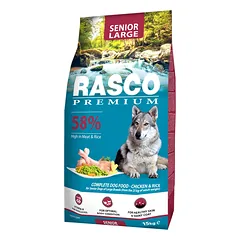
Rasco
2,67 €/kg
39,99 € / 15 kg
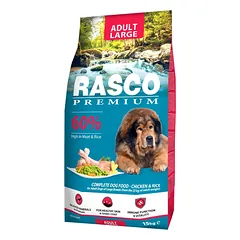
Rasco
2,67 €/kg
39,99 € / 15 kg
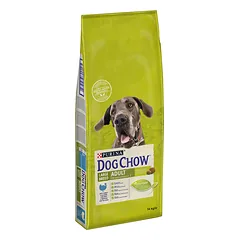
Purina
2,71 €/kg
37,96 € / 14 kg

Sam's Field
2,77 €/kg
35,99 € / 13 kg
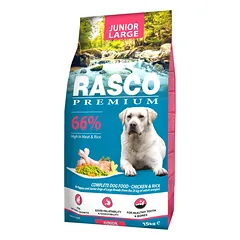
Rasco
2,80 €/kg
41,99 € / 15 kg

Sam's Field
2,85 €/kg
37,04 € / 13 kg