

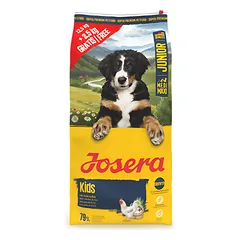
Josera
Josera Kids 12,5kg + 2,5kg = 15 kg
1,38 €/kg
37,89 € / 27,5 kg

Also known as: Blackberry Pink Justice, Appenzell Cattle Dog, Appenzell Mountain Dog
In Switzerland's Appenzell canton this dog spent centuries as an all-purpose farmhand, driving cattle, guarding the yard and pulling small milk carts to market. Its tricolor coat with sharp rust and white markings sets it apart from the other Sennenhund breeds, and the compact, muscular frame rarely tops 32 kilograms. The bark is loud and frequent, a trait bred in for guard work rather than a flaw to train out. It needs a job or at least a routine, since the working instinct shows up as constant shadowing of whoever is home, room to room. The short double coat is easy to maintain but sheds year round. It tends to be wary of strangers, sometimes sharply so, which makes early socialization worth the effort. Life expectancy runs 12 to 14 years.
Browse dog food sized right for this breed
Appenzeller Sennenhund: how old in human years?
Energy level
Trainability
Family friendly
Grooming need
Males 52–56 cm
Females 50–54 cm
Males 22–32 kg
Females 22–32 kg
Appenzeller Sennenhund's average temperament and family-life score for this breed is moderate.
Appenzeller Sennenhund's energy and exercise needs are moderate.
Appenzeller Sennenhund's guarding and alertness traits are high.
Appenzeller Sennenhund's grooming needs are low.
A tricoloured bundle with a curled tail that greets you at the gate barking as if you'd been gone a year. The Appenzeller Sennenhund is a medium-sized Swiss mountain dog with a big dog's temperament: it comes from farms where it drove cattle and guarded the yard, and it has kept all of that energy. It needs plenty of exercise and something to occupy its mind every single day; for this dog, one short walk is merely the warm-up.
It learns quickly and gladly, and does best when lessons are varied and its owner is consistent and calm. It suits active people: running, hiking, obedience or agility. With its family it is devoted and fun, while strangers get a wary and very audible welcome. It is a good guard and an even better alarm system: you, and your neighbours, will hear about every arrival.
A flat is too tight for it; it is far happier in a house with a fenced garden that it can treat as its own patch. It gets on with children, but its energy and urge to herd can be too much for little ones, so supervise early meetings. Once its body and mind have had their share, it will happily stretch out at your feet in the evening, still keeping one ear on what is happening in the yard.
An Appenzeller Sennenhund's coat is short, dense and harsh, with an undercoat that keeps out mountain wind. It asks very little: a weekly going-over with a brush or rubber mitt keeps it clean and glossy. Mud mostly falls off once dry, so baths are only needed now and then.
It sheds moderately, with more hair when the undercoat changes, so brush more often in those weeks. Because this dog covers a lot of ground, check its paw pads and between the toes after every long outing, and look through the coat for ticks. Nails, ears and teeth need the same regular checks as any dog's.
We don't have reliable health information specific to this breed, so we don't list conditions here. Keep up regular vet check-ups, and if you are getting a puppy, ask the breeder about the parents' health testing.
This is general information, not veterinary advice. For your own dog's health, tests and treatment, see a vet.
This list is chosen by the breed's weight (32 kg) rather than the breed itself: shops label food by dog size, so every breed of the same size gets the same list. Prices are updated daily.
≈ 350 g of dry food a day, from €19,16 a month For a neutered, normally active 27 kg dog. Calculate for your dog
Josera
1,38 €/kg
37,89 € / 27,5 kg
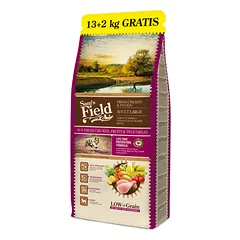
Sam's Field
1,80 €/kg
26,99 € / 15 kg

Country Dog
1,89 €/kg
28,29 € / 15 kg
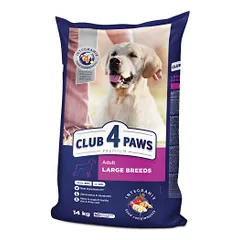
Club 4 Paws
1,92 €/kg
26,94 € / 14 kg
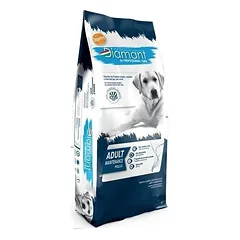
Diamant
1,93 €/kg
28,99 € / 15 kg
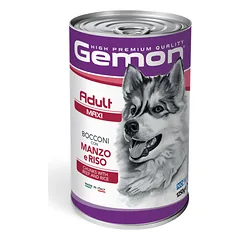
Gemon
1,94 €/kg
2,42 € / 1,3 kg

BIO FORM
2,00 €/kg
40,00 € / 20 kg
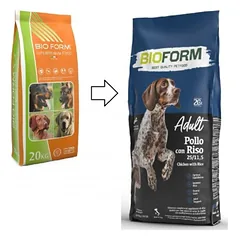
BIO FORM
2,00 €/kg
40,00 € / 20 kg