

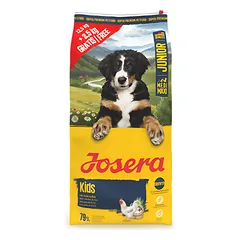
Josera
Josera Kids 12,5kg + 2,5kg = 15 kg
1,38 €/kg
37,89 € / 27,5 kg

Also known as: Sammy, Bjelkier, Samoiedskaïa Sabaka
The Samoyed originated in Siberia, where the Samoyedic peoples used the breed to herd reindeer, pull sleds, and, on the coldest nights, sleep pressed against their owners as a living heater. Its most recognizable trait, often called the Samoyed smile, is a slight upward curl at the corners of the mouth that keeps drool from freezing into icicles in a blizzard and happens to give the dog a permanently cheerful look. The thick white double coat, with a long, harsh outer layer over a soft undercoat, does more than insulate: it also reflects sunlight, helping the dog avoid overheating even in summer. A male weighs around 30 kilograms, with a sturdy but not heavy build suited to sustained work rather than short sprints. Because it lived in close daily contact with its people rather than guarding from a distance, the breed stayed unusually friendly and makes a poor watchdog, trusting strangers readily. Life expectancy runs 12 to 14 years.
Browse dog food sized right for this breed
Samoyed: how old in human years?
Energy level
Trainability
Family friendly
Grooming need
Males 54–60 cm
Females 50–56 cm
Males 20–30 kg
Females 17–25 kg
Samoyed's average temperament and family-life score for this breed is high.
Samoyed's energy and exercise needs are moderate.
Samoyed's guarding and alertness traits are low.
Samoyed's grooming needs are moderate.
A Samoyed's ancestors herded reindeer and pulled sledges across the Siberian tundra, so this dog needs not just a walk but a proper job. Long hikes, running beside a bike on a cool day, canicross, and in winter towing the children's sledge are exactly what he dreams of. Heat suits him less well, so in summer go out early and late. An under-exercised Samoyed will find his own projects, and they tend to involve digging and a loud conversation with you about how bored he is.
He is clever but opinionated, so training is more negotiation than command. Short, cheerful sessions with treats and games work best, and patience and consistency pay off. Work on recall long and carefully, and until it's reliable stick to fenced areas.
In the family a Samoyed is pure sunshine: friendly to everyone, gentle with children, happy with other dogs and greeting every stranger like an old friend. As a guard dog he is hopeless, unless you think a burglar will be scared off by a warm welcome. He loves to talk, from barking to strange singing noises, and hates being left alone, so long hours in an empty house are hard on him, and a small flat will feel tight for his energy and his coat.
A Samoyed wears two coats: long, harsh guard hairs on top and beneath them a dense undercoat as soft as cotton wool that once kept out the Siberian cold. That undercoat has one habit: it falls out. A little all year round, then once or twice a year all at once, when white tumbleweeds roll across the floor, cling to your clothes and turn up in your tea. Brush a few times a week and daily while he's blowing his coat, with a brush plus an undercoat rake, paying extra attention behind the ears, in the armpits and on the trousers, where tangles form fastest. No clipping or shaving: this coat insulates against heat as well as cold, and he rarely needs a bath, since dried mud brushes out of it surprisingly easily.
As you brush, part the coat right down to the skin and check that it isn't red or flaky, and that there are no mats keeping the air off it. Upright ears get plenty of air, but look inside once a week: clean and not smelly is what you want. His eyes should be clear, not red, without discharge or cloudiness, and the dark rims of his eyes, nose and lips shouldn't fade. Trim the hair between his paw pads, and trim his nails when you hear them clicking on the floor.
Upturned mouth corners and dark eyes peering out of a snow-white cloud: a Samoyed smiles even when he has just knocked over your flowerpot. Behind that smile is a sturdy northern dog built for work in the cold, but the breed asks you to keep a closer eye on eyes, heart, hips and kidneys. Know the signs and you'll catch changes in time, and regular vet check-ups help make sense of them while there is still a lot that can be done.
This is general information, not veterinary advice. For your own dog's health, tests and treatment, see a vet.
The retina is the light-sensitive layer at the back of the eye, and when it is damaged or slowly wastes away, sight fades. The first thing you might notice is a Samoyed who moves hesitantly at dusk or in a dim room, pausing at the stairs or catching on things he easily avoids by day. It doesn't hurt, which makes it easy to miss, so talk to your vet about any change in his sight, and if you are getting a puppy, ask the breeder about the parents' health testing.
An immune-driven disease in which the body attacks its own pigment-producing cells, so both the eyes and the skin suffer. First you may see red, sore eyes, squinting or an eye turning cloudy, and later the black of the nose, lips or eyelid rims fading and turning pale. The eyes are at real risk here, so show changes like these to your vet as soon as you can.
An umbrella term for several conditions in which the heart muscle, valves or vessels stop working as well as they should, so the heart has to strain to move blood around the body. You may notice your normally tireless Samoyed lagging on walks, tiring sooner, coughing, or breathing faster than before while fast asleep. At check-ups your vet listens to the heart and decides whether anything more is needed, and if he ever collapses or faints, he needs a vet immediately.
A developmental problem of the hip: as the puppy grows, the ball and socket don't form quite right, so the joint moves unevenly and wears over time. A Samoyed's thick coat hides his gait remarkably well, so watch for other clues: getting up stiffly after a nap, reluctance to jump into the car, or running with both hind legs pushing off together like a rabbit. For a working northern dog sound hips matter a great deal, so ask the breeder about the parents' health testing.
An inherited kidney disease in which the tiny filters of the kidney are damaged, so the kidneys gradually lose their ability to clean the blood properly. The first signs can appear in a young dog: drinking and peeing more and more, losing appetite, getting thinner or seeming listless. Changes like these are a reason to see your vet promptly, and if you are getting a puppy, ask the breeder about the parents' health testing.
This list is chosen by the breed's weight (30 kg) rather than the breed itself: shops label food by dog size, so every breed of the same size gets the same list. Prices are updated daily.
≈ 310 g of dry food a day, from €16,98 a month For a neutered, normally active 23 kg dog. Calculate for your dog
Josera
1,38 €/kg
37,89 € / 27,5 kg
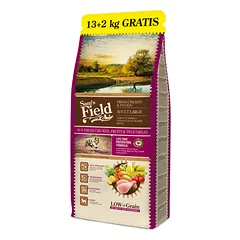
Sam's Field
1,80 €/kg
26,99 € / 15 kg

Country Dog
1,89 €/kg
28,29 € / 15 kg

Club 4 Paws
1,92 €/kg
26,94 € / 14 kg
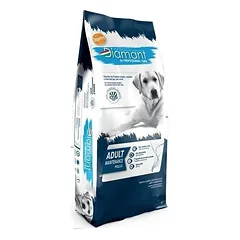
Diamant
1,93 €/kg
28,99 € / 15 kg
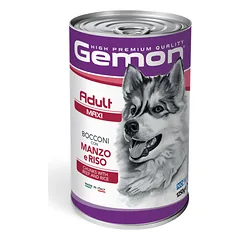
Gemon
1,94 €/kg
2,42 € / 1,3 kg

BIO FORM
2,00 €/kg
40,00 € / 20 kg

BIO FORM
2,00 €/kg
40,00 € / 20 kg