

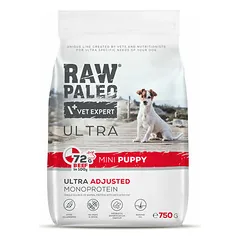
VetExpert
Raw Paleo Dog Ultra Mini Puppy Beef 750 kg
0,02 €/kg
13,09 € / 750 kg

Also known as: Pom dog, Zwergspitz, Dwarf Spitz, German Spitz Zwerg
The Pomeranian, the smallest of the German Spitz family, owes much of its popularity to Queen Victoria, who fell for the breed in the late 19th century and drove the trend toward the smaller size we know today. An adult weighs only around 3.5 kilograms, but carries the same dense double coat as its larger relatives, which makes it look noticeably bigger than it actually is. The coat needs frequent brushing to keep the thick undercoat from matting. Despite the tiny size, temperament runs bold and confident, this dog often acts like it has no idea how small it is. Vocal habits run strong, it tends to bark quickly at any change in its surroundings. Care is needed around young children given the fragile build. Life expectancy runs 12 to 16 years.
Browse dog food sized right for this breed
Pomeranian: how old in human years?
Energy level
Trainability
Family friendly
Grooming need
Males 18–22 cm
Females 18–22 cm
Males 1.9–3.5 kg
Females 1.9–3.5 kg
Pomeranian's average temperament and family-life score for this breed is moderate.
Pomeranian's energy and exercise needs are low.
Pomeranian's guarding and alertness traits are moderate.
Pomeranian's grooming needs are moderate.
The courier has only just turned into your street and the whole house already knows, because the Pomeranian has announced it loudly, clearly and several times over. The smallest of the German Spitz weighs only a few kilos but seems to see itself as considerably larger: alert, bold and with an opinion on everything. Barking is its native language, so start teaching "thank you, that's enough" early, patiently and with rewards; a Pomeranian learns perfectly well once it sees what's in it for itself.
With its own family it is devoted and affectionate, but it greets strangers and other dogs with suspicion at first, sometimes with a certain swagger. It is no toy for small children: its bones are fragile and its patience limited, so it gets on best with older kids who understand that a dog is not a teddy bear. At the dog park, make sure it doesn't pick a fight with something ten times its size; it has plenty of courage and very little bulk.
In a flat it is entirely at home. A typical day is a few short walks with plenty of sniffing, some play indoors, a little lesson in tricks, and lots of time on your lap or on the windowsill, which offers such a fine view of the street and so much to report.
A Pomeranian's coat is less a hairstyle than a piece of architecture: long, harsh outer hairs stand straight up off a dense, soft undercoat, which is exactly why the dog looks like a ball with eyes. Brush it a few times a week, layer by layer, right down to the skin, and every day during the moult, when the undercoat comes out by the handful. As you go, check the skin and watch whether the coat is equally thick everywhere; don't clip the double coat short unless a vet or an experienced groomer advises it.
Check the ears weekly; they stand upright and air well, but inside they should be clean and odour-free. Wipe the corners of the eyes with a soft damp cloth as needed. Teeth deserve a chapter of their own: brush them daily with a dog toothbrush and toothpaste, starting in puppyhood, so the ritual becomes as ordinary as a walk.
A Pomeranian can live a long time, around twelve to sixteen years, and spends most of it lively, curious and full of opinions. Its health concerns flow from its size: small bones and joints, a crowded mouth, a delicate windpipe and very little energy in reserve. Knowing what to look for lets you catch a lot early, and your vet decides what to do about it.
This is general information, not veterinary advice. For your own dog's health, tests and treatment, see a vet.
In this condition the dog gradually loses coat on its body and tail and the exposed skin darkens, while the dog itself feels fine and doesn't scratch. The first thing you may notice is a coat on the thighs or tail that has thinned, turned dry and woolly, or failed to grow back after a trim. A Pomeranian's coat is its pride, so a change like this is easy to see; finding out what is behind it is a job for your vet, since other conditions can look similar.
Blood sugar suddenly drops too low, taking with it the energy the brain and muscles run on. The dog may become listless, tremble, wobble and seem confused, and in more serious cases stop responding or have a seizure. The smaller the dog, the smaller its reserves, and tiny Pomeranian puppies have the least of all, so if you see these signs, get your dog to a vet immediately.
This is an umbrella term for a range of eye troubles, from watering and irritation to a lens turning cloudy. You might notice a red, weepy or cloudy eye, squinting, or your dog rubbing an eye with its paw. A Pomeranian's dark, bright eyes sit close to the ground and close to a lot of fur, so a daily glance is worthwhile, and any change belongs in front of your vet.
The trachea, or windpipe, is held open by rings of cartilage, and when they soften the tube flattens and gets in the way of the air. The classic sign is a dry, honking cough, rather like a goose, when the dog is excited, pulls on the lead or has just had a drink. In small dogs like the Pomeranian that tube is especially delicate, so a cough like this calls for a vet visit, and if your dog is struggling to breathe or its tongue turns bluish, it needs a vet immediately.
Plaque builds up on the teeth and hardens into tartar, which irritates the gums until they bleed and recede. The first sign is bad breath; later you may see a yellow or brown layer at the gum line, or notice your dog chewing carefully on one side. A Pomeranian's tiny jaws hold their teeth close together, and plaque loves a tight corner, so tooth care is a daily matter for this dog and a dental check is part of every vet visit.
This is a developmental problem of the hip: the ball of the thigh bone doesn't sit snugly in its socket, and the joint wears over time. You might see your dog hesitate before jumping onto the sofa, get up more slowly, or run with both back legs together like a rabbit. On legs this small, joint trouble isn't always obvious at first, so if the way your dog moves has changed, let the vet take a look.
In this disease the head of the thigh bone loses part of its blood supply, so the bone there slowly breaks down and the hip becomes painful. It shows up in young dogs of small breeds: you may notice a limp on one hind leg, a reluctance to put weight on it, and that leg starting to look thinner. The Pomeranian belongs to the group of small dogs this disease is associated with, so a limp in a young dog that doesn't go away is a reason to see the vet.
The kneecap, a small bone at the front of the knee, slips out of its groove and the leg briefly locks. Mid-run, the dog suddenly skips along on three legs, sometimes stretches the leg out and carries on as if nothing happened. In a Pomeranian that hop can pass for playfulness, but if it keeps recurring, the knee should be examined by a vet.
This list is chosen by the breed's weight (4 kg) rather than the breed itself: shops label food by dog size, so every breed of the same size gets the same list. Prices are updated daily.
≈ 62 g of dry food a day, from €3,41 a month For a neutered, normally active 2,7 kg dog. Calculate for your dog
VetExpert
0,02 €/kg
13,09 € / 750 kg
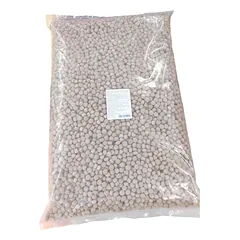
1,70 €/kg
17,02 € / 10 kg
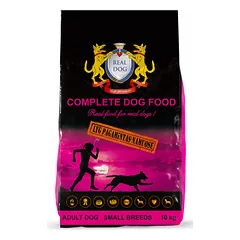
Real Dog
1,78 €/kg
17,79 € / 10 kg
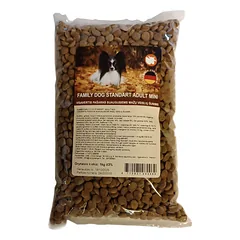
Family Dog
1,89 €/kg
1,89 € / 1 kg
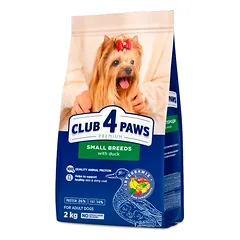
Club 4 Paws
1,93 €/kg
26,99 € / 14 kg
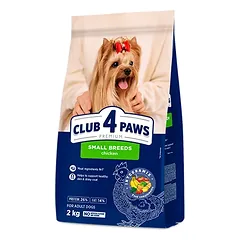
Club 4 Paws
1,93 €/kg
26,99 € / 14 kg
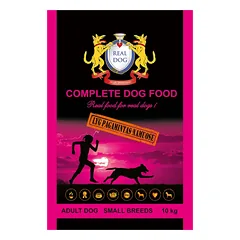
Real Dog
1,94 €/kg
19,42 € / 10 kg
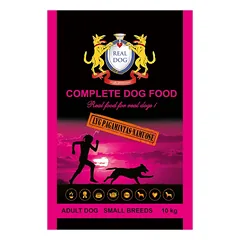
Real Dog
1,95 €/kg
19,49 € / 10 kg