


Samoyed vs Siberian Husky
Compare two breeds
Pick two breeds to see them compared side by side.
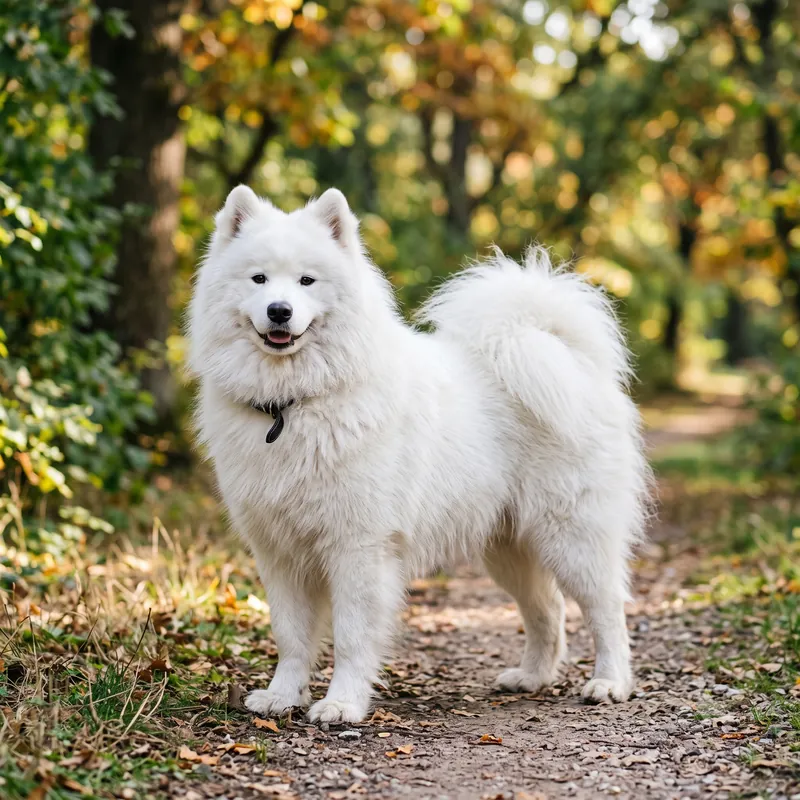
Samoyed
The Samoyed originated in Siberia, where the Samoyedic peoples used the breed to herd reindeer, pull sleds, and, on the coldest nights, sleep pressed against their owners as a living heater. Its most recognizable trait, often called the Samoyed smile, is a slight upward curl at the corners of the mouth that keeps drool from freezing into icicles in a blizzard and happens to give the dog a permanently cheerful look. The thick white double coat, with a long, harsh outer layer over a soft undercoat, does more than insulate: it also reflects sunlight, helping the dog avoid overheating even in summer. A male weighs around 30 kilograms, with a sturdy but not heavy build suited to sustained work rather than short sprints. Because it lived in close daily contact with its people rather than guarding from a distance, the breed stayed unusually friendly and makes a poor watchdog, trusting strangers readily. Life expectancy runs 12 to 14 years.
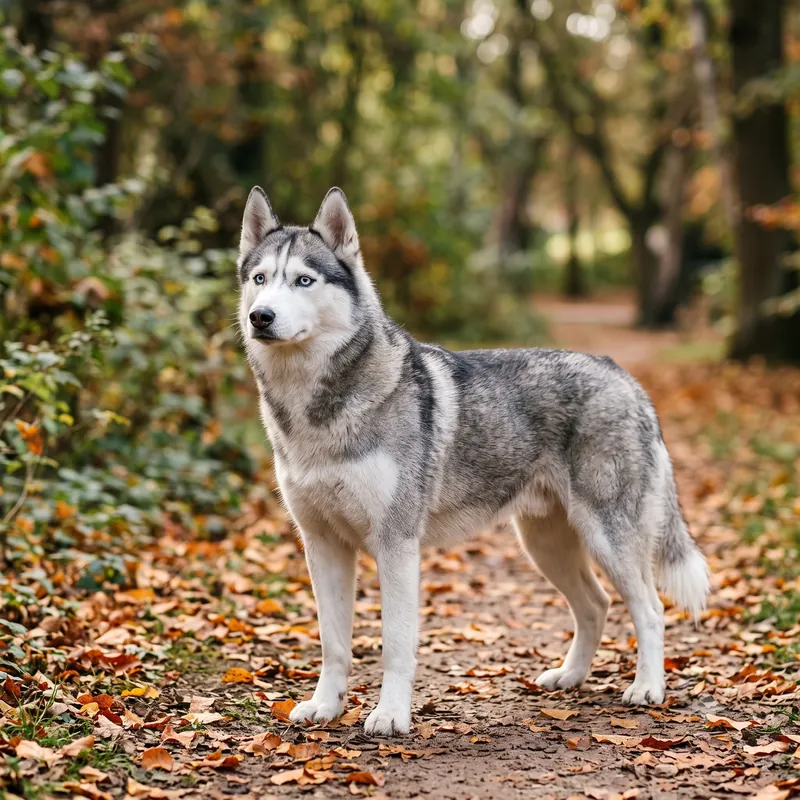
Siberian Husky
The Chukchi people of northeastern Siberia bred these dogs for centuries to pull light loads efficiently across vast distances on minimal food, yet the FCI lists the country of origin as the United States, since that's where the modern breed standard was actually shaped after Siberian dogs arrived in Alaska during the gold rush. Their most famous moment came in 1925, when relay teams of Siberian Huskies carried diphtheria antitoxin nearly 700 kilometers to Nome in a blizzard, a run still commemorated by Alaska's Iditarod race. An adult male tops out around 27 kilograms, built for endurance over distance rather than raw pulling power, which is why they lose weight-pulling contests to heavier breeds but win long-distance sled races. The double coat insulates against extreme cold so effectively that huskies often prefer sleeping outside even in winter, curling their tail over their nose for warmth. Blue eyes, brown eyes, or one of each all fall within the breed standard, unlike most breeds where eye color options are limited. They were never bred to guard territory, so a husky is a poor watchdog and often startlingly friendly with strangers. The pack instinct runs deep enough that a lone husky left alone too often will howl rather than bark to signal distress. Escape artistry is a real trait, not exaggeration: they can dig under or climb over fences that stop most other breeds. Life expectancy runs 12 to 14 years.
At a glance
| Samoyed | Siberian Husky | |
|---|---|---|
| Height (male) | 54.0–60.0 cm | 54.0–60.0 cm |
| Weight (male) | 20.0–30.0 kg | 20.0–27.0 kg |
| Life expectancy | 12–14 yrs | 12–14 yrs |
| Coat | double coat, long harsh outer coat with soft undercoat | double coat, medium length |
Temperament & Family Life
| Samoyed | Siberian Husky | |
|---|---|---|
| Family friendly | ||
| Good with children | ||
| Good with other dogs | ||
| Friendly with strangers | ||
| Intelligence | ||
| Trainability |
Exercise, Energy & Space
| Samoyed | Siberian Husky | |
|---|---|---|
| Energy level | ||
| Exercise need | ||
| Apartment friendly | ||
| Prey drive | ||
| Hunting instinct |
Guarding & Alertness
| Samoyed | Siberian Husky | |
|---|---|---|
| Guarding instinct | ||
| Watchfulness | ||
| Barking level |
Grooming & Care
| Samoyed | Siberian Husky | |
|---|---|---|
| Shedding | ||
| Drooling | ||
| Grooming need |
Temperament and care scores (1-5) are a general guide based on the breed standard — every individual dog is different.