

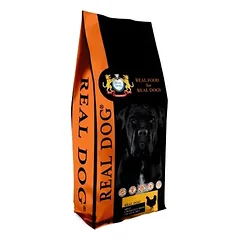
Real Dog
Real Dog sausas maistas suaugusiems, didelių-milžiniškų veislių, šunims su vištiena ir ryžiais 20kg
2,11 €/kg
42,15 € / 20 kg

Also known as: Mastín Pirineo
The Pyrenean Mastiff comes from the mountains of Aragón, where it guarded sheep against wolves and bears on the slopes of the Pyrenees for centuries. The long, dense double coat let it withstand harsh mountain winters, and adults can weigh up to 90 kilograms, making it one of Spain's largest breeds. Its white coat with patches helped shepherds tell the dog apart from a wolf at night. It's still used for flock protection today, but increasingly takes on a family role where there's enough space for it. The coat needs regular brushing, especially through seasonal shedding. Temperament is calm but independent, this is a dog bred to make its own decisions rather than wait for a command. Life expectancy runs 10 to 11 years.
Browse dog food sized right for this breed
Pyrenean Mastiff: how old in human years?
Energy level
Trainability
Family friendly
Grooming need
Males 77–81 cm
Females 72–77 cm
Males 50–90 kg
Females 40–75 kg
Pyrenean Mastiff's average temperament and family-life score for this breed is moderate.
Pyrenean Mastiff's energy and exercise needs are low.
Pyrenean Mastiff's guarding and alertness traits are high.
Pyrenean Mastiff's grooming needs are moderate.
In the mountains of Spain, these dogs walked with the flocks on their long seasonal journeys and kept them safe from wolves and bears. From those days the Pyrenean Mastiff inherited a calm self-assurance: it has no need to make a fuss for everyone to understand who is in charge. By day it can lie in the yard for hours, watching, and its deep bark comes out only when it is really needed.
It doesn't need much exercise, a few unhurried walks a day and a roomy, well-fenced yard will do. A flat is too small for it, and not only in square metres. It is perceptive and learns, but makes up its own mind, so patience, consistency and early socialisation are not optional: a puppy that will grow to eighty kilos has to learn loose-lead walking and calm greetings while you can still hold it back.
With its own family, children included, it is a gentle, patient giant. It is more reserved with strangers and other dogs, and regards its territory as its responsibility; this is a real guardian. If you have plenty of land and want a calm, dignified companion who keeps watch while you sleep, this is your dog.
The Pyrenean Mastiff's long, dense double coat is both blanket and raincoat, so it needs looking after but not clipping. A few times a week, comb it down to the skin, especially behind the ears, around the neck, on the tail and on the hind legs, where mats form, and while the undercoat is shedding, keep the brush out every day. Feel the skin as you go: under a layer this thick, a red or damp patch can go unnoticed for a long time.
Loose eyelids can make the eyes untidy, so glance at them daily and wipe the corners with a damp cloth. Once a week, lift the heavy drop ears and check inside for smell or redness. The breed drools a little, so wipe the lip folds after meals and drinks to keep the skin there from staying damp.
A dog that can weigh as much as an adult human naturally puts its biggest demands on bones, joints and stomach. A Pyrenean Mastiff lives around ten to eleven years, and the conditions below are worth recognising so you notice early when something is off. Take anything that worries you to a vet, who will decide what happens next.
This is general information, not veterinary advice. For your own dog's health, tests and treatment, see a vet.
This is a slowly progressing disease of the spinal cord in which the dog gradually loses control of its hind legs. You might first notice an older dog scuffing its back paws, a swaying rear end, or hind legs that cross as it walks. Weakening legs are a big challenge in a dog this heavy, so show any change in gait to a vet, and if you are getting a puppy, ask the breeder about the parents' health testing.
This is a developmental problem of the hip or elbow joints, where the parts of the joint don't fit together properly and wear faster. You might notice your dog getting up stiffly after sleeping, limping, being reluctant on stairs, or cutting walks short. A Pyrenean Mastiff grows very fast and ends up very heavy, so any limp is a reason to see a vet, and if you are getting a puppy, ask the breeder about the parents' health testing.
This is bone cancer, which can affect the long bones of the legs. The first sign can be a limp that doesn't go away, or a painful swelling on a leg. A big dog may limp now and then after hard play, but if a limp lingers or keeps coming back, don't wait: take your Pyrenean Mastiff to a vet.
The stomach fills with gas and can twist on itself, cutting off its own blood supply. The dog is restless, tries to vomit without bringing anything up, drools more than usual, and its belly swells and turns hard. A Pyrenean Mastiff is a giant, deep-chested dog, and this is an emergency: if you see these signs, get your dog to a vet immediately.
This list is chosen by the breed's weight (90 kg) rather than the breed itself: shops label food by dog size, so every breed of the same size gets the same list. Prices are updated daily.
≈ 665 g of dry food a day, from €36,62 a month For a neutered, normally active 63,8 kg dog. Calculate for your dog
Real Dog
2,11 €/kg
42,15 € / 20 kg

Sam's Field
2,56 €/kg
33,26 € / 13 kg
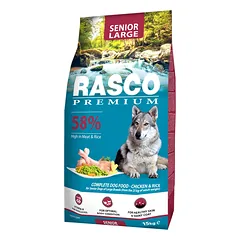
Rasco
2,67 €/kg
39,99 € / 15 kg
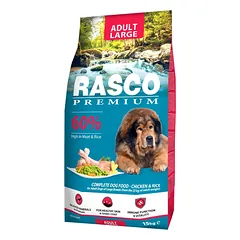
Rasco
2,67 €/kg
39,99 € / 15 kg
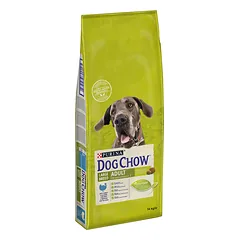
Purina
2,71 €/kg
37,96 € / 14 kg

Sam's Field
2,77 €/kg
35,99 € / 13 kg
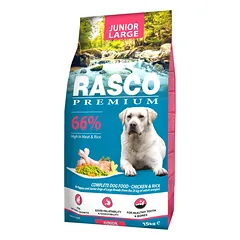
Rasco
2,80 €/kg
41,99 € / 15 kg

Sam's Field
2,85 €/kg
37,04 € / 13 kg