

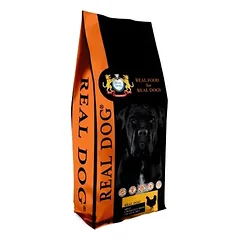
Real Dog
Real Dog sausas maistas suaugusiems, didelių-milžiniškų veislių, šunims su vištiena ir ryžiais 20kg
2,11 €/kg
42,15 € / 20 kg

Also known as: Šarko, Sharr dog, Qen i Sharrit, Charplaninatz, Šar Mountain Dog
Originating in the Šar Mountains of the Balkans, this dog has guarded sheep flocks against wolves and bears for centuries in the remote highlands of Serbia, North Macedonia and Kosovo. The long, thick double coat let it withstand brutal mountain winters, living outdoors year round alongside its flock. A male can weigh up to 45 kilograms of muscular, heavy set frame built to hold off predator attacks. Unlike herding breeds that move a flock, the Sharplanina lives within it as a member, making its own decisions independently rather than waiting on constant human direction. That independence means the breed trains poorly with conventional methods and needs an experienced handler. With its own family it tends to be loyal and gentle, but it can be wary and protective around strangers. Life expectancy runs 11 to 13 years.
Browse dog food sized right for this breed
Sarplaninac: how old in human years?
Energy level
Trainability
Family friendly
Grooming need
Males 56–65 cm
Females 54–62 cm
Males 35–45 kg
Females 30–40 kg
Sarplaninac's average temperament and family-life score for this breed is low.
Sarplaninac's energy and exercise needs are moderate.
Sarplaninac's guarding and alertness traits are high.
Sarplaninac's grooming needs are moderate.
The Šar Mountains, where Serbia, Kosovo, North Macedonia and Albania meet: for centuries this dog guarded flocks against wolves there, and it still considers that its job. During the day a Sarplaninac may look half asleep, sprawled in the middle of the yard, but don't be fooled. It sees everything, and when a stranger nears the gate its deep voice rings out without any prompting from you.
This is not a dog for a first-time owner, nor for a flat. It needs a large, securely fenced yard, long daily walks and a calm, self-assured owner. It is intelligent but independent: it was bred to make decisions on its own, with no shepherd on hand, so don't expect blind obedience. Calm, consistent and early socialisation with lots of people, animals and situations is essential, so that as an adult it can tell a guest from a threat.
A Sarplaninac is wary of strangers and often doesn't get on with other dogs; that is its nature, not a failure of upbringing. It is devoted and protective with its own family, but with small children, especially visiting ones, its vigilance can be too much, so supervision is a must. If you have a farmstead, sheep or simply plenty of land and experience with large dogs, you will struggle to find a better guardian.
A Sarplaninac wears a long, thick double coat with a dense undercoat that once kept out mountain rain, wind and cold. Comb it right down to the skin once or twice a week, especially behind the ears, around the neck, on the breeches and along the tail, where mats form. It sheds heavily, and when the undercoat changes you will be combing daily and collecting enough fluff to build a second dog.
Baths are rarely needed: a healthy coat sheds dirt by itself, and once wet it takes a very long time to dry. As you comb, check the skin, since ticks and scratches hide easily in a coat this dense. Lift the drop ears weekly for a look inside, and trim the hair between the paw pads when needed. Get this big, independent dog used to being handled from puppyhood, while you can still lift it with ease.
We don't have reliable health information specific to this breed, so we don't list conditions here. Keep up regular vet check-ups, and if you are getting a puppy, ask the breeder about the parents' health testing.
This is general information, not veterinary advice. For your own dog's health, tests and treatment, see a vet.
This list is chosen by the breed's weight (45 kg) rather than the breed itself: shops label food by dog size, so every breed of the same size gets the same list. Prices are updated daily.
≈ 445 g of dry food a day, from €24,50 a month For a neutered, normally active 37,5 kg dog. Calculate for your dog
Real Dog
2,11 €/kg
42,15 € / 20 kg

Sam's Field
2,56 €/kg
33,26 € / 13 kg
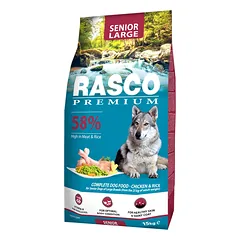
Rasco
2,67 €/kg
39,99 € / 15 kg
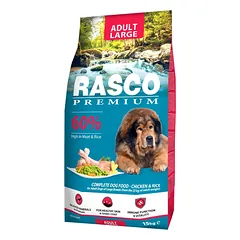
Rasco
2,67 €/kg
39,99 € / 15 kg
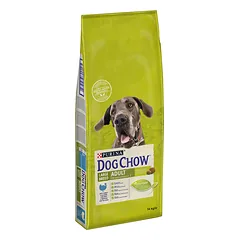
Purina
2,71 €/kg
37,96 € / 14 kg
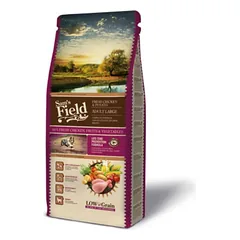
Sam's Field
2,77 €/kg
35,99 € / 13 kg
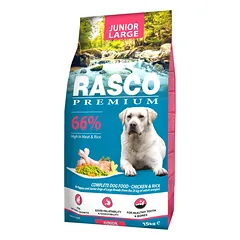
Rasco
2,80 €/kg
41,99 € / 15 kg
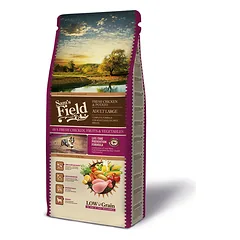
Sam's Field
2,85 €/kg
37,04 € / 13 kg