


Real Dog
Real Dog sausas maistas suaugusiems, didelių-milžiniškų veislių, šunims su vištiena ir ryžiais 20kg
2,11 €/kg
42,15 € / 20 kg

Also known as: Carpatin, Carpathian Sheepdog, Rumanian Carpathian, Caine Ciobanesc Carpatin, Romanian Carpatin Herder
The Romanian Carpathian Shepherd, like its Mioritic relative, worked the Carpathian mountains for centuries guarding sheep against wolves and bears, but is considered an older, less crossbred type. A male can weigh up to 50 kilograms on a sturdy, muscular frame, and the long, thick double coat handles harsh mountain winters well. The breed was historically selected for working usefulness rather than appearance, so type varies noticeably from region to region even within the country. It works independently, making its own calls without waiting on a handler, and can turn aggressive toward a predator while staying calm with its own flock. It's still widely used across rural Romania and remains rare outside the country. It stays naturally distrustful of strangers and needs an experienced owner. Life expectancy runs 11 to 14 years.
Browse dog food sized right for this breed
Romanian Carpathian Shepherd Dog: how old in human years?
Energy level
Trainability
Family friendly
Grooming need
Males 60–70 cm
Females 55–65 cm
Males 32–50 kg
Females 28–45 kg
Romanian Carpathian Shepherd Dog's average temperament and family-life score for this breed is low.
Romanian Carpathian Shepherd Dog's energy and exercise needs are moderate.
Romanian Carpathian Shepherd Dog's guarding and alertness traits are high.
Romanian Carpathian Shepherd Dog's grooming needs are moderate.
It lies in the corner of the yard with a view of both the gate and the lane, apparently dozing, until a stranger walks past the fence. Then it turns out only the eyes were asleep. The Romanian Carpathian Shepherd Dog spent centuries guarding flocks in the Carpathians against wolves and bears, and it is used to making its own decisions without waiting for the shepherd.
That makes training a negotiation rather than a list of commands. It understands what you want but doesn't always see the point, so it needs a calm, consistent, self-assured owner who socialises the puppy early and widely. It is suspicious of strangers, may not get on with other dogs, especially of the same sex, and it announces anything it finds suspicious with its voice, nights included. With its own family it is devoted and protective, but a dog this big and this serious belongs around small children only with an adult watching.
It doesn't need frantic running, but it does need plenty of daily movement: long walks, time outdoors and a territory to patrol and keep an eye on. A flat is out of the question. It does best on a farm or in a house with a large, securely fenced yard, with an experienced owner who wants a guardian rather than a lapdog.
The Romanian Carpathian Shepherd Dog wears a long, thick double coat: a harsher outer layer over a dense undercoat built for mountain wind and sleet. Most of the year, a thorough brush down to the skin once or twice a week is enough, with extra attention behind the ears, on the neck, the thighs and the tail, where the undercoat mats first. It sheds heavily, and at the change of seasons the undercoat comes out in tufts, so for those weeks the comb becomes a daily habit and the vacuum cleaner stays within reach.
The coat shouldn't be clipped, since it does its own temperature control, and baths are only for when the dog has genuinely got itself filthy. After walks, check the paws and between the toes, look into the ears regularly and keep the nails short. Get the puppy used to all of this while it still fits on your lap: persuading a large, independent adult is a much harder conversation.
We don't have reliable health information specific to this breed, so we don't list conditions here. Keep up regular vet check-ups, and if you are getting a puppy, ask the breeder about the parents' health testing.
This is general information, not veterinary advice. For your own dog's health, tests and treatment, see a vet.
This list is chosen by the breed's weight (50 kg) rather than the breed itself: shops label food by dog size, so every breed of the same size gets the same list. Prices are updated daily.
≈ 460 g of dry food a day, from €25,14 a month For a neutered, normally active 38,8 kg dog. Calculate for your dog
Real Dog
2,11 €/kg
42,15 € / 20 kg

Sam's Field
2,56 €/kg
33,26 € / 13 kg
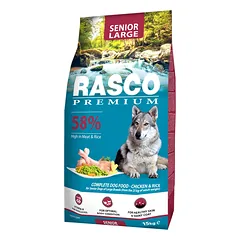
Rasco
2,67 €/kg
39,99 € / 15 kg
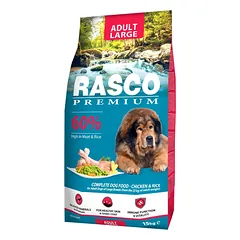
Rasco
2,67 €/kg
39,99 € / 15 kg
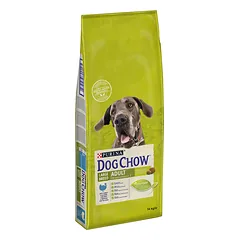
Purina
2,71 €/kg
37,96 € / 14 kg

Sam's Field
2,77 €/kg
35,99 € / 13 kg
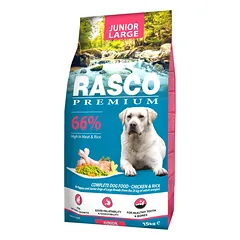
Rasco
2,80 €/kg
41,99 € / 15 kg

Sam's Field
2,85 €/kg
37,04 € / 13 kg