

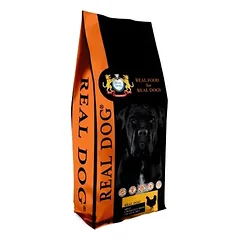
Real Dog
Real Dog sausas maistas suaugusiems, didelių-milžiniškų veislių, šunims su vištiena ir ryžiais 20kg
2,11 €/kg
42,15 € / 20 kg

Also known as: Mioritic
The Romanian Mioritic Shepherd guarded sheep flocks in the Carpathian mountains for centuries, taking its name from the old Romanian ballad Miorița about a shepherd and his ewe. A male can weigh up to 55 kilograms on a massive frame, and the long, thick coat, which tends toward corded, protects against both cold and a wolf's teeth. The breed stayed almost unknown outside Romania for a long time and only began to be formally registered and recognized in the 21st century. It works a flock independently, often at night when predators are most active, and can stand watch all night without any command from a handler. The coat takes real time to maintain or it mats quickly. It tends to be gentle with its own family and the flock it guards, but stays completely distrustful of strangers. Life expectancy runs 11 to 14 years.
Browse dog food sized right for this breed
Romanian Mioritic Shepherd Dog: how old in human years?
Energy level
Trainability
Family friendly
Grooming need
Males 63–73 cm
Females 59–69 cm
Males 35–55 kg
Females 30–48 kg
Romanian Mioritic Shepherd Dog's average temperament and family-life score for this breed is moderate.
Romanian Mioritic Shepherd Dog's energy and exercise needs are moderate.
Romanian Mioritic Shepherd Dog's guarding and alertness traits are high.
Romanian Mioritic Shepherd Dog's grooming needs are moderate.
From a distance it looks like a big, soft mountain of fur you'd like to lean against; up close it turns out the mountain is watching you carefully and hasn't decided yet whether you're coming in. The Romanian Mioritic Shepherd Dog takes its name from the Mioritic region and an old shepherds' ballad, and its job on the Carpathian pastures was a single one: keep the flock safe from predators and strangers.
With its family it is gentle, patient and attached, and it usually gets along calmly with children, though a dog this size can knock a toddler over without meaning to, so an adult should be around. It is wary of strangers, announces arrivals in a deep, loud voice and decides for itself when the threat is over. It can learn, but blind obedience isn't its style: it needs a calm, consistent owner and early, broad socialisation with people and other dogs.
It doesn't need hard sport, but it does need long, steady movement every day: walks, time in the yard, rounds of its territory. A flat doesn't suit it, and on a hot summer day that thick coat sends it looking for shade, so save the longer outings for cool mornings and evenings. It does best in a house with a large fenced yard and an owner who appreciates a calm, independent guardian.
The Romanian Mioritic Shepherd Dog has a long, thick double coat that tends to twist into cords if you leave it to its own devices. That only looks charming in photos: under unbrushed cords the skin can't breathe, and moisture and dirt build up. Two or three times a week, brush it out in layers right down to the skin, starting behind the ears, in the armpits, on the chest, thighs and tail, and tease mats apart with your fingers while they are still small. It sheds heavily, especially at the change of seasons, when undercoat will find its way into every corner of the house.
Baths are rare, but each one means a long drying session, because a damp undercoat mats quickly. Trim the hair between the pads so snow and mud don't ball up there, and check the ears and nails weekly. If you find red, damp or bad-smelling skin under the coat, show the dog to a vet. Start the puppy on the brush in its first weeks with you, because as an adult it will be bigger than your patience.
We don't have reliable health information specific to this breed, so we don't list conditions here. Keep up regular vet check-ups, and if you are getting a puppy, ask the breeder about the parents' health testing.
This is general information, not veterinary advice. For your own dog's health, tests and treatment, see a vet.
This list is chosen by the breed's weight (55 kg) rather than the breed itself: shops label food by dog size, so every breed of the same size gets the same list. Prices are updated daily.
≈ 485 g of dry food a day, from €26,68 a month For a neutered, normally active 42 kg dog. Calculate for your dog
Real Dog
2,11 €/kg
42,15 € / 20 kg

Sam's Field
2,56 €/kg
33,26 € / 13 kg
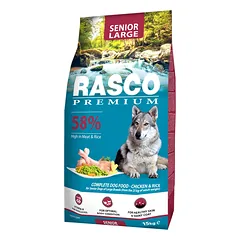
Rasco
2,67 €/kg
39,99 € / 15 kg
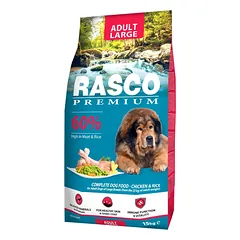
Rasco
2,67 €/kg
39,99 € / 15 kg
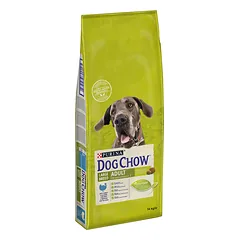
Purina
2,71 €/kg
37,96 € / 14 kg

Sam's Field
2,77 €/kg
35,99 € / 13 kg
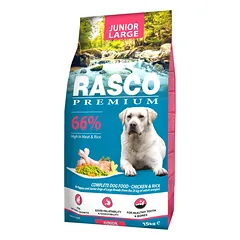
Rasco
2,80 €/kg
41,99 € / 15 kg

Sam's Field
2,85 €/kg
37,04 € / 13 kg