


Real Dog
Real Dog sausas maistas suaugusiems, didelių-milžiniškų veislių, šunims su vištiena ir ryžiais 20kg
2,11 €/kg
42,15 € / 20 kg

Also known as: Tosa Tōken, Japanese Tosa, Japanese Mastiff, Tosa Fighting Dog, Japanese Fighting Dog
The Tosa originated in Japan's Kochi prefecture, where local dogs were crossed with mastiffs, bull terriers and Great Danes in the late 19th century to build a heavyweight fighting dog. Japanese dog fighting follows sumo-like rituals, and a winning dog is traditionally awarded a champion's rope belt. A male can weigh up to 61 kilograms, and the smooth, dense coat needs almost no upkeep, unlike handling the dog itself, which demands real experience. Many countries restrict or ban Tosa ownership under dangerous-breed legislation. Calm with its owner but powerfully built, it's not a dog suited to a first-time owner. Life expectancy runs 9 to 11 years, shorter than most breeds owing to its sheer body mass.
Browse dog food sized right for this breed
Energy level
Trainability
Family friendly
Grooming need
Males 60–65 cm
Females 55–60 cm
Males 36–61 kg
Females 30–50 kg
Tosa's average temperament and family-life score for this breed is low.
Tosa's energy and exercise needs are low.
Tosa's guarding and alertness traits are moderate.
Tosa's grooming needs are low.
In Japan, around Kochi, the Tosa was bred for fighting, and that history is worth knowing not to condemn the dog but to understand what you are bringing home. Well raised and socialised, it is calm, dignified and surprisingly quiet: it rarely barks, prefers resting indoors, and outside a few calm but longer walks are enough. It is big and heavy, so a flat doesn't suit it, and the lead must be held by someone who can genuinely hold it.
With its family it is devoted and gentle, but it distrusts strangers and may not get along with other dogs, particularly of the same sex, and no amount of good intentions will change that. Start socialising from the first day, train calmly and consistently without harshness, and never leave it unsupervised with small children or unfamiliar dogs.
In some countries owning this breed is restricted or requires a permit, so check the rules where you live before you commit. This is a dog for an experienced owner who values calm, has a secure yard and is ready for the responsibility, and in return gets a quiet, intensely loyal guardian.
The coat is the easiest part of keeping a Tosa, and the only part you can manage with one hand. The short, smooth, dense coat needs no more than a weekly pass with a rubber brush or mitt to shine, and it sheds little. As you go, look at the skin and at the folds on the head and neck: moisture and dirt can collect there, so wipe them clean and dry them.
It drools a fair amount, especially after drinking or while waiting for food, so keep a towel by the door and dry the lip folds. Check the ears weekly, trim the nails every few weeks and brush the teeth several times a week. Start all these rituals while the puppy weighs ten kilos: a sixty-kilo adult has to accept nail trimming willingly.
We don't have reliable health information specific to this breed, so we don't list conditions here. Keep up regular vet check-ups, and if you are getting a puppy, ask the breeder about the parents' health testing.
This is general information, not veterinary advice. For your own dog's health, tests and treatment, see a vet.
This list is chosen by the breed's weight (61 kg) rather than the breed itself: shops label food by dog size, so every breed of the same size gets the same list. Prices are updated daily.
≈ 505 g of dry food a day, from €27,76 a month For a neutered, normally active 44,3 kg dog. Calculate for your dog
Real Dog
2,11 €/kg
42,15 € / 20 kg

Sam's Field
2,56 €/kg
33,26 € / 13 kg
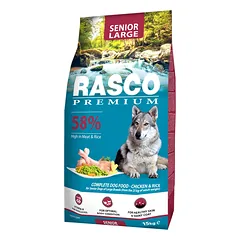
Rasco
2,67 €/kg
39,99 € / 15 kg
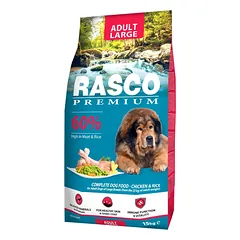
Rasco
2,67 €/kg
39,99 € / 15 kg
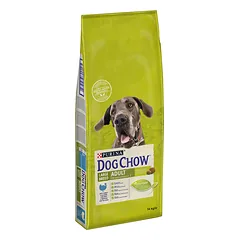
Purina
2,71 €/kg
37,96 € / 14 kg

Sam's Field
2,77 €/kg
35,99 € / 13 kg
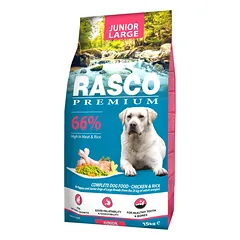
Rasco
2,80 €/kg
41,99 € / 15 kg

Sam's Field
2,85 €/kg
37,04 € / 13 kg