

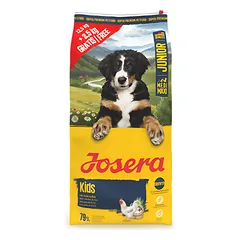
Josera
Josera Kids 12,5kg + 2,5kg = 15 kg
1,38 €/kg
37,89 € / 27,5 kg

Also known as: Majorca Mastiff, Presa Mallorquin, Majorcan bulldog, Mallorquin Bulldog
The Ca de Bou, or Perro de Presa Mallorquin, comes from the Balearic Islands and was historically used for cattle work and farm guarding, its name literally meaning bull dog, a reference to its earlier job controlling large livestock. The massive frame, up to 38 kilograms, with a broad jaw, resembles other presa-type mastiff breeds. The short, dense coat needs little maintenance. The breed is strong-willed and needs an experienced owner along with early socialization, since it is naturally territorial. With family it tends to be loyal and protective. Life expectancy runs 9 to 11 years.
Browse dog food sized right for this breed
Ca de Bou: how old in human years?
Energy level
Trainability
Family friendly
Grooming need
Males 52–58 cm
Females 50–55 cm
Males 30–38 kg
Females 25–34 kg
Ca de Bou's average temperament and family-life score for this breed is moderate.
Ca de Bou's energy and exercise needs are moderate.
Ca de Bou's guarding and alertness traits are high.
Ca de Bou's grooming needs are low.
A broad head, a steady gaze and a body that looks hewn from a single block: the Ca de Bou, from Mallorca, looks serious at first sight, and he does take his job of guarding the home seriously. With his own people he is gentle, loyal and likes to be close, but he meets strangers with caution and does not trust them straight away. This is not a dog who greets every guest with a wagging tail, and that is exactly why he is valued as a dependable guardian.
He has a fair amount of energy and needs more exercise than his calm bearing suggests: daily long walks, games and tasks for his brain keep him balanced. Training calls for experience, patience and consistency; harshness won't help, clear rules and respect will. Early and ongoing socialisation with people, sounds and places is essential, so that his watchfulness doesn't turn into suspicion.
The most important thing to know in advance: he does not get on easily with other dogs, and his prey drive can turn his attention to cats and small animals. So a lead in public places and careful introductions to other animals are not optional, they are the rule. He can live well with children, especially his own family's, but play should always be supervised by an adult. For an experienced owner looking for a devoted, calm and watchful friend, the Ca de Bou can be a remarkably loyal companion.
The Ca de Bou's coat is short, smooth and dense, a little rough to the touch, and it asks so little that you may struggle to remember when you last brushed it. A weekly pass with a rubber brush or mitt lifts the dead hair and leaves it looking tidy again. He sheds lightly, so no clouds of hair around the house, and a bath is only needed when he has genuinely got himself dirty.
A short coat has its flip side: it protects the skin less than a thick undercoat, so while brushing check for scratches, redness or sore spots, especially on the chest and elbows, where he lies down on hard surfaces. A soft bed will be a welcome present. Once a week check his ears and wipe the folds around the muzzle if dirt collects there, and keep the nails trimmed, since a solid, heavy dog feels them with every step.
We don't have reliable health information specific to this breed, so we don't list conditions here. Keep up regular vet check-ups, and if you are getting a puppy, ask the breeder about the parents' health testing.
This is general information, not veterinary advice. For your own dog's health, tests and treatment, see a vet.
This list is chosen by the breed's weight (38 kg) rather than the breed itself: shops label food by dog size, so every breed of the same size gets the same list. Prices are updated daily.
≈ 395 g of dry food a day, from €21,66 a month For a neutered, normally active 31,8 kg dog. Calculate for your dog
Josera
1,38 €/kg
37,89 € / 27,5 kg
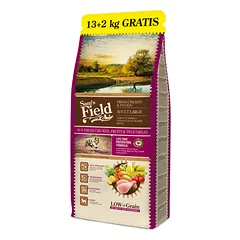
Sam's Field
1,80 €/kg
26,99 € / 15 kg

Country Dog
1,89 €/kg
28,29 € / 15 kg
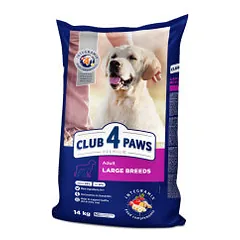
Club 4 Paws
1,92 €/kg
26,94 € / 14 kg
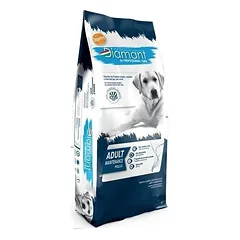
Diamant
1,93 €/kg
28,99 € / 15 kg
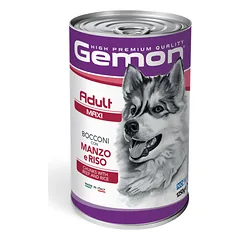
Gemon
1,94 €/kg
2,42 € / 1,3 kg

BIO FORM
2,00 €/kg
40,00 € / 20 kg

BIO FORM
2,00 €/kg
40,00 € / 20 kg