

VetExpert
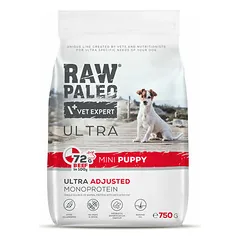
Raw Paleo Dog Ultra Mini Puppy Beef 750 kg
0,02 €/kg
13,09 € / 750 kg

Also known as: carlin, Puggu, Puglet, Mopshond, Dutch Mastiff
The Pug originated in China, where it was kept as a favored companion in the imperial court more than two thousand years ago, before Dutch traders brought it to Europe in the 16th century, where it became a symbol of the House of Orange. The flattened face that defines the breed causes real breathing difficulty in heat and during exertion, so the dog tolerates hot weather and long summer walks poorly. Weighing around 8 kilograms, it is compact and muscular but prone to rapid weight gain if feeding isn't controlled. The short, smooth coat sheds heavily year round. Temperamentally it is playful and affectionate, and tends to bond very closely with its owner. Life expectancy runs 12 to 15 years.
Browse dog food sized right for this breed
Energy level
Trainability
Family friendly
Grooming need
Males not specified
Females not specified
Males 6.3–8.1 kg
Females 6.3–8.1 kg
Pug's average temperament and family-life score for this breed is high.
Pug's energy and exercise needs are low.
Pug's guarding and alertness traits are low.
Pug's grooming needs are moderate.
If you have ever wanted a shadow with a wrinkled forehead, a Pug is for you. It follows you from room to room, lies on your feet while you cook and waits outside the bathroom door as if you had left for a month. Pugs were bred as companions, and their one serious job is being with you.
They don't need much exercise: a few easy walks and a bit of play indoors keep a Pug content, which makes it a natural for flats and for people who are not training for a marathon. Just guard it from heat: in summer walk early in the morning and in the evening, and leave the hot middle of the day for napping on a cool floor. It learns happily when the reward is edible and noticeably less happily when it isn't; short, cheerful sessions work best, and its stubbornness is not bad character, just a negotiating style.
A Pug gets along with nearly everyone: children who haul it around, other dogs, and the courier, whom it is more likely to greet than to bark at. As a guard dog it is hopeless, which is part of its charm. A typical day is a morning walk, a long nap, a dinner it will remind you about a good hour in advance, and an evening on the sofa pressed against your side.
The Pug's short, glossy coat is a master of disguise: it looks as if there is nothing there to shed, yet fine little hairs will soon be on your clothes, your sofa and quite possibly your sandwich. A rubber mitt or brush a few times a week catches a good share of them. Skin care is all about the wrinkles: once or twice a week wipe them, especially the big fold over the nose, with a soft damp cloth and then dry them thoroughly, because a warm, damp fold is the perfect place for skin trouble to start.
Look at those prominent eyes every day; it takes seconds. They should be clear and bright, with no redness or cloudiness. Check the ears once a week: pale inside and odour-free is what you want. Brush the teeth with a dog toothbrush and dog toothpaste, ideally daily, because crowded Pug teeth will thank you for it more than for anything else. A small mouth is awkward to brush, so start early, build up slowly and be generous with praise.
The face you fell for is also the Pug's big health story: a short muzzle means narrower airways, prominent eyes and teeth packed in tight. A Pug can live twelve to fifteen years and be cheerful for every one of them, but heat, extra weight and eye injuries are more dangerous for it than for a longer-nosed dog, so it is worth knowing what to watch for.
This is general information, not veterinary advice. For your own dog's health, tests and treatment, see a vet.
Overheating means the body temperature climbs past the point where the dog can cool itself down, and it can become life-threatening fast. Watch for loud, laboured panting, a tongue and gums turning dark red or bluish, stumbling, vomiting, or a dog that stops responding. A Pug cools itself by panting, which that short muzzle does poorly, so on a warm day trouble arrives quickly: if you see these signs, get to a vet immediately.
This is the price of the flat face: narrow nostrils, an overlong soft palate and a tight throat that stop air from flowing freely. Snoring, snorting and grunting even at rest aren't a charming quirk but a sign that breathing takes effort; so is a Pug that tires quickly or sleeps sitting up with its chin propped on something. How much it affects your particular dog is for a vet to assess.
Obesity is excess body fat, and in a Pug it makes the hard things harder: breathing, moving and coping with heat. Run your hands along the sides: under a thin layer you should feel the ribs, and from above there should be at least a hint of a waist, even if a Pug will never pass for a greyhound. These dogs have a begging stare that could melt steel, so weigh yours regularly and talk the numbers through with your vet.
An allergy is the immune system overreacting to harmless things such as pollen, dust mites or certain food ingredients, and in dogs it shows up in the skin and the ears. You might notice paw licking, a face rubbed along the carpet, scratching at the ears, head shaking and an unpleasant smell from the ears. A Pug's warm, damp facial folds and its ears are where trouble shows first, and a vet can help work out what is behind it.
This is gum inflammation caused by plaque and tartar, which over time can loosen the teeth. The first signs are bad breath, brownish deposits along the gums or a reddened gum line. A Pug's short jaw has to fit the same number of teeth as a long-nosed dog's, so they end up crowded, and food gets trapped in the gaps more easily.
Eye injuries are scratches or small wounds on the surface of the eye, the cornea, left by a twig, a cat's claws or even a stiff blade of grass. The dog squints, has a watery eye, paws at it or keeps it shut, and the surface may look cloudy. A Pug's big, prominent eyes are easy to hurt, so any sign of eye pain is a reason to see a vet the same day.
In this disease the head of the thigh bone loses part of its blood supply, so the bone starts to break down and the hip joint becomes painful. It shows up in young small dogs, first as a limp on one back leg that slowly gets worse, sometimes with the leg held up off the ground. A Pug is exactly that kind of small dog, so don't put a young dog's limp down to rough play; a vet will find out what it means.
This list is chosen by the breed's weight (8 kg) rather than the breed itself: shops label food by dog size, so every breed of the same size gets the same list. Prices are updated daily.
≈ 130 g of dry food a day, from €7,10 a month For a neutered, normally active 7,2 kg dog. Calculate for your dog
VetExpert
0,02 €/kg
13,09 € / 750 kg
1,70 €/kg
17,02 € / 10 kg
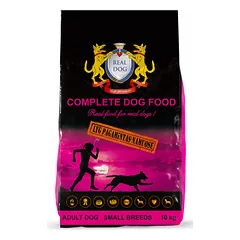
Real Dog
1,78 €/kg
17,79 € / 10 kg
Family Dog
1,89 €/kg
1,89 € / 1 kg
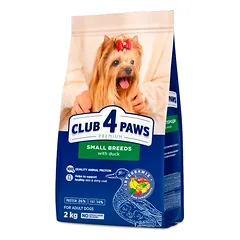
Club 4 Paws
1,93 €/kg
26,99 € / 14 kg

Club 4 Paws
1,93 €/kg
26,99 € / 14 kg
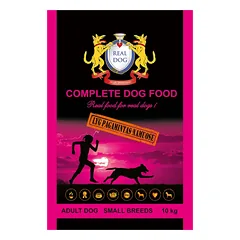
Real Dog
1,94 €/kg
19,42 € / 10 kg
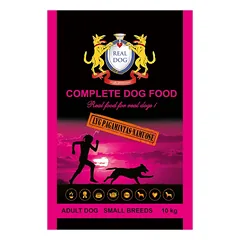
Real Dog
1,95 €/kg
19,49 € / 10 kg