

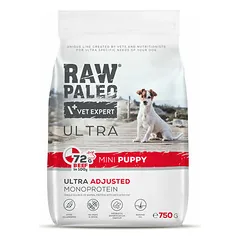
VetExpert
Raw Paleo Dog Ultra Mini Puppy Beef 750 kg
0,02 €/kg
13,09 € / 750 kg

Also known as: Maltese terrier, Melitan, Maltese lapdog, Maltese lion dog
Somewhere around the Mediterranean, likely the island of Malta, this breed has existed since antiquity, mentioned in Greek and Roman writing as a favored companion of the aristocracy. The long, straight, silky single coat with no undercoat was long treated as a mark of luxury and today needs daily brushing to stay mat-free. The body is featherlight, up to 4 kilograms, bred purely to stay close to a person rather than to work. Despite the small size, it's alert and quick to sound off at strangers. The area around the eyes tends to stain from tearing and needs regular cleaning. It attaches closely to its family and often struggles with being left alone. Life expectancy runs 12 to 15 years.
Browse dog food sized right for this breed
Maltese: how old in human years?
Energy level
Trainability
Family friendly
Grooming need
Males 21–25 cm
Females 20–23 cm
Males 3–4 kg
Females 3–4 kg
Maltese's average temperament and family-life score for this breed is high.
Maltese's energy and exercise needs are low.
Maltese's guarding and alertness traits are low.
Maltese's grooming needs are low.
In the morning, a Maltese greets you as if you'd been apart for a year, even though you slept in the same bed. This dog has been a companion for centuries and takes the job seriously: it follows you about, settles on your lap, and makes a point of joining in whatever you are doing. It needs little in the way of exercise; a few short walks and some play indoors keep it content and calm.
It is bright and keen to learn, especially when lessons are short and the reward is tasty. Gentleness works better than firmness, because this little dog is sensitive to your tone. House training can take longer than with a bigger dog, so arm yourself with patience.
It is perfectly at home in a flat and delights the whole family, but small children need supervising: a three-kilo dog does not survive being dropped or stepped on unscathed. It will announce the doorbell, sometimes louder than you'd expect, but it is no guard dog. It does not like long hours alone, so if you are out a lot, it would much rather come along in your bag.
The Maltese coat is a single layer, long and straight with no undercoat, so it sheds very little: the hair doesn't fall on the floor, it stays in the coat and tangles there unless you brush it. Brush daily, a little at a time, section by section down to the skin, especially behind the ears, in the armpits and on the belly. If a floor-length show coat isn't your dream, a short trim from a groomer every few weeks makes life easier for you both. Check the skin as you go; under a white coat, redness is easy to spot as long as you look.
A white coat shows every tear, so wipe the corners of the eyes daily with a clean damp cloth and keep hair out of the eyes, trimmed short or tied up in a topknot. Once a week, look into the ears, have a sniff and clean the visible part without going into the canal; if hair grows inside the ears, ask your groomer or vet about it. Brush the teeth with a dog toothbrush and dog toothpaste, ideally every day: start with a few seconds and a treat, and within a week it becomes a ritual.
Three or four kilos of snow-white fluff looks fragile, but the Maltese is sturdier than it appears and can live twelve to fifteen years. A small body has its weak spots, though: the knees, the heart, the liver and, above all, the teeth. Knowing what to look for lets you catch a lot early, and your vet will help you decide what to do about it.
This is general information, not veterinary advice. For your own dog's health, tests and treatment, see a vet.
The kneecap should glide in its groove, but sometimes it pops out to the side and then slips back. You may see it as a funny skip: the dog is trotting along, suddenly lifts a hind leg for a few steps, then carries on as if nothing happened. A Maltese's knees take a lot of leaps off sofas and beds, so show that three-legged hop to your vet.
Before birth, a puppy's heart uses a blood vessel that bypasses the lungs, and after birth it is meant to close; if it stays open, blood takes the wrong route and the heart works too hard. The first clue may not be something you notice at all, but a heart murmur the vet hears at the first puppy check. So don't put off that first visit with your Maltese, and ask how its heart sounds.
A liver shunt is a blood vessel that routes blood from the gut around the liver, so the liver can't clean out what it should. You might notice a puppy growing more slowly than its littermates, or turning oddly dull, confused or wobbly after a meal. A Maltese is tiny anyway, so slow growth is easy to put down to size, but if something seems off, let a vet take a look.
Plaque builds up on the teeth and hardens into tartar, the gums redden, and the inflammation can reach the roots. The first giveaway may well be the smell: when a doggy kiss starts to remind you of old fish, it's time to look in the mouth. A Maltese jaw fits a full set of teeth into very little space, so those teeth deserve as much attention as the famous white coat.
This list is chosen by the breed's weight (4 kg) rather than the breed itself: shops label food by dog size, so every breed of the same size gets the same list. Prices are updated daily.
≈ 76 g of dry food a day, from €4,14 a month For a neutered, normally active 3,5 kg dog. Calculate for your dog
VetExpert
0,02 €/kg
13,09 € / 750 kg
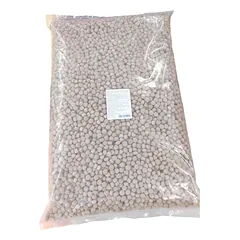
1,70 €/kg
17,02 € / 10 kg
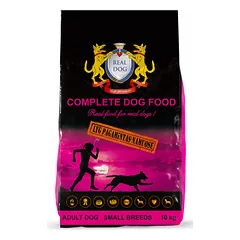
Real Dog
1,78 €/kg
17,79 € / 10 kg
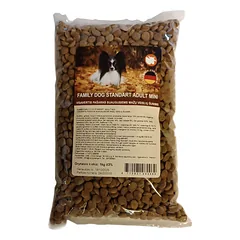
Family Dog
1,89 €/kg
1,89 € / 1 kg

Club 4 Paws
1,93 €/kg
26,99 € / 14 kg

Club 4 Paws
1,93 €/kg
26,99 € / 14 kg
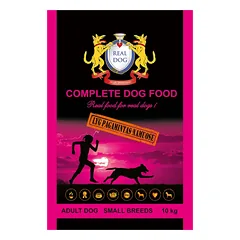
Real Dog
1,94 €/kg
19,42 € / 10 kg
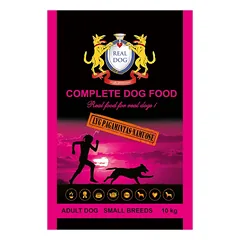
Real Dog
1,95 €/kg
19,49 € / 10 kg