


VetExpert
Raw Paleo Dog Ultra Mini Puppy Beef 750 kg
0,02 €/kg
13,09 € / 750 kg

Also known as: Havanese Bichon, Havana Silk
The Havanese is Cuba's only native dog breed, descended from bichon-type dogs brought over by Spanish colonists and later favored as a companion by Havana's aristocracy in the 19th century. The long, wavy, silky double coat sheds minimally but needs steady brushing to avoid matting. Weighing only around 5.5 to 6 kilograms, the breed is playful and affectionate, sometimes to the point of struggling with being left alone. The breed nearly disappeared in Cuba under Fidel Castro, and survived largely because emigrants carried a small number of dogs to the United States. Life expectancy runs 13 to 15 years.
Browse dog food sized right for this breed
Havanese: how old in human years?
Energy level
Trainability
Family friendly
Grooming need
Males 23–27 cm
Females 21–25 cm
Males 3–6 kg
Females 3–5.5 kg
Havanese's average temperament and family-life score for this breed is high.
Havanese's energy and exercise needs are moderate.
Havanese's guarding and alertness traits are low.
Havanese's grooming needs are low.
The Havanese is the dog that follows you to the bathroom, into the kitchen and, if you let it, into a job interview. For centuries it has been a family companion, and being near you is its whole purpose in life. That makes it a wonderful fit for families where someone is home for much of the day, and a poor one for long hours alone.
It is cheerful, playful and remarkably easy to train: it learns quickly and willingly, and loves showing off tricks to visitors, whom it greets like old friends. It gets along beautifully with children, other dogs and even cats, but teach small children that a dog of a few kilos is not a toy to carry around.
It enjoys moving but doesn't demand much: daily walks and games indoors or in the garden keep it content. It is perfectly at home in a flat and will announce the doorbell, but it is no guard dog. A typical day: a morning lap around the block, an afternoon ball game in the hallway, and an evening on the sofa, pressed against your side.
The long, silky, wavy Havanese coat barely sheds, but that doesn't make it easy: loose hairs stay in the coat and, if you don't brush, turn into mats within days. Brush several times a week, or better a little every day, section by section down to the skin, especially behind the ears, in the armpits and between the legs. If a long coat is too much work, a groomer can trim it shorter and your dog will still be every bit itself. While brushing, part the coat and look at the skin: redness or scabs are easy to miss under all that hair.
Keep the facial hair out of the eyes, trimmed or tied up in a topknot, and wipe the corners of the eyes daily with a damp cloth; a red or weepy eye is a reason to see the vet. Lift the drop ears once a week, look inside, sniff, and wipe the visible part without going into the canal. Brush the teeth with a dog toothbrush and dog toothpaste, ideally every day: a few seconds, a treat, some praise, and within a week it becomes your shared ritual.
A little dog from Cuba that weighs just a few kilos and can live thirteen to fifteen years, the Havanese is sturdier than its fluffy coat suggests. It doesn't escape the concerns of small dogs, though: knees, hips, teeth and eyes are the places worth watching closely. If something seems off, talk to your vet rather than a search engine.
This is general information, not veterinary advice. For your own dog's health, tests and treatment, see a vet.
This is an inherited disease in which the retina gradually deteriorates and the dog slowly loses its sight, starting in dim light. You may notice your dog hesitating on the stairs in the evening, reluctant to go out into a dark garden, or bumping into toys it never touches by day. A Havanese's eyes are easily hidden behind the hair falling over its face, so it's worth asking both the breeder and your vet about eyesight.
In this condition, the head of the thigh bone, which forms the hip joint, loses part of its blood supply and the bone begins to break down. It shows up in young, growing dogs as a limp on one hind leg that slowly gets worse, and the dog may guard the leg and avoid putting weight on it. Small-breed puppies like the Havanese belong to the group in which this disease is known, so show a lingering limp to your vet.
The kneecap briefly slips out of place, so the dog runs a few steps on three legs and then carries on as if nothing happened. That skip is easy to mistake for playfulness, especially in a dog as cheerful as the Havanese. If it keeps happening, tell your vet, who can assess how the kneecap is holding up.
Plaque hardens into tartar, the gums redden, and the inflammation can eventually damage the roots of the teeth. The biggest clue is bad breath that even the sweetest little face can't hide, along with a red gum line or reluctance to chew harder bites. Teeth sit close together in a small Havanese jaw, so caring for them from puppyhood pays off here.
This list is chosen by the breed's weight (6 kg) rather than the breed itself: shops label food by dog size, so every breed of the same size gets the same list. Prices are updated daily.
≈ 90 g of dry food a day, from €4,91 a month For a neutered, normally active 4,4 kg dog. Calculate for your dog
VetExpert
0,02 €/kg
13,09 € / 750 kg
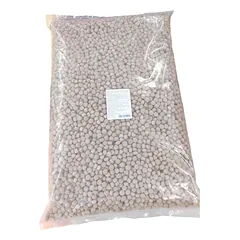
1,70 €/kg
17,02 € / 10 kg

Real Dog
1,78 €/kg
17,79 € / 10 kg
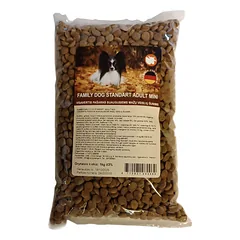
Family Dog
1,89 €/kg
1,89 € / 1 kg

Club 4 Paws
1,93 €/kg
26,99 € / 14 kg

Club 4 Paws
1,93 €/kg
26,99 € / 14 kg

Real Dog
1,94 €/kg
19,42 € / 10 kg

Real Dog
1,95 €/kg
19,49 € / 10 kg