

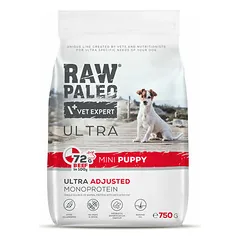
VetExpert
Raw Paleo Dog Ultra Mini Puppy Beef 750 kg
0,02 €/kg
13,09 € / 750 kg

Also known as: Bichon Tenerife
The Bichon Frise traces back to Mediterranean lapdogs before being refined in France and Belgium, where it became a favorite of Renaissance courts and later of traveling entertainers. Its name literally means curly, and that coat is the breed's defining feature: dense, springy curls that barely shed but mat quickly without regular brushing. An adult weighs only around 6 kilograms, which suits smaller homes well. Despite the small frame, it is not a fragile ornamental dog, it is lively, playful and generally happy to be the center of attention. The coat demands an ongoing grooming schedule rather than a one-time trim. Life expectancy runs 12 to 15 years.
Browse dog food sized right for this breed
Bichon Frise: how old in human years?
Energy level
Trainability
Family friendly
Grooming need
Males 23–30 cm
Females 23–30 cm
Males 3–6 kg
Females 3–6 kg
Bichon Frise's average temperament and family-life score for this breed is high.
Bichon Frise's energy and exercise needs are moderate.
Bichon Frise's guarding and alertness traits are low.
Bichon Frise's grooming needs are low.
A quiet evening, and suddenly a white blur tears across the room: a lap of the table, a leap onto the sofa, another lap, and then calm again as if nothing happened. These bursts are the best proof that under the fluff lives a lively, curious dog. Bichons are clever and keen to learn, especially when lessons are short, cheerful and end with something tasty; a gentle voice gets much further with them than a stern one.
They do not need long hikes. A couple of brisk walks a day and some play indoors keep a Bichon content, which makes it a natural in a flat, garden or no garden. It will be first to the door when guests arrive, though to say hello rather than to stand guard. Do not expect a guard dog, even if the doorbell never goes unannounced.
Bichons are built for company. They get along easily with children, other dogs and strangers, and their favourite place is simply wherever you are: on your lap while you read, at your feet while you cook. Long hours alone are not their thing, so if the house stands empty all day, think about who will keep your dog company.
A Bichon leaves very little hair on your sofa: the loose hairs stay caught in the curls instead. That is exactly why the coat mats so quickly and so sneakily. From above the dog looks fluffy, while right next to the skin a hard, felted mat is quietly forming. Brush and comb several times a week, section by section down to the skin, not forgetting the armpits, the groin and behind the ears. The coat also needs regular trimming, and brushing doubles as a skin check: on pale skin you will only spot redness or flaking once you part the curls.
The white hair around the eyes stains reddish-brown from tears, so wipe the corners gently with a soft damp cloth every day and keep hair from poking into the eyes, ideally by having it trimmed short. Hair grows inside the ears too, trapping moisture and dirt, so look inside once a week. A bad smell, redness or a dog that keeps shaking its head are signs for your vet to take a look.
A Bichon can keep you company for twelve to fifteen years, so its health is really a question of the long haul. The places worth watching are the eyes, the teeth, the bladder and how much your dog drinks. Your job is to notice changes early; deciding what they mean is your vet's.
This is general information, not veterinary advice. For your own dog's health, tests and treatment, see a vet.
In diabetes the body can no longer keep its blood sugar in check, so the sugar builds up and spills out in the urine. The water bowl may start emptying far faster than it used to, your dog asks to go out again and again, and weight drops even though the appetite is as keen as ever. In a dog this small, a few extra laps of water or a puddle by the door are easy to shrug off, so mention any such change to your vet, who can find out what is going on.
The cornea is the clear window at the front of the eye, and in corneal dystrophy material builds up in it, leaving greyish or white spots. Looking into your dog's eyes, you might notice a small hazy or silvery patch that was not there before. Against a white Bichon face those dark eyes are hard to miss, so a change like this is easy to spot, and your vet can tell you what it means.
A cataract is a clouding of the lens inside the eye: the clear lens gradually turns milky and lets less light through. You may see a white, milky haze in the pupil, or notice your dog moving hesitantly in the evening and bumping into things it used to step around. Bichons can live a long time, so have their eyes checked by your vet throughout life, and especially if the look in them changes.
Minerals in the urine can form crystals in the bladder, and the crystals can grow into stones that irritate the bladder wall or even block the way out. Watch for a dog that squats for a long time and produces only a few drops, asks to go out again and again, or has blood in its urine. A small dog has narrow urinary passages, so if your Bichon strains and nothing comes out, contact your vet right away.
It starts with plaque that hardens into tartar, while the gums around it redden and begin to recede. The first clue may be bad breath when your dog leans in for a cuddle, or chewing on one side only. Teeth sit close together in a Bichon's small jaw, leaving plenty of corners for food to linger, so ask your vet to look at the teeth at every visit.
This list is chosen by the breed's weight (6 kg) rather than the breed itself: shops label food by dog size, so every breed of the same size gets the same list. Prices are updated daily.
≈ 91 g of dry food a day, from €5,00 a month For a neutered, normally active 4,5 kg dog. Calculate for your dog
VetExpert
0,02 €/kg
13,09 € / 750 kg
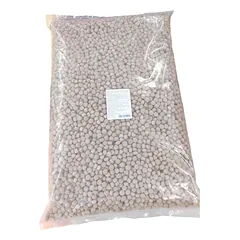
1,70 €/kg
17,02 € / 10 kg
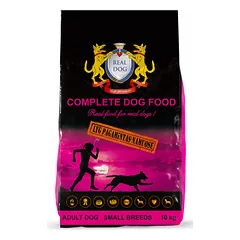
Real Dog
1,78 €/kg
17,79 € / 10 kg
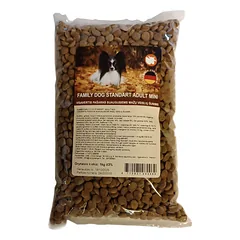
Family Dog
1,89 €/kg
1,89 € / 1 kg
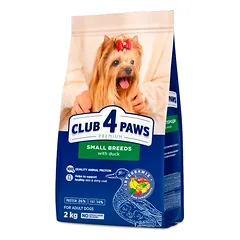
Club 4 Paws
1,93 €/kg
26,99 € / 14 kg
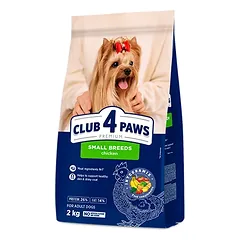
Club 4 Paws
1,93 €/kg
26,99 € / 14 kg

Real Dog
1,94 €/kg
19,42 € / 10 kg

Real Dog
1,95 €/kg
19,49 € / 10 kg