

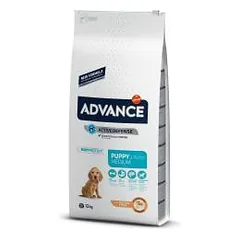
Advance
Advance Puppy Medium sausas maistas vidutinių veislių šuniukams, 12 kg
1,48 €/kg
17,76 € / 12 kg

Also known as: Boston bulldog, American gentleman
The Boston Terrier was developed in late nineteenth century Boston by crossing bulldogs with white English terriers, and became one of the first American breeds officially recognised by a kennel club. The short, smooth coat with its signature black and white 'tuxedo' pattern makes it instantly recognisable. At only around 11 kilograms, it is a compact dog, but like many flat-faced breeds it is heat-sensitive and prone to breathing quirks. Nicknamed the 'American Gentleman' for its balanced, friendly manner and tidy appearance. The short muzzle means long runs in hot weather can be risky. It adapts well to apartment living and doesn't need much space. Grooming needs are minimal, with a coat that barely requires brushing. Life expectancy runs 11 to 13 years.
Browse dog food sized right for this breed
Boston Terrier: how old in human years?
Energy level
Trainability
Family friendly
Grooming need
Males not specified
Females not specified
Males not specified
Females not specified
Boston Terrier's average temperament and family-life score for this breed is high.
Boston Terrier's energy and exercise needs are moderate.
Boston Terrier's guarding and alertness traits are low.
Boston Terrier's grooming needs are low.
He will wake you not with a bark but with a half-snoring sigh straight into your ear, the first of many conversations that day. Compact and comically expressive, this American in what looks like a tuxedo manages to be both a playful clown and a calm sofa companion. Bostons are bright and keen to please, so they learn quickly; short, cheerful sessions and honest praise are all it takes.
There is energy to spare, but no need for marathons: a few walks a day and a game of ball are plenty. Flat life suits a Boston perfectly, and the neighbours will hardly know it is there, since it barks little. Just remember that short muzzle in summer: on hot days play moves to the cool of morning or evening, and midday belongs to the shade.
Families will struggle to find a better friend. A Boston is patient and jolly with children, easygoing with other dogs, and inclined to greet visitors like old acquaintances. Nobody would call it a guard dog, though it will certainly tell you the courier has arrived. Above all it wants to be near you, so when you sit down on the sofa in the evening, do not be surprised when your thigh becomes its pillow.
Good news here: the short, smooth, glossy coat practically looks after itself. A once-a-week going-over with a rubber brush or grooming mitt lifts the dead hair and brings back the shine. Feel the skin as you go: short hair hides nothing, so redness, a bump or a scratch shows up straight away. On cold, wet days a coat this fine offers little warmth, so a jacket outdoors is a matter of comfort rather than fashion.
The eyes need the most attention. Look at them every day and wipe any discharge from the corners with a soft damp cloth, moving away from the eye rather than towards it. Upright ears air well, but check them once a week and wipe the visible inner parts if needed; a bad smell or redness is a reason to visit the vet.
That short little face and those big round eyes give the Boston its irresistible expression, and they are also the reason a few things deserve a closer look. Breathing on hot days, the eyes and the knees are the three areas to watch. Bostons live around eleven to thirteen years, and any change you notice is for your vet to assess.
This is general information, not veterinary advice. For your own dog's health, tests and treatment, see a vet.
In a short muzzle all the soft tissue of the airway is packed into less space: the nostrils can be narrow and the soft palate too long, so air has a harder time reaching the lungs. You may notice loud snoring, snuffling even at rest, or a dog who takes a long time to catch its breath after play or in the heat. Heat and hard exertion are a real challenge for a Boston, so walk in the cool of the day in summer, and if your dog struggles to breathe, its tongue turns bluish or it collapses, get to a vet immediately.
The kneecap is a small bone at the front of the knee that should glide in its groove, but sometimes it slips out to the side. It shows up as an odd step: your dog is running along, suddenly hops for a few strides on three legs with one back leg held up, then carries on as if nothing happened. In a small, bouncy Boston that skip can look like play, but if you see it more than once, tell your vet about it.
Big, slightly prominent eyes are the Boston's calling card, but they are less protected from knocks, dust and twigs than deeper-set eyes. Watch for squinting, redness, watering, or a dog rubbing its face along the carpet. Eyes are not something to wait on: show any sudden change, especially signs of pain, to your vet as soon as possible.
This list is chosen by the breed's weight (11 kg) rather than the breed itself: shops label food by dog size, so every breed of the same size gets the same list. Prices are updated daily.
≈ 180 g of dry food a day, from €9,96 a month For a neutered, normally active 11,3 kg dog. Calculate for your dog
Advance
1,48 €/kg
17,76 € / 12 kg

Sam's Field
1,80 €/kg
26,99 € / 15 kg

Country Dog
1,89 €/kg
28,29 € / 15 kg
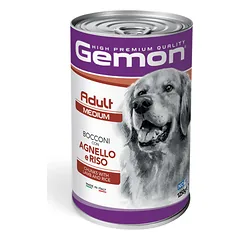
Gemon
1,94 €/kg
2,42 € / 1,3 kg
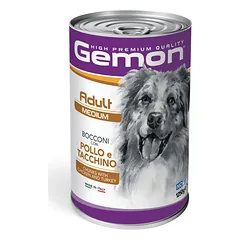
Gemon
1,94 €/kg
2,42 € / 1,3 kg

Sam's Field
2,11 €/kg
27,45 € / 13 kg

2,14 €/kg
30,00 € / 14 kg

Club 4 Paws
2,15 €/kg
42,99 € / 20 kg