


VetExpert
Raw Paleo Dog Ultra Mini Puppy Beef 750 kg
0,02 €/kg
13,09 € / 750 kg

Also known as: Apso, Kasmir terrier, Lhassa terrier, Bhuteer Terrier
The Lhasa Apso originated in Tibet, where for centuries it guarded monasteries, stationing itself by the door and sounding an alarm at strangers rather than relying on physical force. The breed's name references Lhasa, Tibet's capital. The heavy, straight, long double coat once served as insulation against high-altitude cold, and today it requires steady brushing to avoid matting. Despite weighing only around 6 to 8 kilograms, this is an alert, independent dog that does not defer easily. It tends to stay reserved with strangers, echoing its watchdog ancestry. Life expectancy runs 12 to 15 years.
Browse dog food sized right for this breed
Lhasa Apso: how old in human years?
Energy level
Trainability
Family friendly
Grooming need
Males 25–28 cm
Females 23–26 cm
Males 5–8 kg
Females 5–7 kg
Lhasa Apso's average temperament and family-life score for this breed is moderate.
Lhasa Apso's energy and exercise needs are moderate.
Lhasa Apso's guarding and alertness traits are high.
Lhasa Apso's grooming needs are moderate.
Someone has barely touched the gate, and the Lhasa is already at the door asking, in a stern voice, who goes there. In Tibetan monasteries these small dogs kept watch indoors while bigger guardians held the yard, and they still take the job seriously. It greets strangers with reserve, sometimes suspicion, and decides for itself when to make friends.
A Lhasa does not demand long hikes: a couple of calm walks and some play at home are usually plenty, which makes it a natural for a flat. It is clever but independent, and quick to notice when training turns into dull repetition. Short, gentle lessons with a treat work better than firmness, and you will need patience, especially when teaching that not every sound on the stairs calls for an alarm.
With its own people it is affectionate and loyal, happy to be near you, if not always in your arms. It gets on with children who respect its peace and keep their hands off its coat, and with other dogs it is usually polite rather than eager. This is the dog that, after the evening walk, settles on a cushion by the window and guards the house even while it dozes.
The Lhasa Apso's coat, heavy, straight and dense with an undercoat beneath, was once protection against Tibetan winds; in your home it becomes a daily commitment. It sheds very little, but that means the dead hair stays in the coat and mats quickly, especially behind the ears, in the armpits and between the legs. A full coat wants combing every day, layer by layer, right down to the skin, and many owners choose a shorter trim from a groomer instead, which costs the dog nothing and saves you a lot of time. While you comb, check the skin: under a mat it can turn red or stay damp.
The eyes and ears need special care here. Keep the hair away from the eyes, combed to the sides or tied up in a topknot, and wipe the corners gently with a damp cloth every day. The drop ears are hairy and should be clean, dry and odour-free inside; check them every week. Brush the teeth with a dog toothpaste several times a week, and keep the hair between the paw pads short so your dog does not skid on the floor.
Under all that long, straight hair lives a sturdy, long-lived little dog that can be with you for twelve to fifteen years. Looking after its health is mostly about what is hard to see beneath the coat: the eyes, the teeth, the knees, the kidneys and the breathing through that shortish muzzle. Regular vet visits and a careful daily look go a long way.
This is general information, not veterinary advice. For your own dog's health, tests and treatment, see a vet.
A Lhasa Apso has large, dark eyes framed by long hair, so they are easily irritated and can be affected by various problems, from damage to the surface of the eye to diseases inside it. You may notice squinting, pawing at an eye, watering, redness or a cloudy look. Show any such change to your vet promptly, because the surface of the eye is easily hurt.
The kneecap, a small bone at the front of the knee, can slip out of its groove and pop back in. You may see your Lhasa suddenly hold up a hind leg for a few steps, then put it down again as if nothing had happened. Under a long coat this gait is easy to miss, so watch how your dog moves and show a recurring skip to your vet.
This is the chain of plaque, tartar and inflamed gums that slowly weakens the teeth and their hold in the jaw. You might smell bad breath, see red gums, or notice your dog chewing carefully on one side. In a small muzzle the teeth sit close together, so ask your vet to look in your Lhasa's mouth at every visit.
Renal dysplasia is an inborn disorder in which the kidneys do not develop fully and cannot filter the blood properly. A young dog may drink and pee more than usual, grow poorly, seem listless or eat little. Because the signs appear early in life, it is worth asking the breeder about the parents' health testing, and showing any unusual thirst to your vet.
A shorter muzzle leaves less room for the airways, so air can struggle to get through the nose and throat. You may hear snoring, snorting or noisy breathing, especially in hot weather or after play. If your Lhasa struggles for breath, its gums or tongue turn blue, or it collapses, it needs a vet immediately.
This list is chosen by the breed's weight (8 kg) rather than the breed itself: shops label food by dog size, so every breed of the same size gets the same list. Prices are updated daily.
≈ 115 g of dry food a day, from €6,42 a month For a neutered, normally active 6,3 kg dog. Calculate for your dog
VetExpert
0,02 €/kg
13,09 € / 750 kg
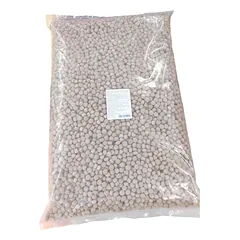
1,70 €/kg
17,02 € / 10 kg
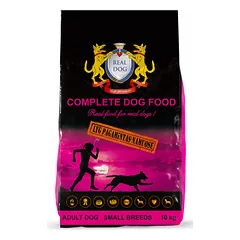
Real Dog
1,78 €/kg
17,79 € / 10 kg
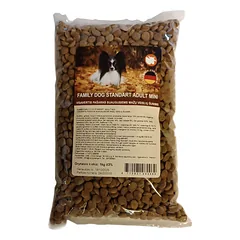
Family Dog
1,89 €/kg
1,89 € / 1 kg
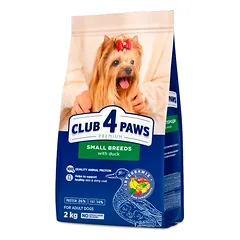
Club 4 Paws
1,93 €/kg
26,99 € / 14 kg

Club 4 Paws
1,93 €/kg
26,99 € / 14 kg
Real Dog
1,94 €/kg
19,42 € / 10 kg
Real Dog
1,95 €/kg
19,49 € / 10 kg