

VetExpert
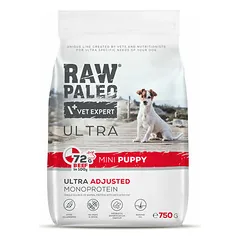
Raw Paleo Dog Ultra Mini Puppy Beef 750 kg
0,02 €/kg
13,09 € / 750 kg

The name is French for butterfly, a reference to the large, wide-set ears fringed with long hair that fan out like wings. The breed spent centuries as a favorite of European aristocracy, including the French royal court, and shows up in old portraits by Titian and others. The body is featherlight, up to 5 kilograms, but noticeably more athletic and alert than most toy breeds. The long, silky single coat doesn't mat as readily as other long-haired breeds, so upkeep stays relatively manageable. Despite the small size, it does well in agility competitions. Playful and sharp with family, it picks up new commands quickly. Life expectancy runs 14 to 16 years.
Browse dog food sized right for this breed
Papillon: how old in human years?
Energy level
Trainability
Family friendly
Grooming need
Males 20–28 cm
Females 20–28 cm
Males 3.5–5 kg
Females 3.5–5 kg
Papillon's average temperament and family-life score for this breed is high.
Papillon's energy and exercise needs are moderate.
Papillon's guarding and alertness traits are moderate.
Papillon's grooming needs are low.
It weighs less than a bag of shopping, yet it walks into a room as if it owned the place. The Papillon takes its name from the French word for butterfly, after its large, upright, fringed ears that look like open wings. For centuries it was a dog of European courts and salons, but it is a long way from an ornament: quick, curious and full of energy.
It is one of those small dogs you can train seriously: it learns very fast, loves tricks and can shine in agility. It needs exercise, but not a great deal: a few walks and some games indoors each day are enough, which makes it a fine flat dog. Being alert, it will report every footstep on the stairs, so teach it polite barking from the start.
With its family it is affectionate and likes to be close, and it gets on with other dogs, even ones many times its size. It is friendly with children, but such a fragile little dog can be hurt if it is dropped or stepped on by accident, so show young children how to handle it. With strangers it is reserved at first, but it doesn't take long to decide that a new person is simply one more pair of hands for stroking.
The Papillon's coat is long, fine and silky with no undercoat, so for all its elegance it is fairly easy to look after: it sheds little and only tangles in certain places. Comb it twice a week, especially the fringed ears, the hair behind them, the armpits and the trousers, where tangles form fastest. As you comb, check the skin: with no undercoat it sits closer to the surface, so dry or reddened patches are easy to spot. That missing undercoat also means a little dog gets cold quickly on a wet winter day.
Check the long-fringed ears weekly, and wipe the corners of the eyes if discharge collects there. The teeth sit close together in that small jaw, so brush them with a dog toothbrush and paste several times a week, ideally every day. Nails wear down little on soft floors and carpets, so trim them regularly, and trim the hair between the paw pads too, so your dog doesn't slip on the floor.
How to do it:
By age:
Small dogs are known for long lives, and the Papillon is no exception: with good care it lives fourteen to sixteen years. Its health questions largely come down to the build of a small dog, the bones of the skull, the kneecaps, the teeth and the windpipe, plus the eyes. Before you take a puppy home, it's worth asking the breeder about the parents' health testing, and afterwards keeping up regular vet visits, where a vet can look at anything you've noticed too.
This is general information, not veterinary advice. For your own dog's health, tests and treatment, see a vet.
The fontanelle is a soft spot on top of the skull where the bones haven't yet joined; it is normal in puppies, but sometimes stays open into adulthood. Stroking your puppy's head gently, you might feel a soft dip on the crown. A Papillon's tiny head is especially vulnerable when that is the case, so tell a vet about any soft spot you notice.
The kneecap, which should glide in its groove, slips out of place, and the leg briefly seems to lock. You might see a dog that suddenly skips along on three legs for a few strides and then runs on as if nothing had happened. That hop can easily pass for the playfulness so typical of a Papillon, so if it keeps happening, have a vet look at your dog.
Plaque builds up on the teeth and hardens into tartar, the gums become inflamed, and over time teeth can loosen. You might notice bad breath, reddened gums, a brown band of tartar at the gumline, or a dog that chews on one side only. In a Papillon's small jaw the teeth sit close together, so caring for them is part of the daily routine, and the mouth is worth showing to the vet at every visit.
The windpipe is held open by rings of cartilage; when they weaken, it flattens and air passes through it less easily. You might hear a dry cough that sounds like a goose honking, especially when the dog gets excited, pulls on the lead or has a drink. If your Papillon is struggling to breathe, gasping, or its gums turn blue, it needs a vet immediately; a cough that keeps coming back is worth discussing with a vet even without that urgency.
In this inherited disease the retina at the back of the eye gradually wastes away, and the dog slowly loses its sight. It starts with poorer vision in dim light: hesitating before jumping off the sofa in the evening or in a dark hallway, and the eyes may seem to reflect light more brightly. Before taking a Papillon puppy home, it's worth asking the breeder about the parents' health testing, and any change in sight is for a vet to assess.
This list is chosen by the breed's weight (5 kg) rather than the breed itself: shops label food by dog size, so every breed of the same size gets the same list. Prices are updated daily.
≈ 88 g of dry food a day, from €4,82 a month For a neutered, normally active 4,3 kg dog. Calculate for your dog
VetExpert
0,02 €/kg
13,09 € / 750 kg
1,70 €/kg
17,02 € / 10 kg
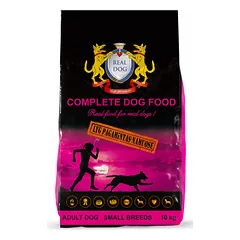
Real Dog
1,78 €/kg
17,79 € / 10 kg
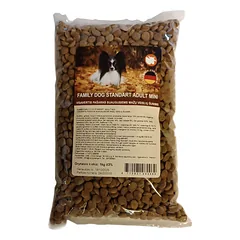
Family Dog
1,89 €/kg
1,89 € / 1 kg
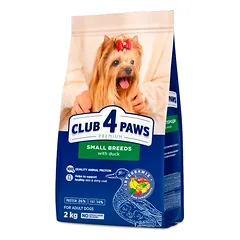
Club 4 Paws
1,93 €/kg
26,99 € / 14 kg
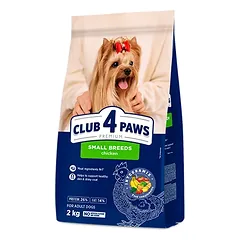
Club 4 Paws
1,93 €/kg
26,99 € / 14 kg

Real Dog
1,94 €/kg
19,42 € / 10 kg

Real Dog
1,95 €/kg
19,49 € / 10 kg