

VetExpert
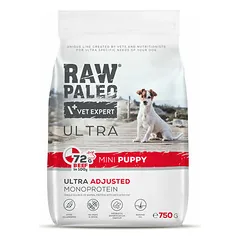
Raw Paleo Dog Ultra Mini Puppy Beef 750 kg
0,02 €/kg
13,09 € / 750 kg

Also known as: Jingba, Pickanese
The Pekingese was guarded for centuries inside the Chinese imperial court in Beijing, where stealing or even touching one of these dogs without permission could carry a death sentence for a commoner. When British forces looted the Summer Palace in 1860, several Pekingese were taken to England, and one was presented to Queen Victoria, marking the breed's entry into the West. The heavy, long coat with its full mane around the neck and the flattened face echo the image of a lion, a symbol of courage and nobility in Chinese culture. Despite a modest weight of around 5 kilograms, the body is compact and notably heavy for its size. Because of the short muzzle, the breed breathes noisily and handles heat and prolonged exercise poorly. Life expectancy runs 12 to 15 years.
Browse dog food sized right for this breed
Pekingese: how old in human years?
Energy level
Trainability
Family friendly
Grooming need
Males not specified
Females not specified
Males not specified
Females not specified
Pekingese's average temperament and family-life score for this breed is moderate.
Pekingese's energy and exercise needs are low.
Pekingese's guarding and alertness traits are moderate.
Pekingese's grooming needs are moderate.
A Pekingese is not a running partner, and he makes no secret of it. A calm stroll round the block, some sniffing in the park and a long rest on his favourite cushion add up to a perfectly good day. He is entirely at home in a small flat; just remember that a short face handles heat badly, so in summer walk in the cool hours, never leave him in a stuffy car and don't push him to run when he would rather not.
Training a Pekingese is closer to diplomacy than drill. He is clever but independent, and convinced that a request deserves an answer only when it makes sense to him. Short sessions, treats and endless patience work better than a stern voice, and house manners, housetraining above all, may take longer than you expected.
With his own people he is devoted and affectionate, but he is no toy for boisterous children: handled roughly or carried about constantly, he will soon let you know he has had enough. He is reserved with other dogs and strangers, and he announces every footstep on the stairs with a loud bark. He fits best in a calm home where he is respected and allowed to be a small monarch.
A Pekingese wears a proper robe: long, coarse guard hairs over a thick undercoat, a profuse mane around the neck and long feathering on the ears, legs and tail. All that luxury takes work. Brush several times a week, ideally a little every day, layer by layer down to the skin, paying extra attention behind the ears, in the armpits, on the trousers and under the tail, where tangles form fastest. The undercoat sheds all year, so keep the brush within reach, and some owners trim the hair around the rear end to keep it clean.
Check the wrinkle above his nose every day and wipe it gently: moisture and dirt collect there, and the skin can turn red and smell. His big, prominent eyes should be clear, without discharge or redness; wipe the corners with a damp cloth. The drop ears are heavily feathered and get little air, so look inside once a week: clean and not smelly is what you want. Check the skin under the coat as you brush, and trim the hair between his paw pads so he doesn't slip on smooth floors.
A Pekingese walks as if there were a red carpet under him: unhurried, rolling, with a lion's mane and an emperor's composure. That flat face and those big eyes are the breed's charm, and also the reason to keep a closer eye on breathing, eyes, knees and teeth. A small dog can live a long, good life when you catch changes in time, and regular vet check-ups help make sense of them.
This is general information, not veterinary advice. For your own dog's health, tests and treatment, see a vet.
In a short face the same airways are squeezed into less room: narrow nostrils, a long soft palate and a crowded throat all get in the way of the air. You may hear your Pekingese snore, snort or breathe heavily even after a short walk, and on a hot day he finds it especially hard to cool down. If he is struggling to breathe, his gums turn blue or he collapses, he needs a vet immediately.
The eye makes too few tears, so its surface dries out, gets irritated and becomes inflamed. You might notice thick, sticky, yellowish discharge, a red eye or a cornea that has lost its shine and looks dull. A Pekingese's eyes are large and exposed, so moisture matters a great deal to them; show any change to your vet.
An inherited disease in which the light-sensitive retina at the back of the eye slowly wastes away, taking sight with it. The first thing you might see is a Pekingese who moves hesitantly at dusk or in a dark room, pausing at the stairs or bumping into furniture he steers around easily by day. It doesn't hurt, which makes it easy to miss, and if you are getting a puppy, ask the breeder about the parents' health testing.
The kneecap should glide in its groove, and when it slips out to the side the leg briefly locks up. You may see your Pekingese skip along on three legs for a few steps, one hind leg held up, then carry on as if nothing happened. His short, slightly bowed legs and his weight matter a lot to his joints, so show that kind of skipping to your vet.
As plaque and tartar build up on the teeth, inflammation spreads into the gums and can damage the tissue that holds each tooth in place. You may notice bad breath, red gums or a dog who chews carefully on one side. In a Pekingese's small, short jaw the teeth sit tightly together, so mouth care and dental check-ups at the vet count for a lot.
This list is chosen by the breed's weight (5 kg) rather than the breed itself: shops label food by dog size, so every breed of the same size gets the same list. Prices are updated daily.
≈ 100 g of dry food a day, from €5,57 a month For a neutered, normally active 5,2 kg dog. Calculate for your dog
VetExpert
0,02 €/kg
13,09 € / 750 kg
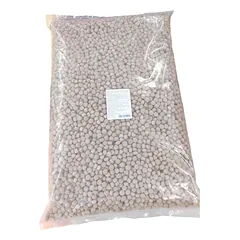
1,70 €/kg
17,02 € / 10 kg
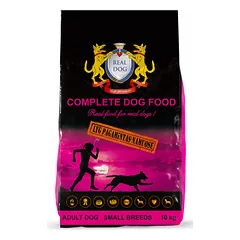
Real Dog
1,78 €/kg
17,79 € / 10 kg
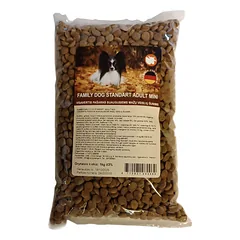
Family Dog
1,89 €/kg
1,89 € / 1 kg

Club 4 Paws
1,93 €/kg
26,99 € / 14 kg

Club 4 Paws
1,93 €/kg
26,99 € / 14 kg
Real Dog
1,94 €/kg
19,42 € / 10 kg
Real Dog
1,95 €/kg
19,49 € / 10 kg