


VetExpert
Raw Paleo Dog Ultra Mini Puppy Beef 750 kg
0,02 €/kg
13,09 € / 750 kg

Also known as: Coton
The Coton de Tulear comes from the Madagascar port city of Tulear, where legend says its ancestors swam ashore after a shipwreck and were later adopted by local villagers. The coat that gave the breed its name feels like cotton: soft, light and fluffy, quite different from a Bichon's silkier texture. For a long stretch the breed was reserved for Madagascar's nobility, and ordinary residents were forbidden from keeping one. A male weighs only around 6 kilograms, playful and people-oriented, happiest close to its owner rather than left alone. The coat doesn't shed in the usual sense but mats easily without near-daily brushing. Life expectancy runs 14 to 16 years, long even by small-breed standards.
Browse dog food sized right for this breed
Coton de Tulear: how old in human years?
Energy level
Trainability
Family friendly
Grooming need
Males 25–30 cm
Females 22–28 cm
Males 4–6 kg
Females 3.5–5 kg
Coton de Tulear's average temperament and family-life score for this breed is high.
Coton de Tulear's energy and exercise needs are moderate.
Coton de Tulear's guarding and alertness traits are low.
Coton de Tulear's grooming needs are low.
In the morning it greets you as if you had been gone a year, at breakfast it settles under the table, and in the evening it brings a toy and drops it in your lap: it has decided it is your turn. The Coton comes from Madagascar and has been a companion for its whole history, and it shows. What it needs most is not long hikes but you.
Its energy is moderate: a couple of walks and some play indoors will do, so a flat suits it perfectly. It learns willingly and fast, especially when the lesson feels like a game and a treat waits at the end. It doesn't bark much, though it will announce the doorbell.
With children, visitors and other dogs the Coton is friendly and forgiving, and it has no guard dog in it at all, unless you count the kind that lets the burglar in and offers him a toy. It copes with being alone less well than many breeds, so if you are out all day, think about who will keep it company.
The coat really does feel like cotton: soft, fluffy and long, which is exactly why it loves to tangle. A Coton barely sheds, so you will hardly find hair on the sofa, but the loose hair stays caught in the coat and within days turns into knots behind the ears, in the armpits and on the belly. A few times a week, brush and comb right down to the skin, layer by layer. It is also your chance to check the skin itself: under a coat this thick, redness, a tick or a small sore is easy to miss. After a bath or a rainy walk, dry the coat completely, because damp cotton mats fastest of all.
A white face shows every tear, so wipe the corners of the eyes gently with a damp cloth each day, and take an eye that looks red or cloudy to the vet. The drop ears are covered in hair and get little air, so once a week lift them and look inside: clean, odour-free and not red means all is well.
Under all that white cotton-wool fluff sits a sturdy little dog that can keep you company for fourteen to sixteen years. A few inherited conditions are linked to the Coton de Tulear, and they are worth knowing about in advance: not to worry you, but so you notice changes in time. If something seems off, show your dog to a vet, who will decide what comes next.
This is general information, not veterinary advice. For your own dog's health, tests and treatment, see a vet.
The kneecap can slide out of its groove, so the leg briefly seems to lock. You might see your Coton skip along on three legs for a few strides mid-run, then carry on as if nothing happened. In a small, bouncy dog that loves leaping off the sofa, that little hop is worth mentioning to the vet at the next check-up.
This is an inherited disease in which the retina at the back of the eye slowly wastes away and sight fades, first in dim light. You might notice your Coton hesitating on the stairs in the evening, or bumping into things it walks around perfectly well by day. It isn't painful, but if you are getting a puppy, ask the breeder about the parents' health testing.
This is a slowly progressing disease of the spinal cord in older dogs, in which the hind legs gradually weaken and lose coordination. The first sign may be the sound of back claws scuffing the floor, or a slight sway in the walk. A Coton lives long, so it is easy to put such changes down to old age; show them to a vet instead, and if you are getting a puppy, ask the breeder about the parents' health testing.
This list is chosen by the breed's weight (6 kg) rather than the breed itself: shops label food by dog size, so every breed of the same size gets the same list. Prices are updated daily.
≈ 93 g of dry food a day, from €5,08 a month For a neutered, normally active 4,6 kg dog. Calculate for your dog
VetExpert
0,02 €/kg
13,09 € / 750 kg

1,70 €/kg
17,02 € / 10 kg

Real Dog
1,78 €/kg
17,79 € / 10 kg
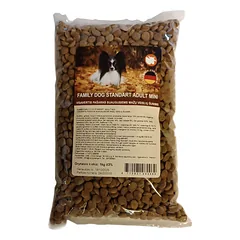
Family Dog
1,89 €/kg
1,89 € / 1 kg
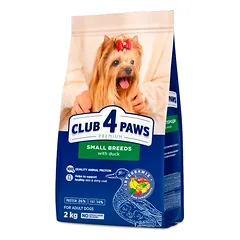
Club 4 Paws
1,93 €/kg
26,99 € / 14 kg

Club 4 Paws
1,93 €/kg
26,99 € / 14 kg

Real Dog
1,94 €/kg
19,42 € / 10 kg

Real Dog
1,95 €/kg
19,49 € / 10 kg