


VetExpert
Raw Paleo Dog Ultra Mini Puppy Beef 750 kg
0,02 €/kg
13,09 € / 750 kg

Also known as: Brussels Griffon, Belgian Griffon, Brussels Gryphon, Brabancon Griffon
This variety is the smooth-coated version of the Griffon Bruxellois, a result of crossing with the Pug, which left it with a flat, glossy coat instead of the wiry texture seen in its relatives. The short muzzle and large, round eyes give it the same near-human expression. The body is featherlight, up to 6 kilograms. Grooming is the simplest of the three Brussels griffon varieties, with no hand-stripping required. As with its relatives, the short muzzle means breathing needs watching in hot conditions. The temperament is playful and curious, often attaching to its owner to the point of dependence. Life expectancy runs 12 to 15 years.
Browse dog food sized right for this breed
Petit Brabancon: how old in human years?
Energy level
Trainability
Family friendly
Grooming need
Males not specified
Females not specified
Males 3.5–6 kg
Females 3.5–6 kg
Petit Brabancon's average temperament and family-life score for this breed is moderate.
Petit Brabancon's energy and exercise needs are moderate.
Petit Brabancon's guarding and alertness traits are moderate.
Petit Brabancon's grooming needs are low.
You sit down at the table, and from somewhere near your ankles two huge, almost human eyes lock onto you. A Petit Brabancon can look at you in a way that makes you feel guilty about every sandwich. This is a small dog with a big personality: curious, cheerful and deeply attached to its people. It doesn't like being left alone for long, because its main occupation is being wherever you are.
A flat suits it well. It has more energy than its size suggests, but a few walks a day and some play indoors are enough to spend it. It is clever and learns willingly when lessons are short, fun and generous with praise. It will bark at the door and report every footstep on the stairs, so teach a calm "that's enough" early on.
With its family it is affectionate and playful, and it gets on with children who know how to handle a small dog: it is fragile, and a fall from someone's arms or off the sofa can end badly. It usually makes friends with other dogs, though it has little sense of its own size and will stand up boldly to much bigger ones. On hot days, walk in the morning and evening, because that short face copes with heat less well.
The Petit Brabancon's short, smooth coat practically looks after itself: a weekly once-over with a soft brush or a rubber grooming mitt is enough. It sheds lightly, but the coat is thin, so in winter this little dog will appreciate a jumper, and in summer some shade. As you brush, check the skin and the folds of the face, gently wiping out any dirt or moisture and drying them well.
The face is where most of the work is. Check the eyes daily and wipe any discharge from the corners with a damp cloth. Once a week, look into the ears for any smell or brown residue. Brush the teeth several times a week, daily if you can, and trim the nails regularly, since a dog this light barely wears them down.
The Petit Brabancon is a sturdy little dog that can live a long life, but its small frame and short face come with their own weak spots. It helps to know where to look: joints, eyes and teeth. Regular vet visits and a watchful eye at home let you catch trouble early.
This is general information, not veterinary advice. For your own dog's health, tests and treatment, see a vet.
This is a fault in how the hip joint develops: the ball doesn't sit snugly in its socket, and the joint wears over time. You might notice your dog hesitating before jumping onto the sofa, or moving stiffly for a while after a nap. It is better known in big dogs, but small ones can have it too, so ask the breeder about the parents' health testing.
The kneecap can slip out of its groove, and the leg briefly locks up. A Petit Brabancon may then run a few steps on three legs and carry on as if nothing happened. If you see that little hop more than once, have a vet take a look.
Those large, prominent eyes are part of the Petit Brabancon's charm, but they are also exposed: a twig or a cat's claw can injure them easily. Watering, squinting, redness or cloudiness all mean a trip to the vet, sooner rather than later.
In a short muzzle the teeth sit close together, so plaque and tartar build up easily and irritate the gums. Bad breath, red gums or reluctance to chew hard food are reasons to talk to your vet. Regular tooth brushing pays off handsomely with this breed.
This list is chosen by the breed's weight (6 kg) rather than the breed itself: shops label food by dog size, so every breed of the same size gets the same list. Prices are updated daily.
≈ 96 g of dry food a day, from €5,24 a month For a neutered, normally active 4,8 kg dog. Calculate for your dog
VetExpert
0,02 €/kg
13,09 € / 750 kg
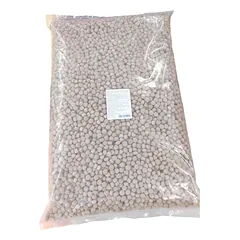
1,70 €/kg
17,02 € / 10 kg
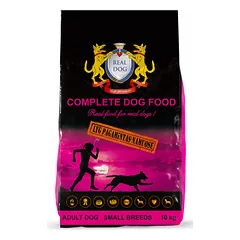
Real Dog
1,78 €/kg
17,79 € / 10 kg
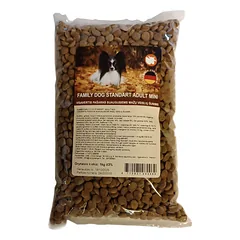
Family Dog
1,89 €/kg
1,89 € / 1 kg
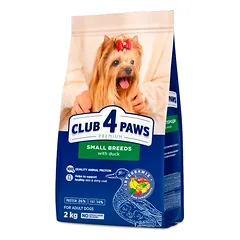
Club 4 Paws
1,93 €/kg
26,99 € / 14 kg
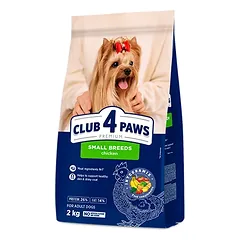
Club 4 Paws
1,93 €/kg
26,99 € / 14 kg
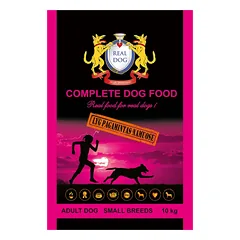
Real Dog
1,94 €/kg
19,42 € / 10 kg
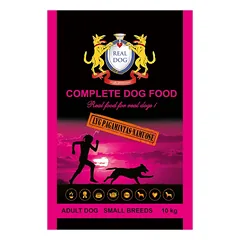
Real Dog
1,95 €/kg
19,49 € / 10 kg