

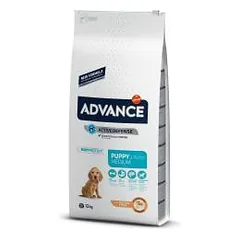
Advance
Advance Puppy Medium sausas maistas vidutinių veislių šuniukams, 12 kg
1,48 €/kg
17,76 € / 12 kg

Also known as: Snap dog, English Whippet
The Whippet was developed in England's working-class districts in the nineteenth century as an affordable alternative to larger sighthounds, bred for informal races nicknamed 'rag racing,' where dogs chased a dragged rag instead of live game. The lean, muscular frame, weighing around 16 kilograms, reaches some of the highest speeds of any breed over a short sprint but tires out just as quickly. The short, thin coat offers little protection from cold, so a winter coat is often a practical necessity. Indoors a Whippet behaves almost like a cat, sleeping through most of the day on a soft surface to offset short bursts of intense activity. Temperament is gentle and calm, rarely aggressive or overly vocal. Thin skin and low body fat make it more cold-sensitive than most medium-sized breeds. Life expectancy runs 12 to 15 years.
Browse dog food sized right for this breed
Whippet: how old in human years?
Energy level
Trainability
Family friendly
Grooming need
Males 47–51 cm
Females 44–47 cm
Males 11–16 kg
Females 10–14 kg
Whippet's average temperament and family-life score for this breed is high.
Whippet's energy and exercise needs are moderate.
Whippet's guarding and alertness traits are low.
Whippet's grooming needs are low.
Thirty seconds flat out across a meadow, then two hours on the sofa curled up in a blanket: that is a Whippet's rhythm. This English sighthound was built for the sprint, not the marathon. It needs a daily chance to open up in a safe, fenced space, and the rest of the time it will gladly spend next to you, ideally on the same cushion.
Indoors it is quiet and well-mannered: it barks little, doesn't charge at visitors and will never make a guard dog, so if you want someone to watch the yard, keep looking. A flat suits it fine as long as it gets its daily dose of running. It learns willingly and quickly but prefers a gentle tone; harshness hurts its feelings more than it teaches.
With family and children a Whippet is gentle, and it gets along easily with other dogs. But a sighthound's eye never sleeps: a hare or a cat flickering past can wipe out all your training in an instant, and you won't catch up with it. In open country, a lead or a fenced field isn't fussiness; it's plain good sense.
A Whippet's coat is short, fine and close-lying, so the brush in your house will gather dust on the shelf. Once a week, run a rubber mitt over your dog: a few dead hairs come away and the coat takes on a shine. Shedding is light. The skin matters more than the coat: it is thin, so as the mitt moves, feel for scratches, scrapes or ticks. In winter that coat offers almost no protection from the cold, and your Whippet will wear a jumper or a coat with real gratitude.
The rose ears fold back, so once a week lift them and look inside: clean, odour-free and not red means all is well. Check the eyes after every run through fields, where dust and grass seeds find their way in easily; wipe sleep from the corner with a damp cloth, and take an eye that is red, cloudy or watering to the vet.
There is nothing spare on a Whippet: thin skin, hardly any fat and muscle built for speed. That featherweight build has its price, so it is worth knowing the handful of conditions linked to the breed, in a dog that can keep you company for twelve to fifteen years. If something looks off, show your dog to a vet, who will decide what comes next.
This is general information, not veterinary advice. For your own dog's health, tests and treatment, see a vet.
The mitral valve separates the two chambers on the left side of the heart, and in this condition it gradually stops closing tightly, letting some blood flow backwards. You might notice your Whippet taking longer to recover after a run, starting to cough, or breathing faster while fast asleep. A vet with a stethoscope can catch changes before you do, so ask for a careful listen to the heart at every check-up.
The stomach fills with gas and can twist on itself, cutting off its own blood supply. The dog paces restlessly, tries to vomit without bringing anything up, and its belly turns swollen and hard. A Whippet has the deep, narrow chest of a sighthound, and this is an emergency: if you see these signs, get your dog to a vet immediately.
A Whippet's skin is thin, with almost no layer of fat beneath it, so a branch, barbed wire or another dog's teeth tear it more easily than they would a thick-coated dog's. After a gallop across a field you may find a nick on its flank or legs that it apparently never even felt. Look your dog over after every hard run, and show any deep or bleeding wound to a vet.
This is an inherited clotting disorder: the blood lacks a protein that helps a small wound seal, so bleeding goes on for longer. You might notice that a minor scratch or a nail clipped too short bleeds longer than it should. In a dog whose skin tears as easily as a Whippet's, that matters, so mention anything like it to your vet, and if you are getting a puppy, ask the breeder about the parents' health testing.
Deafness is a partial or complete loss of hearing in one or both ears, and in dogs it is linked to white coat colour. Whippets come in every colour, including plenty of white, and a deaf puppy won't stir when a bag of treats rustles behind it. If you have any doubts, ask a vet to check the puppy's hearing.
This list is chosen by the breed's weight (16 kg) rather than the breed itself: shops label food by dog size, so every breed of the same size gets the same list. Prices are updated daily.
≈ 200 g of dry food a day, from €10,94 a month For a neutered, normally active 12,8 kg dog. Calculate for your dog
Advance
1,48 €/kg
17,76 € / 12 kg
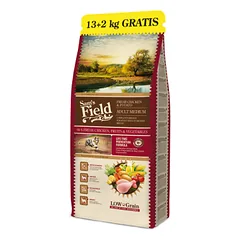
Sam's Field
1,80 €/kg
26,99 € / 15 kg

Country Dog
1,89 €/kg
28,29 € / 15 kg
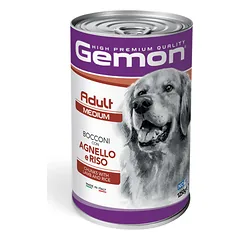
Gemon
1,94 €/kg
2,42 € / 1,3 kg
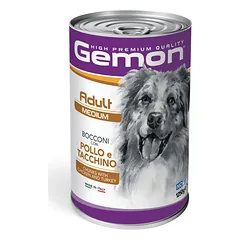
Gemon
1,94 €/kg
2,42 € / 1,3 kg

Sam's Field
2,11 €/kg
27,45 € / 13 kg

2,14 €/kg
30,00 € / 14 kg
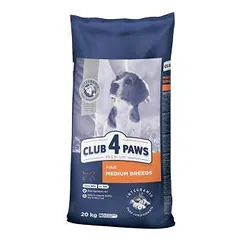
Club 4 Paws
2,15 €/kg
42,99 € / 20 kg