

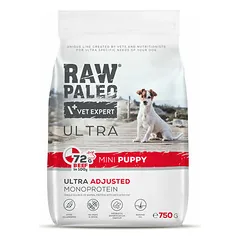
VetExpert
Raw Paleo Dog Ultra Mini Puppy Beef 750 kg
0,02 €/kg
13,09 € / 750 kg

Also known as: Levretės, Italų kurtas, Segugio Cravin, Levriero Italiano, Potsdam Greyhound
The Italian Greyhound is one of the oldest toy breeds, appearing in ancient Egyptian and Greek art before becoming a favored companion at Italian noble courts during the Renaissance. Despite its miniature size, around 5 kilograms, the build is a precise scaled-down copy of a full-size Greyhound, made for speed rather than warmth. The thin, close coat offers little protection from cold, so a jacket is often necessary for a winter walk. That same build also leaves the breed prone to bone fractures, especially as a young dog jumping off furniture. In temperament it is gentle, sensitive, and closely bonded to its owner. Life expectancy runs 12 to 15 years.
Browse dog food sized right for this breed
Italian Greyhound: how old in human years?
Energy level
Trainability
Family friendly
Grooming need
Males 33–38 cm
Females 32–38 cm
Males 3–5 kg
Females 3–5 kg
Italian Greyhound's average temperament and family-life score for this breed is moderate.
Italian Greyhound's energy and exercise needs are moderate.
Italian Greyhound's guarding and alertness traits are low.
Italian Greyhound's grooming needs are low.
Lift the corner of the duvet on a February morning and you may find a pair of large dark eyes asking whether getting up is strictly necessary. The Italian Greyhound is a sighthound in miniature, kept as a companion in Italy for centuries, and he combines a sprinter's body with firm opinions about central heating. A few minutes of flat-out running in a safely fenced space is the high point of his day; after that he is happy to lie curled up beside you for hours.
He is gentle, affectionate and quietly devoted to his people, but reserved with strangers, and his delicate build makes him a better match for calm adults or older children than for a house full of toddlers. Training takes patience and kindness; harsh words simply make him shut down. House-training takes time, partly because he regards rain as a personal insult, so plan for it. Keep him on a lead near roads: anything small that runs can switch on the chaser in him, and he is a lot faster than you.
A flat suits him perfectly, as long as he gets daily walks, company and a soft place to sleep, ideally yours. He barks little and is no guard, and he does not enjoy long days alone; another calm dog or a person at home makes a big difference.
There is almost nothing to groom: the coat is short, fine and lies close like satin, and a wipe with a soft cloth or a rubber mitt once a week keeps it glossy. What it lacks is protection. The skin is thin and barely covered, so look it over now and then for scratches, dry patches or bald spots, and in a Lithuanian winter put a coat on him before he goes out; he will not argue.
The eyes are large and expressive, so wipe any crust from the corners with a damp cloth, and treat a red or weepy eye as a reason to call the vet. The small folded-back ears are worth a look once a week; inside they should be clean, pale and odourless. A dog this light doesn't wear his nails down on soft ground, so trim them regularly, carefully, a little at a time.
With a life expectancy of twelve to fifteen years, the Italian Greyhound is a small dog built for a long journey, and many of those years can be good ones. The conditions below range from the eyes to the hips to the hormones, and none of them is something to lie awake over; they are things to recognise early. Regular check-ups, and a vet who knows your dog, do the rest.
This is general information, not veterinary advice. For your own dog's health, tests and treatment, see a vet.
Progressive retinal atrophy is a slow wasting of the retina, the light-sensitive layer at the back of the eye, and over time it leads to blindness. It is painless and creeps in: the first hint is a dog who hesitates on the stairs at dusk, won't go out into a dark garden, or bumps into things in a dim room. A sighthound lives through his eyes, so tell your vet about any change, and ask the breeder about the parents' health testing.
In an autoimmune disorder the immune system turns on the dog's own body and attacks healthy tissue, such as the skin, the blood or the joints. What you notice depends on what is affected: patchy hair loss or sores, unusual tiredness, pale gums, or a dog who is suddenly stiff or off his food. An Italian Greyhound's skin is barely covered by hair, so changes there are easy to see; anything like that, or a sudden drop in energy, is for the vet to investigate.
In Legg-Calvé-Perthes disease the blood supply to the head of the thigh bone fails, and the bone inside the hip joint slowly breaks down. It shows up in young, small dogs as a limp on one hind leg that comes and goes and then stays, sometimes with the leg held up or the thigh muscles looking thinner. In a puppy as light and leggy as an Italian Greyhound a limp can pass for a minor knock, so if it lasts, let the vet examine the hip.
Hypothyroidism means the thyroid gland makes too little hormone, and the body's engine runs slower. The signs creep in: weight gain without extra food, tiring sooner, seeking out warmth even more than usual, and a coat that thins or loses its shine. An Italian Greyhound already lives under blankets and has hardly any coat to lose, so the clues can be subtle; if he doesn't seem himself, leave the diagnosis to your vet.
This list is chosen by the breed's weight (5 kg) rather than the breed itself: shops label food by dog size, so every breed of the same size gets the same list. Prices are updated daily.
≈ 84 g of dry food a day, from €4,58 a month For a neutered, normally active 4 kg dog. Calculate for your dog
VetExpert
0,02 €/kg
13,09 € / 750 kg
1,70 €/kg
17,02 € / 10 kg
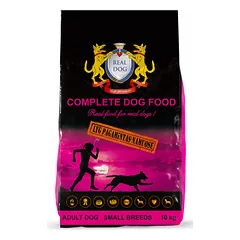
Real Dog
1,78 €/kg
17,79 € / 10 kg
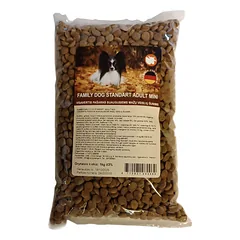
Family Dog
1,89 €/kg
1,89 € / 1 kg
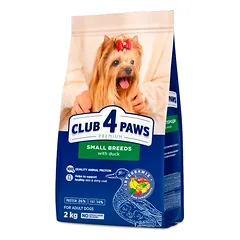
Club 4 Paws
1,93 €/kg
26,99 € / 14 kg
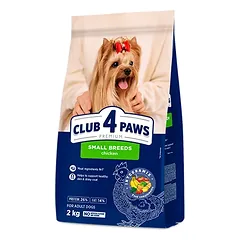
Club 4 Paws
1,93 €/kg
26,99 € / 14 kg
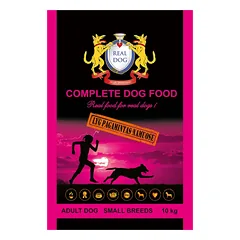
Real Dog
1,94 €/kg
19,42 € / 10 kg
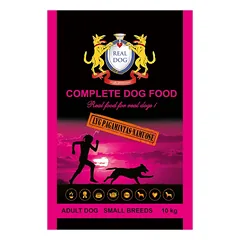
Real Dog
1,95 €/kg
19,49 € / 10 kg