

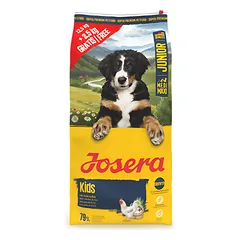
Josera
Josera Kids 12,5kg + 2,5kg = 15 kg
1,38 €/kg
37,89 € / 27,5 kg

Also known as: Bakhmull, Afghan dog, Khalag Tazi, Sage Baluchi, Baluchi Hound
The Afghan Hound comes from the mountainous regions of Afghanistan, where it hunted gazelle and wolves by sight rather than scent, often over cold, rocky terrain. The long, silky coat once buffered swings in high-altitude temperature, and today it demands serious upkeep, several hours of brushing a week. The frame, up to 27 kilograms, is lean but muscular, built for sprinting across uneven ground. Like many sighthounds, it can take off after anything that moves, so a securely fenced yard is essential rather than optional. Temperamentally it tends to be independent and can seem aloof even with its own family. Life expectancy runs 12 to 18 years, notably long for a dog its size.
Browse dog food sized right for this breed
Afghan Hound: how old in human years?
Energy level
Trainability
Family friendly
Grooming need
Males 68–74 cm
Females 63–69 cm
Males 20–27 kg
Females 18–25 kg
Afghan Hound's average temperament and family-life score for this breed is moderate.
Afghan Hound's energy and exercise needs are high.
Afghan Hound's guarding and alertness traits are low.
Afghan Hound's grooming needs are moderate.
An Afghan Hound runs as if the wind had designed its hairstyle personally, and it needs to do so every day. This ancient mountain sighthound was bred to chase game across wide, rocky country, so long walks and a chance to gallop freely in a safely fenced space are a necessity, not a luxury. Indoors it turns into an elegant, quiet, slightly aloof presence that is happier in a house than in a small flat.
The urge to chase is very strong: a hare or a cat flickering past erases every command you have taught, and nobody is going to catch up with it. So in open country a lead is the rule rather than a suggestion, and the fence needs to be high. Training is worth doing, but patiently: an Afghan understands perfectly well what you want, it simply doesn't always think it deserves its attention. Harshness won't help; gentle consistency and a sense of humour will.
It is attached to its family but shows its love quietly, without puppyish enthusiasm, and with children who know how to give a dog space it makes a good friend. It greets strangers with reserve and won't make a guard dog; it is more likely to withdraw with dignity. If you want a dog with style, opinions and speed, and you aren't afraid of a brush, an Afghan Hound will grace your life like nothing else.
Back from an autumn walk, an Afghan Hound's coat can be carrying half the park's leaves, and that is perfectly normal. The long, fine, silky coat is the breed's calling card and your biggest commitment: several times a week it needs brushing layer by layer right down to the skin, or mats form behind the ears, in the armpits and on the legs that take an hour to work out. It sheds moderately, it needs bathing far more than a short-coated dog, and it needs patient drying, because a damp coat tangles fastest. Check the skin as you brush: under such a thick veil, a scratch or a red patch can go unnoticed for a long time.
The long, feathered ears get little air and love dipping their tips in the bowl, so once a week lift them and look inside: clean, odour-free and not red means all is well. A fabric snood at mealtimes helps keep them out of the food. Check the eyes after walks, when dust and grass seeds easily get into the coat and eyes; take a watering or red eye to the vet.
Under all that silk is a lean, muscular runner with a deep, roomy chest. Two conditions are linked to the breed, both of them in the chest: one affects breathing, the other the stomach, and the second has to be recognised at once. If anything about your dog's behaviour or breathing seems off, show it to a vet.
This is general information, not veterinary advice. For your own dog's health, tests and treatment, see a vet.
Milky lymph fluid builds up in the chest around the lungs, pressing on them and stopping them from expanding fully. You might notice your dog breathing faster or harder, tiring quickly, coughing, or not wanting to lie on its side. An Afghan is reserved by nature and doesn't complain, so laboured breathing is a serious sign: see a vet without delay.
The stomach fills with gas and can twist on itself, cutting off its own blood supply. The dog is restless, tries to vomit without bringing anything up, and its belly swells and turns hard; under a long coat that isn't always visible, so feel the belly with your hand. The Afghan Hound has a sighthound's deep chest, and this is an emergency: if you see these signs, get your dog to a vet immediately.
This list is chosen by the breed's weight (27 kg) rather than the breed itself: shops label food by dog size, so every breed of the same size gets the same list. Prices are updated daily.
≈ 305 g of dry food a day, from €16,70 a month For a neutered, normally active 22,5 kg dog. Calculate for your dog
Josera
1,38 €/kg
37,89 € / 27,5 kg
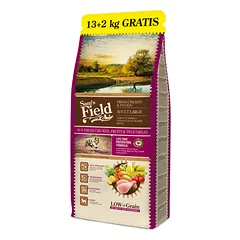
Sam's Field
1,80 €/kg
26,99 € / 15 kg

Country Dog
1,89 €/kg
28,29 € / 15 kg
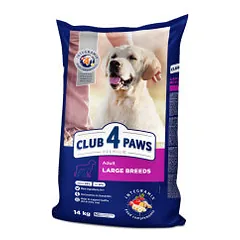
Club 4 Paws
1,92 €/kg
26,94 € / 14 kg
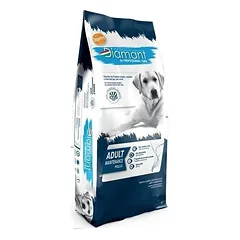
Diamant
1,93 €/kg
28,99 € / 15 kg
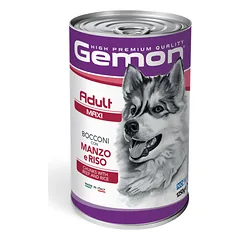
Gemon
1,94 €/kg
2,42 € / 1,3 kg

BIO FORM
2,00 €/kg
40,00 € / 20 kg

BIO FORM
2,00 €/kg
40,00 € / 20 kg