


Real Dog
Real Dog sausas maistas suaugusiems, didelių-milžiniškų veislių, šunims su vištiena ir ryžiais 20kg
2,11 €/kg
42,15 € / 20 kg

Also known as: Borzaya, Russian Wolfhound
The Borzoi, also known as the Russian Wolfhound, served Russian nobility for centuries as a hunting companion, coursing wolves in large packs alongside mounted riders. The long, silky, wavy or curly coat gives the breed its striking look but needs regular brushing to prevent matting. A male can reach 48 kilograms, yet the frame stays lean and muscular, built for explosive speed over short distances rather than endurance. Many Russian kennels were destroyed during the Bolshevik Revolution, and the breed survived largely thanks to dogs already exported to the West beforehand. In temperament it is a calm, dignified housedog with a strong chase drive toward anything that moves quickly. Life expectancy runs 9 to 11 years.
Browse dog food sized right for this breed
Borzoi: how old in human years?
Energy level
Trainability
Family friendly
Grooming need
Males 75–85 cm
Females 68–78 cm
Males 34–48 kg
Females 27–41 kg
Borzoi's average temperament and family-life score for this breed is moderate.
Borzoi's energy and exercise needs are high.
Borzoi's guarding and alertness traits are low.
Borzoi's grooming needs are moderate.
Visitors arrive, and your Borzoi merely lifts its head from the rug, gives them a long, faintly bored look and lays it down again. Indoors it is elegant, quiet and almost never barks, an aristocrat who finds noise rather vulgar. It will never be a guard dog, and with strangers it keeps a polite distance rather than any hostility.
But let a hare flicker past, and the aristocrat becomes a hunter in an instant, one you will barely be able to hold. This sighthound was bred to chase and catch, and that instinct runs deep, so cats and small animals around it are a serious question, and in open country a lead is a must. Every day it needs a chance to open up in a safe, fenced space; the rest of the time it will gladly stretch out on the sofa.
A Borzoi learns in its own way: it understands quickly but sees little point in repeating itself, so short, cheerful lessons work better than strictness. It is gentle with its family, if reserved in showing it, and gets along calmly with children and other dogs as long as it isn't crowded. A flat can work, provided it has room to stretch its legs and gets its daily dose of speed.
A Borzoi's coat is long and silky, wavy or even curly, and on the neck, tail and hindquarters it grows into luxurious feathering. Once or twice a week, brush and comb right down to the skin, paying most attention behind the ears, in the armpits and on the trousers of the hind legs, where tangles form first. Shedding is moderate, and noticeably heavier during a coat change. As you brush, check the skin: it is thin, and a scratch from a gallop through the bushes can go unnoticed.
The small ears, folded back against the head, are covered in soft hair: once a week lift them and look inside, and clean, odour-free and not red means all is well. Check the eyes after runs across fields, where dust and grass seeds find their way in easily, and take an eye that is red, cloudy or watering to the vet.
A Borzoi is built for the sprint: long legs, a deep, narrow chest and hardly any body fat. That same elegant build is tied to a few conditions worth knowing about in advance, not least because a Borzoi tends to bear discomfort with quiet dignity. It can live nine to eleven years, and if you notice anything unusual, show it to a vet.
This is general information, not veterinary advice. For your own dog's health, tests and treatment, see a vet.
The stomach fills with gas and can twist on itself, cutting off its own blood supply. The dog paces restlessly, tries to vomit without bringing anything up, and its belly turns swollen and hard. A Borzoi's chest is deep and narrow, and this is an emergency: if you see these signs, get your dog to a vet immediately.
Sighthounds carry very little body fat, so anaesthesia can affect them more strongly than other dogs, and recovery can take longer. Your dog will show nothing of this in daily life; it only matters before a procedure. Before any procedure that means putting your dog under, remind the vet that your dog is a sighthound and let them decide how to proceed.
The hip or elbow joints develop abnormally, so they wear over time. You might notice your Borzoi getting up more slowly after a rest, limping, or less keen to launch into that famous gallop. In a big, fast dog the joints carry a lot, so if you are getting a puppy, ask the breeder about the parents' health testing.
In a growing dog's joint the cartilage develops abnormally, and a small piece of it can come loose. You might notice a young Borzoi limping, especially after a run, with the limp coming and going. This breed grows fast and grows tall, so take a limping puppy to the vet rather than waiting for it to pass.
This is an inherited disease in which the retina slowly wastes away and sight fades, first in dim light. You might notice your Borzoi moving uncertainly in a familiar place in the evening, or bumping into things. For a sighthound that hunts with its eyes, sight is everything, so if you are getting a puppy, ask the breeder about the parents' health testing.
This list is chosen by the breed's weight (48 kg) rather than the breed itself: shops label food by dog size, so every breed of the same size gets the same list. Prices are updated daily.
≈ 445 g of dry food a day, from €24,50 a month For a neutered, normally active 37,5 kg dog. Calculate for your dog
Real Dog
2,11 €/kg
42,15 € / 20 kg

Sam's Field
2,56 €/kg
33,26 € / 13 kg
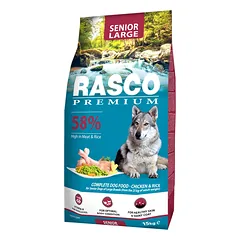
Rasco
2,67 €/kg
39,99 € / 15 kg
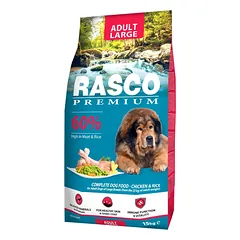
Rasco
2,67 €/kg
39,99 € / 15 kg
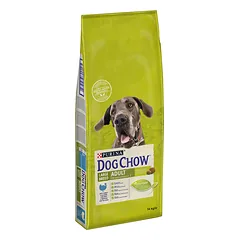
Purina
2,71 €/kg
37,96 € / 14 kg

Sam's Field
2,77 €/kg
35,99 € / 13 kg
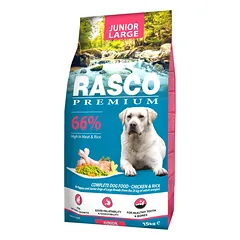
Rasco
2,80 €/kg
41,99 € / 15 kg

Sam's Field
2,85 €/kg
37,04 € / 13 kg