


VetExpert
Raw Paleo Dog Ultra Mini Puppy Beef 750 kg
0,02 €/kg
13,09 € / 750 kg

In England's Lake District this terrier was bred to go to ground after fox and badger, work that demanded a small dog with real nerve for tight, dark tunnels. The frame is compact, up to 8 kilograms, but solidly muscled for its size. The wiry coat doesn't shed on its own schedule and needs periodic hand-stripping or clipping. The coat type also makes it one of the more allergy-friendly terrier breeds. The temperament is bold, sometimes stubborn, a direct legacy of working alone underground against game that fights back. Caution is warranted around smaller pets given the hunting drive. Life expectancy runs 12 to 16 years.
Browse dog food sized right for this breed
Lakeland Terrier: how old in human years?
Energy level
Trainability
Family friendly
Grooming need
Males 37–37 cm
Females 34–34 cm
Males 7.3–8 kg
Females 6.4–7.1 kg
Lakeland Terrier's average temperament and family-life score for this breed is moderate.
Lakeland Terrier's energy and exercise needs are high.
Lakeland Terrier's guarding and alertness traits are moderate.
Lakeland Terrier's grooming needs are low.
Every mouse in the garden, every flicker of a squirrel and every suspicious plastic bag in the street is a personal matter for a Lakeland Terrier. It is a small but bold hunter with a big sense of itself, and its energy lasts all day: a long walk, ball games, scent games and digging wherever it's allowed.
It is clever and learns quickly, but with the classic terrier "what's in it for me?": patience, short sessions and treats work better than strictness. Let off the lead, it can follow a scent a long way, and cats and small pets look like prey to it. It isn't always friendly with other dogs, especially of the same sex, so introductions are worth making carefully and starting from puppyhood.
At home it is cheerful, devoted to its family and an excellent watchdog: it will announce every arrival loudly, and more than once. A flat works if it gets a proper outlet every day; otherwise its ingenuity will find something to do with your cushions.
A Lakeland Terrier's coat is harsh, dense and wiry, with a soft undercoat beneath: armour against rain and sharp stones. It sheds very little, but only when the dead hair is removed in time: a few times a year the coat is best hand-stripped to keep it wiry and its colour rich. Clippers make the job easier, but they soften the coat and over time cost it its weatherproofing. Between strips, a weekly brush is enough, especially for the beard and legs where the hair is longer.
The beard is a real sponge: wipe it after meals and drinks so the skin underneath doesn't stay damp. Check the folded ears once a week, and wipe the eyes when sleep gathers in the corners. After a walk through scrub, run your hand through the coat down to the skin to feel for ticks or burrs.
The Lakeland Terrier comes from the fells of England's Lake District, where it scrambled over rocks and into dens alongside hunters, and that hard upbringing has left it robust: it can live twelve to sixteen years. Only a couple of conditions are linked to the breed, involving the teeth and the knees, so much of the care fits into everyday routine. When in doubt, talk to a vet, and if you are getting a puppy, ask the breeder about the parents' health testing.
This is general information, not veterinary advice. For your own dog's health, tests and treatment, see a vet.
Plaque builds up on the teeth and hardens into tartar, which irritates the gums until they bleed and recede. You might notice bad breath, red gums or a dog that chews on one side only. In a small terrier's muzzle the teeth sit close together, so tooth care and regular checks by a vet are especially worthwhile.
The kneecap slips out of its groove and the leg briefly locks. A Lakeland may suddenly lift a hind leg mid-run and hop on three legs for a few strides, then shoot off again as if nothing had happened. Such an energetic dog does a lot of leaping, so a skip that keeps coming back is worth showing to a vet.
This list is chosen by the breed's weight (8 kg) rather than the breed itself: shops label food by dog size, so every breed of the same size gets the same list. Prices are updated daily.
≈ 130 g of dry food a day, from €7,10 a month For a neutered, normally active 7,2 kg dog. Calculate for your dog
VetExpert
0,02 €/kg
13,09 € / 750 kg

1,70 €/kg
17,02 € / 10 kg

Real Dog
1,78 €/kg
17,79 € / 10 kg
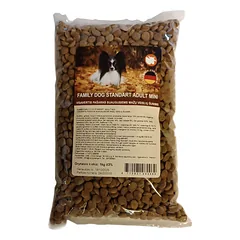
Family Dog
1,89 €/kg
1,89 € / 1 kg

Club 4 Paws
1,93 €/kg
26,99 € / 14 kg

Club 4 Paws
1,93 €/kg
26,99 € / 14 kg

Real Dog
1,94 €/kg
19,42 € / 10 kg

Real Dog
1,95 €/kg
19,49 € / 10 kg