


VetExpert
Raw Paleo Dog Ultra Mini Puppy Beef 750 kg
0,02 €/kg
13,09 € / 750 kg

Also known as: Brussels Griffon, Belgian Griffon, Brussels Gryphon, Petite Brabancon, Brabancon Griffon
In Brussels, Belgium, this breed descends from small stable dogs kept to catch rats, later refined into a fashionable lapdog through crosses with the Pug and other toy breeds. The short muzzle and large, round eyes give it an almost human expression, which helped popularize it in the 20th century with the patronage of Queen Astrid. The body is featherlight, up to 6 kilograms. The wiry, rough coat needs periodic hand-stripping to avoid looking unkempt. The short muzzle means breathing needs watching in hot weather or during heavy exercise. It bonds intensely with its family, often attaching to one person in particular. Life expectancy runs 12 to 15 years.
Browse dog food sized right for this breed
Griffon Bruxellois: how old in human years?
Energy level
Trainability
Family friendly
Grooming need
Males not specified
Females not specified
Males 3.5–6 kg
Females 3.5–6 kg
Griffon Bruxellois's average temperament and family-life score for this breed is moderate.
Griffon Bruxellois's energy and exercise needs are moderate.
Griffon Bruxellois's guarding and alertness traits are moderate.
Griffon Bruxellois's grooming needs are low.
The Griffon Bruxellois once caught rats in the stables of Brussels cab horses; today it catches your eye, and it manages every single time. This small bearded Belgian has a big personality: curious, self-assured and deeply attached to its person. It wants to be part of everything, so long days home alone do not suit it.
It has plenty of energy, but that fits into a few moderate walks and some games indoors, and it is perfectly at home in a flat. It is clever but not shy about its opinions, so training needs patience, consistency and treats; harshness quickly hurts its feelings. A Griffon is alert and loudly reports everything happening outside the door, so you can forget about being the quiet neighbour unless you teach it when to stop.
In the family it is affectionate and playful, but it is too small and too sensitive for little, boisterous children, and does best with calmer, older ones. It gets on with other dogs, and watches strangers from a safe distance first, sometimes from the safety of your arms. In the evening it curls up beside you and studies you with those big eyes as if it knows everything about you.
The Griffon Bruxellois has a harsh, wiry coat that sheds little and keeps the dirt at bay, but it does not stay tidy on its own. Brush it down to the skin once or twice a week, and a few times a year pull out the dead hair with your fingers; this hand-stripping keeps the coat's texture, while clipping softens it. The first time, it is best seen in an experienced groomer's hands. As you brush, check the skin, especially on the chest and behind the ears, for redness or flaking.
The beard deserves a damp cloth after every meal, or it soon starts to smell of things you would rather it didn't. Check the eyes daily and wipe the corners gently, and look inside the ears once a week: they should be clean and odour-free. Teeth are best brushed daily with a dog toothpaste, and the nails need regular trimming, because a dog this small hardly wears them down by itself.
Big expressive eyes, a beard and a short little nose: the Griffon Bruxellois has an almost human face, and that face shapes what is worth watching. In this little dog, keep an eye on the eyes, the teeth, the knees and the hips. With good care and regular vet visits, it can be at your side for twelve to fifteen years.
This is general information, not veterinary advice. For your own dog's health, tests and treatment, see a vet.
Hip dysplasia means the ball of the thighbone does not sit properly in its socket, so the joint wears faster than it should. In a small dog the signs are subtle: stiffness on getting up, reluctance to jump onto the sofa, or a bunny-hop with both hind legs together. A Griffon weighs only a few kilos and is clever at compensating, so show such changes to your vet and ask the breeder about the parents' health testing.
The kneecap, a small bone at the front of the knee, can slip out of its groove and pop back into place. You might see your Griffon trotting beside you suddenly hop a few steps on three legs, then walk on as if nothing happened. On such tiny legs it is easy to mistake for play, but if the hop keeps returning, show it to your vet.
This covers a range of eye disorders, from injuries to the surface to changes inside the eye that can dim the sight. A Griffon's large, slightly prominent eyes are easier to catch on a twig or scratch during play, so if you notice squinting, watering, redness or a cloudy patch, don't wait. An eye like that is worth showing to your vet the same day.
In a short jaw the teeth are crowded, so plaque and tartar build up easily and the gums become inflamed. The beard hides the first signs well, so watch for bad breath, red gums, brown deposits or a dog that chews more carefully. Look inside your Griffon's mouth regularly and talk any changes through with your vet.
This list is chosen by the breed's weight (6 kg) rather than the breed itself: shops label food by dog size, so every breed of the same size gets the same list. Prices are updated daily.
≈ 96 g of dry food a day, from €5,24 a month For a neutered, normally active 4,8 kg dog. Calculate for your dog
VetExpert
0,02 €/kg
13,09 € / 750 kg

1,70 €/kg
17,02 € / 10 kg
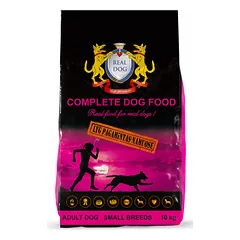
Real Dog
1,78 €/kg
17,79 € / 10 kg
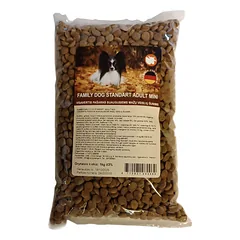
Family Dog
1,89 €/kg
1,89 € / 1 kg
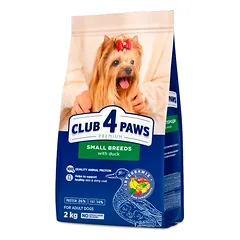
Club 4 Paws
1,93 €/kg
26,99 € / 14 kg

Club 4 Paws
1,93 €/kg
26,99 € / 14 kg
Real Dog
1,94 €/kg
19,42 € / 10 kg
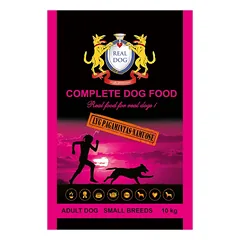
Real Dog
1,95 €/kg
19,49 € / 10 kg