

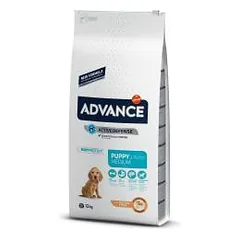
Advance
Advance Puppy Medium sausas maistas vidutinių veislių šuniukams, 12 kg
1,48 €/kg
17,76 € / 12 kg

Also known as: Swiss Shorthaired Pinscher
The German Pinscher is the old base breed behind both the Miniature Pinscher and the Schnauzers, working German farms in the 19th century as a ratter and watchdog. The smooth, short, dense coat needs minimal grooming, unlike its wire-coated Schnauzer relatives. A male weighs around 20 kilograms, with a square, muscular, and notably agile build. The breed nearly disappeared in East Germany after the Second World War and was rebuilt from a small number of surviving dogs in the West. It remains alert, confident, and strongly bonded to its family, which calls for firm, consistent handling. Life expectancy runs 12 to 14 years.
Browse dog food sized right for this breed
German Pinscher: how old in human years?
Energy level
Trainability
Family friendly
Grooming need
Males 45–50 cm
Females 43–48 cm
Males 14–20 kg
Females 14–20 kg
German Pinscher's average temperament and family-life score for this breed is moderate.
German Pinscher's energy and exercise needs are moderate.
German Pinscher's guarding and alertness traits are moderate.
German Pinscher's grooming needs are low.
At six in the morning, at the first creak of the stairs, a German Pinscher is already at the door, ears up, its whole body one question: now? This is an energetic, curious and very alert dog that notices everything at home, from the neighbour's cat to a new bin bag by the gate, and is happy to tell you about it. It is not a barker for no reason, but the guarding instinct is alive in it, so teaching it to greet visitors calmly is worth starting in the first weeks.
A Pinscher learns quickly and understands what you want, but it works out just as quickly where your consistency ends. It needs short, varied sessions, clear rules and an owner who doesn't lose their temper but simply doesn't give in. It tends to get on well with children who know how to behave around dogs, can live with other dogs if introduced properly, and sometimes finds small pets far too interesting.
It can live in a flat if it gets a proper walk every day, a chance to run and a job for its brain: tracking, hunting for hidden treats or agility. Given that, in the evening it curls up beside you on the sofa and turns back into an elegant, warm companion that keeps just one ear on the hallway.
A German Pinscher's coat is short, dense and smooth, fitting the body like a well-cut suit. A weekly going-over with a rubber brush or a damp mitt is enough to lift out dead hair and bring up the shine. It sheds little, has hardly any doggy smell and only needs a bath when it has truly rolled in something it shouldn't. That short coat is poor insulation, so in frost and rain it will happily wear a jacket and won't want to sit around outside.
Since grooming takes a few minutes, use that time for a once-over. As you run your hand along its sides, feel for lumps, scratches or dry, flaky patches of skin. Look into the ears to check they are clean and don't smell, and wipe the outer ear with a dry cloth. The eyes should be clear and bright; show any cloudiness, redness or heavier discharge to a vet. Trim the nails carefully and a little at a time so you don't catch the quick.
The German Pinscher is a medium-sized, muscular and fairly long-lived dog that needs no special care to stay well. Three things are worth knowing about: the hips, the eyes and blood clotting. None of them is a reason to rule out the breed, but all of them are reasons to find a good vet and choose a breeder carefully.
This is general information, not veterinary advice. For your own dog's health, tests and treatment, see a vet.
Hip dysplasia means the joint forms unevenly as the puppy grows, so the ball of the thigh bone moves roughly in its socket and the joint wears over time. A Pinscher that used to reach the sofa in one bound may start to hesitate, get up stiffly in the morning or limp a little after a run. Because inheritance plays a part, ask the breeder about the parents' health testing.
Eye problems are a broad group of disorders, from a clouding lens to changes in the retina, and some of them are inherited. You might notice a greyish tint in the eye, hesitant behaviour at dusk, or the dog bumping into things in an unfamiliar place. A Pinscher's dark, expressive eyes make any change easy to spot, and it is worth asking the breeder about the parents' health testing.
Von Willebrand disease is an inherited clotting disorder: the blood lacks a protein that helps a wound seal. Suspicion can arise from bleeding that will not stop after a nail is cut too short, bleeding gums, or a nosebleed with no obvious cause. If your Pinscher is diagnosed, every vet who treats it needs to know, and if you are getting a puppy, ask the breeder about the parents' health testing.
This list is chosen by the breed's weight (20 kg) rather than the breed itself: shops label food by dog size, so every breed of the same size gets the same list. Prices are updated daily.
≈ 245 g of dry food a day, from €13,54 a month For a neutered, normally active 17 kg dog. Calculate for your dog
Advance
1,48 €/kg
17,76 € / 12 kg
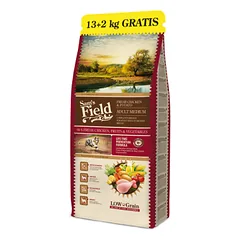
Sam's Field
1,80 €/kg
26,99 € / 15 kg

Country Dog
1,89 €/kg
28,29 € / 15 kg
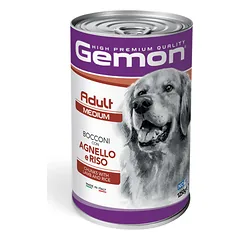
Gemon
1,94 €/kg
2,42 € / 1,3 kg
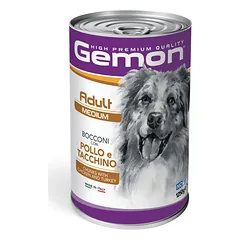
Gemon
1,94 €/kg
2,42 € / 1,3 kg

Sam's Field
2,11 €/kg
27,45 € / 13 kg

2,14 €/kg
30,00 € / 14 kg

Club 4 Paws
2,15 €/kg
42,99 € / 20 kg