


Real Dog
Real Dog sausas maistas suaugusiems, didelių-milžiniškų veislių, šunims su vištiena ir ryžiais 20kg
2,11 €/kg
42,15 € / 20 kg

Also known as: Presa, Canary Dog, Dogo Canario, Canary Mastiff, Canary Island mastiffs
The Presa Canario comes from the Canary Islands, where it was used to work cattle and guard farms, and its name, meaning roughly to seize or catch, points to its historical job of holding large livestock in place. A male can weigh up to 65 kilograms on a massive, powerful frame, and the short, dense coat needs little grooming. A mid 20th century ban on dog fighting nearly wiped the breed out, and it had to be rebuilt through dedicated breeding efforts afterward. It needs very early, consistent socialization and an experienced owner, since its size and power without proper handling pose a real risk. It can be calm and attached with its own family but will never be casually friendly toward strangers. Many countries place legal restrictions on owning the breed. Life expectancy runs 9 to 11 years.
Browse dog food sized right for this breed
Presa Canario: how old in human years?
Energy level
Trainability
Family friendly
Grooming need
Males 58–64 cm
Females 56–62 cm
Males 50–65 kg
Females 40–55 kg
Presa Canario's average temperament and family-life score for this breed is low.
Presa Canario's energy and exercise needs are moderate.
Presa Canario's guarding and alertness traits are high.
Presa Canario's grooming needs are low.
On the Canary Islands this dog guarded farms and worked with cattle, and it remembers that job with every fibre. With its family it is calm, devoted and happy to lie patiently under the table, but at the gate stands a different dog: wary of strangers and ready to defend its ground. Its reputation is divided, and both sides have a point: in the right hands it is balanced and reliable, in the wrong ones it is a serious responsibility.
That makes it no breed for a first dog. It needs an experienced, calm and consistent owner, early and ongoing socialisation with people, other dogs and noise, and training without harshness but without giving in either. It usually does not tolerate other dogs, so walks happen on a lead, and small children need an adult nearby simply because of its strength.
Each day it needs long, steady walks and a little work for its brain, not marathons. A cramped flat doesn't suit a giant like this; a house with a securely fenced garden does. In the evening it will gladly stretch out at your feet, and then it is hard to believe that an hour ago the same dog stood at the gate like a silent, immovable wall.
A short, slightly coarse coat that lies flat against the body makes the Presa Canario surprisingly easy to keep. Once a week, go over it with a rubber brush or grooming mitt: you lift out the dead hair, massage the skin and bring up the shine. Shedding is moderate, and a bath is only needed when it has really got dirty. Do keep a towel handy, though: this dog drools, especially after drinking and while waiting for its dinner.
The brushing doubles as a skin check: on a short coat you will easily spot a scratch, a lump or a red patch, particularly on the elbows a heavy dog rests on when it lies down. Wipe the corners of the eyes with a damp cloth and watch for watering. Look into the ears once a week and wipe away any visible dirt.
Fifty-odd kilos of muscle and a head like a carved block of stone: a body like that can take a lot, but it also asks a lot of its joints. The Presa Canario lives nine to eleven years, and several conditions of the joints, eyes, nervous system and thyroid are linked to the breed. Knowing your dog well helps you notice changes in good time, and if you are getting a puppy, ask the breeder about the parents' health testing.
This is general information, not veterinary advice. For your own dog's health, tests and treatment, see a vet.
The hip joint develops out of shape, the ball of the thigh bone doesn't sit firmly in its socket, and the joint wears over time. You might notice your dog struggling to get up after a rest, swaying through its hindquarters or refusing to jump into the car. In a dog this heavy every extra kilo loads the hips further, so changes in its gait are worth showing to a vet.
The bones of the elbow joint form without fitting together quite right, so the joint is loaded unevenly and becomes painful. The signs show first in the front legs: limping after an active day, a head that bobs with each step, or front feet turned outwards. A Presa Canario carries much of its weight up front, so any limp is worth showing to a vet.
The kneecap slips out of its groove and the leg briefly locks. You may see your dog run a few strides on three legs and then carry on as if nothing had happened. Protect a big dog's knees from sharp turns on slippery floors, and show a vet any skipping that keeps coming back.
Epilepsy means repeated seizures for which no other cause can be found. During a seizure a dog may fall over, twitch or paddle, drool and not respond to your voice, and may seem confused for a while afterwards. If your Presa Canario has a seizure, it needs a vet immediately.
The edge of the eyelid rolls inwards, so the lashes rub against the surface of the eye. The eye waters, the dog squints, rubs its face on the carpet and the eye may turn red. A Presa Canario's massive head, with looser skin around the eyes, makes this worth keeping an eye on, so take an eye that waters constantly to a vet.
The thyroid gland makes too little hormone and the metabolism slows down. Your dog may become more sluggish than usual, put on weight while eating the same, look for warmer spots, and its short coat may thin or lose its shine. A Presa Canario is calm indoors anyway, so slow changes are easy to miss and worth discussing with a vet.
This list is chosen by the breed's weight (65 kg) rather than the breed itself: shops label food by dog size, so every breed of the same size gets the same list. Prices are updated daily.
≈ 575 g of dry food a day, from €31,63 a month For a neutered, normally active 52,5 kg dog. Calculate for your dog
Real Dog
2,11 €/kg
42,15 € / 20 kg

Sam's Field
2,56 €/kg
33,26 € / 13 kg
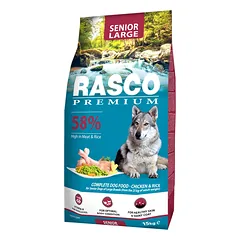
Rasco
2,67 €/kg
39,99 € / 15 kg
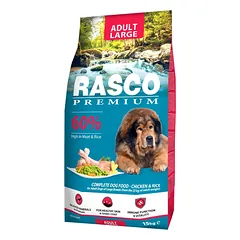
Rasco
2,67 €/kg
39,99 € / 15 kg
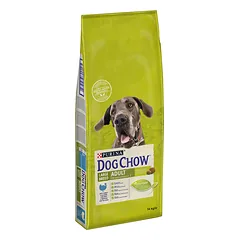
Purina
2,71 €/kg
37,96 € / 14 kg

Sam's Field
2,77 €/kg
35,99 € / 13 kg
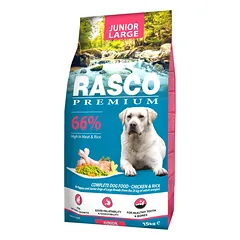
Rasco
2,80 €/kg
41,99 € / 15 kg

Sam's Field
2,85 €/kg
37,04 € / 13 kg