


Real Dog
Real Dog sausas maistas suaugusiems, didelių-milžiniškų veislių, šunims su vištiena ir ryžiais 20kg
2,11 €/kg
42,15 € / 20 kg

Also known as: Doguin, Bordeaux dog, French Mastiff, Bordeuax Mastiff, Bordeaux French mastiffs
The Dogue de Bordeaux is considered one of the oldest French mastiff-type breeds, its ancestors used for centuries in big-game hunting, flock guarding, and even arena fighting in medieval times. The massive head, one of the largest of any breed relative to body size, gives it its unmistakable, powerful look. Males can weigh up to 65 kilograms, with a short but extremely muscular, solid frame. The coat is short and smooth, needing little care, though the facial wrinkles need regular cleaning to avoid irritation. Life expectancy is among the shortest of any breed, often not exceeding 8 years, partly tied to its heavy build and risk of heart problems. Temperament is calm and devoted to family, but firm, consistent handling from puppyhood matters. Life expectancy runs 5 to 8 years.
Browse dog food sized right for this breed
Dogue de Bordeaux: how old in human years?
Energy level
Trainability
Family friendly
Grooming need
Males 60–68 cm
Females 58–66 cm
Males 50–65 kg
Females 45–55 kg
Dogue de Bordeaux's average temperament and family-life score for this breed is moderate.
Dogue de Bordeaux's energy and exercise needs are low.
Dogue de Bordeaux's guarding and alertness traits are moderate.
Dogue de Bordeaux's grooming needs are moderate.
A Dogue de Bordeaux starts his day without hurry: he climbs out of bed, stretches his considerable bulk, sighs hard enough to rattle the windows, and only then takes an interest in breakfast. He comes from working guard dogs, but he doesn't need marathons: two or three steady walks a day, some play in the garden and plenty of time next to you make a perfectly good rhythm. On hot days go out early or late, and a young, still-growing dog needs no long runs or jumping. A dog this size feels cramped in a small flat, especially when the whole family tries to get down the hallway at once.
Start training from day one, while he still fits on your lap. He learns calmly and solidly and enjoys praise, but he has opinions of his own, so patience and consistency work better than a raised voice. Teach loose-lead walking early: stopping sixty kilos that have decided to say hello to the neighbour's cat is no small thing.
In the family he is a gentle giant who loves wholeheartedly and likes to lie across your feet. He gets on well with children he grows up with, though his sheer size means supervision when toddlers are playing nearby. With strangers he is reserved and watchful, since guarding the home is in his nature, and he barks rarely, so when he does it's worth a look. He can be short-tempered with other dogs, particularly of the same sex, which makes early, calm socialisation essential.
The Dogue's short, smooth coat asks for very little brushing: once a week with a rubber mitt lifts out the loose hair, of which he sheds a moderate amount. The real grooming job is elsewhere, and you'll discover it on day one: drool. It ends up on your trousers, on the walls and, after one good head shake, occasionally on the ceiling, so keep a towel by the door and wipe his mouth and lip corners every day. A bath only when he has genuinely got himself dirty.
The folds on his forehead, muzzle and neck sit at the top of your daily checklist: wipe them with a damp cloth and then dry them properly, because a warm, damp fold is an ideal spot for skin trouble. Look at his eyes while you're there, clear, not red and without discharge, and inside his ears once a week: clean and not smelly. Don't forget the paw pads, which should be supple, without cracks or a horny crust. Trim his nails regularly, since a calm dog doesn't wear much off on his own.
A huge head, a furrowed brow and a gaze carrying all the seriousness in the world: the Dogue de Bordeaux looks like a fortress, but a body this massive carries a fair load. Joints, stomach, breathing, eyes, skin folds and even the paw pads all deserve more of your attention than in many breeds, and big dogs in general don't live as long as small ones, so every year together counts. Regular vet check-ups and a watchful eye at home help you spot changes while there is still plenty that can be done.
This is general information, not veterinary advice. For your own dog's health, tests and treatment, see a vet.
An inherited condition in which the skin of the paw pads grows too thick and hard, turning horny and prone to cracking. What you notice is the pads themselves: rough, crusted-looking, sometimes split, and the dog may walk gingerly or limp on hard ground. Get into the habit of checking a Dogue's paws from puppyhood, show any changes to your vet, and if you are getting a puppy, ask the breeder about the parents' health testing.
A developmental problem of the hip: as the puppy grows, the ball and socket don't form quite right, so the joint moves unevenly and wears over time. You might see your dog get up stiffly after a long nap, hesitate at the stairs or sway his hindquarters as he walks. In a dog this heavy every joint works double shifts, so ask the breeder about the parents' health testing and talk to your vet about how much exercise a growing puppy should get.
A developmental problem of the elbow in which the bones don't meet precisely as the puppy grows, so the joint wears and becomes sore. Owners tend to see a limp in a front leg first, especially after rest or a longer walk, or a dog standing with his elbows turned slightly outwards. A Dogue carries a large share of his weight up front, so even a slight limp is worth a trip to the vet.
The stomach fills with gas and can twist on itself, pinching off its own blood supply, which makes this one of the true emergencies in a dog's life. The dog turns restless, wanders from corner to corner, tries to vomit with nothing coming up, drools even more than usual, and his belly looks swollen and tight. Giant, deep-chested dogs like the Dogue de Bordeaux are known to be at risk, so keep the number of your nearest out-of-hours clinic handy: he needs a vet immediately.
Eye problems cover a range of conditions, from eyelids that sit wrongly to inflammation, that can irritate the eye or affect sight. You may notice squinting, a watery, red or weeping eye, or a dog rubbing his face along the carpet. A Dogue's face is framed in heavy, folded skin, so a daily look at the corners of his eyes is a good habit, and your vet decides what any change means.
Skin problems cover a broad family of conditions in which the skin turns red, itches, flakes or starts to smell. The folds on a Dogue's muzzle and neck trap moisture and drool, so the first sign may simply be a sour smell or reddened skin deep in a fold. Check the folds regularly and keep them dry, and if the skin still turns red or he keeps scratching, show it to your vet.
A shorter muzzle leaves less room for the airway, so air has a harder time getting through the nose and throat. You may hear loud snoring, puffing after modest effort, or notice that on a warm day he runs out of breath quickly and only wants to lie in the shade. A Dogue does not cope well with heat, so keep summer exercise to the cool hours, and if he struggles to breathe, overheats, staggers or his tongue turns bluish, he needs a vet immediately.
This list is chosen by the breed's weight (65 kg) rather than the breed itself: shops label food by dog size, so every breed of the same size gets the same list. Prices are updated daily.
≈ 585 g of dry food a day, from €32,23 a month For a neutered, normally active 53,8 kg dog. Calculate for your dog
Real Dog
2,11 €/kg
42,15 € / 20 kg

Sam's Field
2,56 €/kg
33,26 € / 13 kg
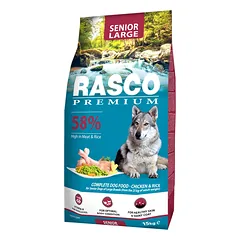
Rasco
2,67 €/kg
39,99 € / 15 kg
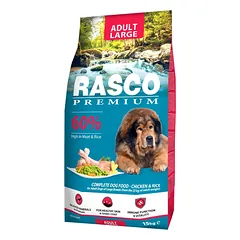
Rasco
2,67 €/kg
39,99 € / 15 kg
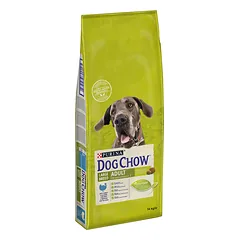
Purina
2,71 €/kg
37,96 € / 14 kg

Sam's Field
2,77 €/kg
35,99 € / 13 kg
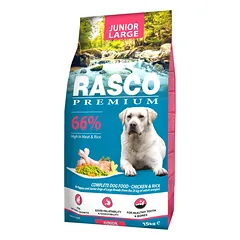
Rasco
2,80 €/kg
41,99 € / 15 kg

Sam's Field
2,85 €/kg
37,04 € / 13 kg