


Real Dog
Real Dog sausas maistas suaugusiems, didelių-milžiniškų veislių, šunims su vištiena ir ryžiais 20kg
2,11 €/kg
42,15 € / 20 kg

Also known as: English Bullmastiff
The Bullmastiff was developed in nineteenth century England by crossing the Mastiff with the Bulldog, aiming for a dog that could stop poachers on large estates without killing them. Nicknamed the 'gamekeeper's night dog,' it was trained to knock a man down and hold him rather than bite. An adult male can weigh up to 59 kilograms of dense muscle, yet capable of surprising bursts of speed over short distances. The short, smooth coat needs minimal grooming. The short muzzle, inherited from its Bulldog ancestry, brings heat sensitivity and some airway risk during heavy exertion. Temperament is calm and self-assured, rarely barking without reason, but strongly territorial. Early socialisation matters a great deal given its size and natural wariness. Life expectancy runs 8 to 10 years.
Browse dog food sized right for this breed
Bullmastiff: how old in human years?
Energy level
Trainability
Family friendly
Grooming need
Males 64–68 cm
Females 61–66 cm
Males 50–59 kg
Females 41–50 kg
Bullmastiff's average temperament and family-life score for this breed is moderate.
Bullmastiff's energy and exercise needs are low.
Bullmastiff's guarding and alertness traits are moderate.
Bullmastiff's grooming needs are moderate.
A Bullmastiff doesn't greet a visitor by barking: it simply stands in the doorway, all of its height and weight, and that is quite enough. The breed was developed in England as the gamekeeper's dog that quietly stopped poachers, and that calm, self-assured vigilance remains: a Bullmastiff guards its home and people without fuss, but very seriously.
At home it values comfort: long naps, a few unhurried walks a day and a soft spot near you make its ideal schedule. On hot days walk early in the morning and in the evening, because a short muzzle and a massive body cope poorly with heat. Start training while the puppy still fits on your lap: clever but independent, a Bullmastiff responds to calm consistency far better than to harshness, and walking without pulling is a necessity when there are nearly sixty kilos on the other end of the lead.
With its own family a Bullmastiff is devoted and gentle, but it is in no hurry to befriend strangers and doesn't always get along with other dogs, so early socialisation with people, dogs and the sounds of the street is not a luxury. It respects children, though a dog this big can be a lot for a toddler, so supervise at first. A flat is cramped for it; a home with a fenced garden and a family that appreciates a calm, quiet guardian is where it belongs.
A Bullmastiff's short, dense coat is easy to keep: a weekly pass with a rubber brush or mitt leaves the loose hair on the brush instead of the sofa. It sheds moderately, a little more during the moult. As you brush, check the skin and the wrinkles on the head and muzzle, where drool and moisture collect; wipe them with a damp cloth and dry them, and show any redness or smell to your vet.
Look at the eyes every few days to make sure they are clear, not watering and not red, and wipe the corners with a soft damp cloth when needed. Lift the hanging ears weekly and check that the inside is clean and free of any smell. Nails matter on a heavy dog, since overgrown ones change how the foot sits, so trim them regularly and start in the first weeks: persuading a fifty-kilo adult is a different matter. A drool towel by the door is standard equipment.
Bullmastiffs live eight to ten years, and like many large dogs their health list takes in the heart, the joints, the eyes and the stomach. You can spot a good deal yourself, such as tiring quickly, a limp or a watering eye, and your vet can take it from there. If you are getting a puppy, ask the breeder about the parents' health testing.
This is general information, not veterinary advice. For your own dog's health, tests and treatment, see a vet.
This is a disease of the heart muscle in which the heart enlarges, its walls thin, and it can no longer pump strongly. You might notice your dog tiring sooner, coughing, or breathing harder even at rest. A Bullmastiff is no runner to begin with, which makes tiredness harder to spot; sudden collapse or fainting means your dog needs a vet immediately.
Entropion is when an eyelid rolls inward and the lashes and hair rub against the surface of the eye. The dog squints, the eye waters or reddens, and it rubs its face with its paws or along the carpet. A Bullmastiff's massive, wrinkled head is part of its charm, so make a habit of checking the eyes and show any irritation to your vet.
This is a narrowing just below the aortic valve, present from birth, that makes the heart work harder to push blood out to the body. A puppy can look perfectly healthy, and signs such as tiring quickly, laboured breathing or fainting after exercise may only show later. A Bullmastiff's calm manner can hide fatigue, but a vet may hear a heart murmur at a routine check, and fainting means your dog needs a vet immediately.
PRA is an inherited disease in which the retina slowly degenerates and the dog gradually loses its sight. It tends to show first in dim light: your Bullmastiff steps hesitantly across a dark garden or walks into things that aren't where they belong. Dogs adapt well by relying on scent and hearing; ask the breeder about the parents' health testing.
Hip dysplasia is a fault in how the hip joint develops: the ball of the thigh bone sits loosely in its socket and the joint wears over time. You may notice your Bullmastiff getting up with effort, swaying at the hindquarters as it walks, or reluctant to climb into the car. A dog of fifty kilos or more puts real load on its joints, so ask the breeder about the parents' health testing.
Elbow dysplasia is a fault in how the front-leg elbows develop, where the bones don't meet precisely and the joint begins to wear. It shows as a front-leg limp, especially after rest or a longer walk, or front feet that turn outward. A Bullmastiff's massive chest and head put a lot of its weight over the front legs, so show any limp to your vet.
Lymphoma is a cancer of the lymphocytes, the immune system's white blood cells, affecting the lymph nodes and other organs. You may feel enlarged, painless lumps under the jaw, in front of the shoulders or behind the knees, and the dog may become listless and lose its appetite. A Bullmastiff's short coat hides nothing, so let your hands check those spots now and then as you stroke, and show any changes to your vet.
Bloat is when the stomach fills with gas and can twist, cutting off its blood supply. The signs are restlessness, a swollen, tight belly, retching that brings nothing up and drooling even heavier than usual. With its deep chest, a Bullmastiff faces a real risk here: if you see these signs, don't wait, your dog needs a vet immediately.
This list is chosen by the breed's weight (59 kg) rather than the breed itself: shops label food by dog size, so every breed of the same size gets the same list. Prices are updated daily.
≈ 555 g of dry food a day, from €30,51 a month For a neutered, normally active 50 kg dog. Calculate for your dog
Real Dog
2,11 €/kg
42,15 € / 20 kg

Sam's Field
2,56 €/kg
33,26 € / 13 kg
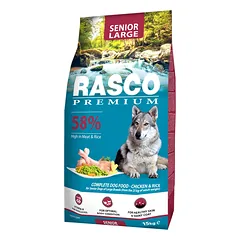
Rasco
2,67 €/kg
39,99 € / 15 kg
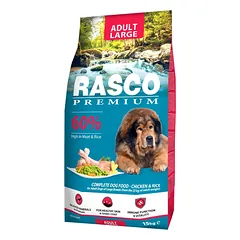
Rasco
2,67 €/kg
39,99 € / 15 kg
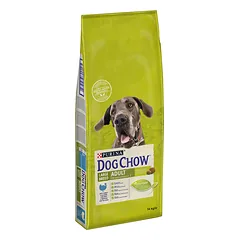
Purina
2,71 €/kg
37,96 € / 14 kg

Sam's Field
2,77 €/kg
35,99 € / 13 kg
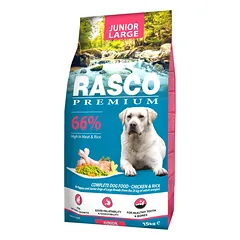
Rasco
2,80 €/kg
41,99 € / 15 kg

Sam's Field
2,85 €/kg
37,04 € / 13 kg