

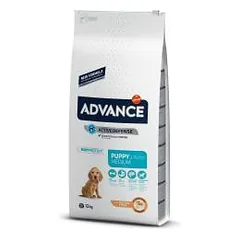
Advance
Advance Puppy Medium sausas maistas vidutinių veislių šuniukams, 12 kg
1,48 €/kg
17,76 € / 12 kg

Also known as: Welsh spaniel, Welsh springer, Welsh cocker spaniel
This red and white spaniel comes from the hills of Wales, where for centuries it flushed birds out of thick cover for hunters on foot. It was only separated from the English Springer Spaniel as its own breed in the early twentieth century, even though the Welsh type is documented much earlier. The silky, dense coat sheds rain and brambles alike but needs regular brushing, especially around the ears and leg feathering. An adult male rarely tops 20 kilograms, making it a compact yet tireless working dog. The breed remains considerably rarer than its English cousin, so finding a breeder takes patience. Temperament is affectionate at home but noticeably reserved with strangers at first. It needs real daily exercise; without it, that flushing energy turns into restlessness indoors. Life expectancy runs 12 to 15 years.
Browse dog food sized right for this breed
Welsh Springer Spaniel: how old in human years?
Energy level
Trainability
Family friendly
Grooming need
Males 46–48 cm
Females 43–46 cm
Males 18–20.5 kg
Females 16–18 kg
Welsh Springer Spaniel's average temperament and family-life score for this breed is high.
Welsh Springer Spaniel's energy and exercise needs are high.
Welsh Springer Spaniel's guarding and alertness traits are low.
Welsh Springer Spaniel's grooming needs are low.
A November morning, fine drizzle, and your dog waiting at the door as if it were the best day of the year. The Welsh Springer Spaniel comes from the hills of Wales, where it flushed birds out of cover for the guns, and weather has never been a reason to stay in. It has so much energy that a stroll round the block barely registers: it wants an hour or more of real exercise a day, ideally with sniffing, searching and retrieving built in.
It is keen to learn and quick on the uptake, but the hunting drive runs deep: a partridge in a hedge will drown out your voice in an instant. Work on a reliable recall from day one, and let it run free only where it is safe. A flat is a tight fit; without work and exercise a bright Welsh Springer will invent its own hobbies, and you are unlikely to approve of them.
At home it is gentle and devoted, good with children and other dogs. With strangers it is polite, sometimes a touch more reserved than its English cousin, and it is no guard dog. It wants to be where you are: long days alone do not suit it, while an evening on the rug at your feet after a good outing is exactly right.
The red-and-white coat is dense, silky and weatherproof: rain runs off it, but burrs, seeds and mud cling to the feathering on the ears, legs and chest like iron filings to a magnet. Comb it through a few times a week, and on the evening of any walk through brambles, before the feathering knots into felt. Run your hand over the skin as you go; that is the quickest way to find a tick, a scratch or a red patch. The hair between the pads and around the ear openings is worth a tidy now and then.
Those hanging, feathered ears hold on to moisture, so after a swim or a wet walk lift each ear, dry the inside with a soft towel and give it a sniff: a healthy ear smells of very little. Once a week check the eyes too, with no discharge building up in the corners, and after a run through dry grass look for seeds that may have got in. Shedding is moderate, which means a brush and a vacuum cleaner will be regular companions.
The Welsh Springer Spaniel is a sturdy, mid-sized working dog that, well looked after, lives twelve to fifteen years. The joints, the thyroid and the eyes are the places to keep an eye on. If your dog starts behaving differently, skip the guesswork and talk to your vet.
This is general information, not veterinary advice. For your own dog's health, tests and treatment, see a vet.
Hip dysplasia is a fault in how the hip joint develops: the ball of the thigh bone does not sit snugly in its socket, and the joint wears over time. You might notice your dog getting up slowly after a long walk, bunny-hopping up the stairs or hesitating before jumping into the car. For a dog built to work through cover all day, sound hips matter a great deal, so ask the breeder about the parents' health testing.
Elbow dysplasia means the parts of the front leg's elbow joint do not grow to fit together, so the joint starts to wear. A growing puppy may limp on a front leg, especially after resting following a busy play session, or stand with the elbows oddly turned out. If you see this in your Welsh Springer, talk to your vet about the limp and about how much exercise a growing puppy should get.
Hypothyroidism is when the thyroid gland makes too little hormone, and the whole body seems to slow down. A normally busy Welsh Springer may turn sluggish, put on weight without eating more, seek out warm spots, and lose the shine and thickness of that silky coat. These changes are easy to blame on age, so let your vet take a look.
Eye problems cover a wide range of trouble, from eyelid and eyelash faults to diseases of the eye itself that can affect sight. You might notice watering, redness, squinting, cloudiness, or a dog who seems unsure of itself at dusk. A Welsh Springer spends a lot of time pushing through undergrowth where eyes get irritated, so show any change to your vet, and if you are getting a puppy, ask the breeder about the parents' health testing.
This list is chosen by the breed's weight (21 kg) rather than the breed itself: shops label food by dog size, so every breed of the same size gets the same list. Prices are updated daily.
≈ 260 g of dry food a day, from €14,19 a month For a neutered, normally active 18,1 kg dog. Calculate for your dog
Advance
1,48 €/kg
17,76 € / 12 kg
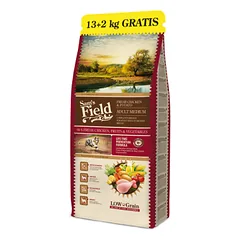
Sam's Field
1,80 €/kg
26,99 € / 15 kg

Country Dog
1,89 €/kg
28,29 € / 15 kg
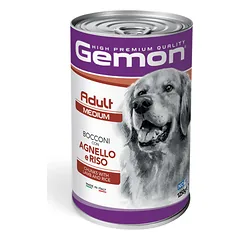
Gemon
1,94 €/kg
2,42 € / 1,3 kg
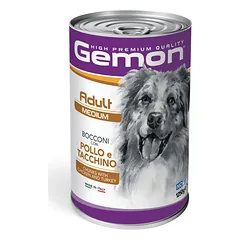
Gemon
1,94 €/kg
2,42 € / 1,3 kg
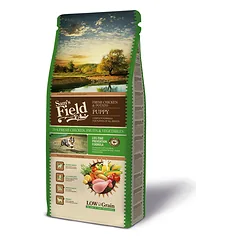
Sam's Field
2,11 €/kg
27,45 € / 13 kg

2,14 €/kg
30,00 € / 14 kg
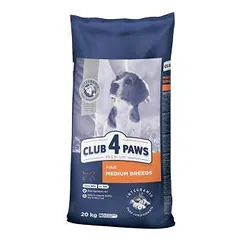
Club 4 Paws
2,15 €/kg
42,99 € / 20 kg