

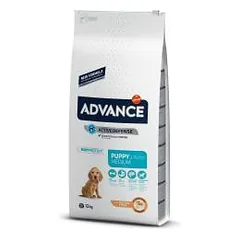
Advance
Advance Puppy Medium sausas maistas vidutinių veislių šuniukams, 12 kg
1,48 €/kg
17,76 € / 12 kg

Also known as: Working cocker spaniel
This spaniel was bred to flush birds out of dense cover for the hunter, and the name Cocker comes from woodcock, the game it specialized in working. The silky, medium length coat with feathering on the ears and legs needs regular brushing, and those long, low hanging ears have a habit of dipping into food and water bowls, which is why many owners use specially shaped dishes. A male typically weighs around 14.5 kilograms on a compact, energetic frame. The breed is known for an unusually cheerful, tail never stops wagging temperament that has become something of its trademark. Like most spaniels, its ears need regular cleaning to prevent infections building up underneath the coat. Though bred as a hunting dog, most kept today never see fieldwork and settle comfortably into family life instead. Life expectancy runs 12 to 14 years.
Browse dog food sized right for this breed
English Cocker Spaniel: how old in human years?
Energy level
Trainability
Family friendly
Grooming need
Males 39–41 cm
Females 38–39 cm
Males 13–14.5 kg
Females 13–14.5 kg
English Cocker Spaniel's average temperament and family-life score for this breed is high.
English Cocker Spaniel's energy and exercise needs are high.
English Cocker Spaniel's guarding and alertness traits are low.
English Cocker Spaniel's grooming needs are moderate.
The English Cocker was born to work: in British fields it flushed birds out of the hedgerows for the hunter, and that nose has gone nowhere. A walk is not just exercise to it but an investigation: every bush has a story, every puddle is an invitation. It needs at least an hour of active exercise a day, and search games, retrieving and scent work will tire it out far better than laps around the block.
It wants to learn and wants to please, so with gentle, consistent training and treats you'll make quick progress. It is sensitive to tone, though, so harshness only backfires. The hunting instinct is strong, so practise recall from day one and don't expect miracles near birds or rabbits.
In the family, it's the one who greets everyone at the door and looks for someone to bring a shoe to. It is friendly with children, other dogs and visitors alike, and no one would call it a guard dog. It can live in a flat if it gets enough exercise, but it doesn't like being left alone for long and out of boredom may start barking or find its own entertainment in your wardrobe.
The flat, silky, medium-length coat, with feathering on the ears, chest, belly and legs, looks wonderful right up until the dog goes into the undergrowth. Brush it several times a week, especially the feathering, which collects burrs, leaves and tangles, and book a trim every few weeks to a month to keep it neat. After a walk through wet grass, towel the coat and skin dry, because moisture held against the skin is one of the things that irritates it. While brushing, check the skin under the ears and between the toes.
The ears are a job of their own. Once a week, and more after swimming, lift them, look inside, sniff, and wipe the visible part with a cotton pad without going into the canal; a groomer can trim the hair around the opening and under the ears. A narrow, deep bowl at mealtimes helps keep the ear tips out of the food. Wipe the corners of the eyes with a clean damp cloth; a red or weepy eye is a reason to talk to your vet.
A tail that wags the whole back half of the dog, and long silky ears that are first into every puddle: the English Cocker Spaniel brings a great deal of joy and twelve to fourteen years of company. Its health list includes inherited eye, kidney and nerve conditions, which responsible breeders test parents for, alongside more everyday concerns with ears and skin. Know what to look for, ask the breeder about testing, and don't hesitate to check in with your vet.
This is general information, not veterinary advice. For your own dog's health, tests and treatment, see a vet.
This is an inherited disease in which the retina at the back of the eye slowly wastes away and the dog gradually loses its sight. The first thing you may notice is a dog that moves hesitantly at dusk, is reluctant to enter a dark room, or bumps into things in the evening. Genetic tests exist for Cockers, so ask the breeder about the parents' results and talk to your vet about any change in how your dog copes in the dark.
The hip joint develops abnormally, so it moves more loosely than it should and wears over time. Signs can include reluctance to jump into the car, a stiff gait after rest, or running with both hind legs pushing off together. A Cocker is an active dog that covers a lot of ground, so it is worth asking about hips when choosing a puppy, including the parents' screening results.
This is an inherited kidney disease in which the kidneys gradually lose their ability to filter the blood properly, starting when the dog is young. An owner may notice a young dog drinking and urinating more than normal, growing poorly or losing its appetite. A genetic test is available for English Cockers, so ask the breeder about the parents, and show any unusual thirst to your vet.
This is an inherited nerve disorder that appears in adulthood: the nerves that control the legs slowly weaken. You may notice your dog placing its hind feet less steadily, its gait becoming clumsier, or it tiring sooner. It is a known condition in Cocker lines, so questions to the breeder about the parents' health are not overdoing it, and what is going on with your own dog is for a vet to assess.
An ear infection is inflammation of the ear canal driven by bacteria or yeast. The dog shakes its head, scratches at the ear, holds its head tilted, and there's an unpleasant smell from the ear. A Cocker's long, heavy, hairy ears cover the canal and trap warmth and moisture, so checking them is simply part of life with this breed, and these signs are worth a trip to the vet.
A skin infection starts when bacteria or yeast take advantage of irritated or damp skin and begin to multiply. You may notice red patches, scabs, hair loss or a distinctive smell, particularly under the ears, on the lips and between the toes. A Cocker's thick, feathered coat holds moisture for a long time after a walk through wet grass, so dry it off, check the skin, and show anything unusual to your vet.
This list is chosen by the breed's weight (15 kg) rather than the breed itself: shops label food by dog size, so every breed of the same size gets the same list. Prices are updated daily.
≈ 210 g of dry food a day, from €11,58 a month For a neutered, normally active 13,8 kg dog. Calculate for your dog
Advance
1,48 €/kg
17,76 € / 12 kg

Sam's Field
1,80 €/kg
26,99 € / 15 kg

Country Dog
1,89 €/kg
28,29 € / 15 kg
Gemon
1,94 €/kg
2,42 € / 1,3 kg
Gemon
1,94 €/kg
2,42 € / 1,3 kg

Sam's Field
2,11 €/kg
27,45 € / 13 kg

2,14 €/kg
30,00 € / 14 kg

Club 4 Paws
2,15 €/kg
42,99 € / 20 kg