

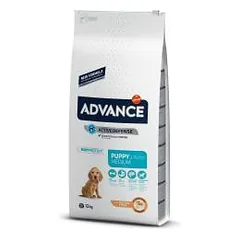
Advance
Advance Puppy Medium sausas maistas vidutinių veislių šuniukams, 12 kg
1,48 €/kg
17,76 € / 12 kg

Also known as: Corgi, Corgwn, Corgïaid, Welsh corgi
According to Welsh folklore, two children once found a pair of puppies said to be gifts from fairies who used them as steeds, which is how the local legend explains the Corgi's origin. The real history is more practical: the Pembroke worked cattle, and its short legs and long body let it dodge hooves safely while nipping at heels. A male typically weighs around 12 kilograms, and the medium length double coat sheds heavily, particularly twice a year. Britain's royal family has kept the breed since 1933, and Queen Elizabeth II owned more than thirty Corgis over her lifetime, which did a great deal to raise the breed's profile worldwide. Its long back relative to its legs means jumping from height should be avoided to protect the spine. Its temperament tends to be lively, intelligent and occasionally stubborn. Life expectancy runs 12 to 14 years.
Browse dog food sized right for this breed
Welsh Corgi Pembroke: how old in human years?
Energy level
Trainability
Family friendly
Grooming need
Males 25–30 cm
Females 25–30 cm
Males 10–12 kg
Females 10–12 kg
Welsh Corgi Pembroke's average temperament and family-life score for this breed is high.
Welsh Corgi Pembroke's energy and exercise needs are moderate.
Welsh Corgi Pembroke's guarding and alertness traits are high.
Welsh Corgi Pembroke's grooming needs are low.
The courier has barely turned into your street and the Corgi is already at the window, announcing the news to the whole house. This little Welsh herder was bred to drive cattle, and the sense of having a job to do is still very much alive: alert, vocal, always aware of what is happening on its patch. The herding instinct sometimes breaks out at home too, when in the heat of a game it tries to round up running children with a nip at their heels, so redirect that urge gently but consistently.
Corgis are clever and learn willingly, especially when a lesson feels like a task rather than a drill. Every day they need at least a couple of good walks and something for the brain: search games, tricks, a good sniff. A flat can work as long as the exercise does, but bear in mind that a Corgi enjoys barking, and the neighbours may feel differently.
In the family a Corgi is devoted and cheerful and gets on well with children, though play with the very youngest is best supervised. With strangers and other dogs it starts out reserved and likes to size up the situation first. One more small thing: short legs are no reason to carry it everywhere, but leaping off high furniture and racing up and down the stairs are not needed either. Its back will thank you.
The Corgi's double coat, a medium-length outer layer over a dense undercoat, keeps the rain out admirably, but in moulting season it sheds so freely that tufts of fur roll across the floor like tiny tumbleweeds. Brush right down to the undercoat a few times a week, and daily while it moults, paying special attention to the trousers and the chest. Do not forget the belly: those short legs mean a Corgi practically sweeps the ground, so after a wet walk dry it off and check the skin where it sits closest to the mud.
Once a week, look at the upright ears and the eyes: ears clean and odour-free inside, eyes clear and not red. Trim the nails regularly, before you hear them clicking on the floor, and carefully, so you do not cut too short; in a Corgi with a clotting disorder even a small nick can bleed for a long time. Brush the teeth with a dog toothpaste several times a week. Start in puppyhood and it becomes just another quiet minute together.
A long body on short legs is what makes a Corgi so recognisable, and also a reminder that its joints and back deserve attention for life. Beyond that, keep an eye on the eyes, the heart and how quickly a small cut stops bleeding. A Corgi can be with you for twelve to fourteen years, and if anything changes along the way, let your vet draw the conclusions.
This is general information, not veterinary advice. For your own dog's health, tests and treatment, see a vet.
Dysplasia is a fault in how a joint develops: as the puppy grows, the parts of the elbow or hip joint do not fit together properly, and over time the joint wears faster than it should. You may notice your Corgi getting up slowly after a nap, limping after a longer walk, or no longer hopping onto the sofa it used to reach without effort. With all that long body resting on short legs, it is worth asking the breeder about joint screening of the parents and showing any change in gait to your vet.
A cataract is a clouding of the lens that leaves a milky haze inside the eye and makes the world steadily blurrier. You may see a white patch in the pupil, or notice that the Corgi who always spotted every passer-by first starts missing them, or trips over a step at dusk. For a dog that takes its lookout duties this seriously, eyesight matters, so show any change in the eyes to your vet.
Before birth, a puppy's blood bypasses the lungs through a small vessel that should close once the puppy is born; if it stays open, the heart has to work harder than it should. The puppy may tire quickly during play or lag behind its littermates in growth, although sometimes there is nothing to see at all. Your vet can pick up this congenital defect by listening to the heart at the first puppy check-ups, so do not skip them.
Degenerative myelopathy is a slowly progressing disease of the spinal cord that, in older age, weakens the link between the brain and the hind legs. You might notice a back paw occasionally landing knuckled over, nails scuffing the floor, or the rear end swaying as your Corgi walks. Responsible breeders screen parents with a DNA test, and only your vet can tell whether a change in gait comes from this disease or from something else.
Von Willebrand disease is an inherited clotting disorder: the blood lacks one of the proteins that helps seal even a tiny wound. You may notice that a small cut, gums while the puppy teeth are changing, or a nail clipped too short bleeds for longer than you would expect. If you have a Corgi, mention the possibility to your vet before any planned procedure, so clotting can be checked in advance.
This list is chosen by the breed's weight (12 kg) rather than the breed itself: shops label food by dog size, so every breed of the same size gets the same list. Prices are updated daily.
≈ 180 g of dry food a day, from €9,76 a month For a neutered, normally active 11 kg dog. Calculate for your dog
Advance
1,48 €/kg
17,76 € / 12 kg
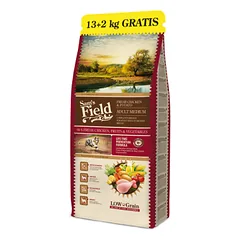
Sam's Field
1,80 €/kg
26,99 € / 15 kg

Country Dog
1,89 €/kg
28,29 € / 15 kg
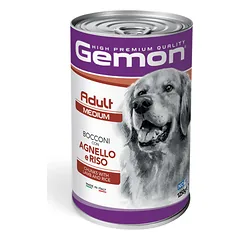
Gemon
1,94 €/kg
2,42 € / 1,3 kg
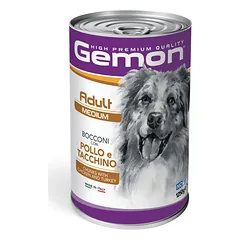
Gemon
1,94 €/kg
2,42 € / 1,3 kg

Sam's Field
2,11 €/kg
27,45 € / 13 kg

2,14 €/kg
30,00 € / 14 kg

Club 4 Paws
2,15 €/kg
42,99 € / 20 kg